Renovate with a clear plan that respects the 1930s shell while delivering modern comfort. Start by evaluating structure, load paths, and original features to guide upgrades without compromising character. Prioritize daylight—position windows for sun, use reflective finishes, and vintage-style lighting. Improve insulation and airtightness, draft-proof windows, and upgrade electrical and plumbing safety. Restore plaster and period details, then refresh kitchens and baths with era-inspired, durable materials. Maintain seasonal care and value-adding updates; further specifics await.
Assess Your 1930s Shell: Structural Baselines and Character Clues
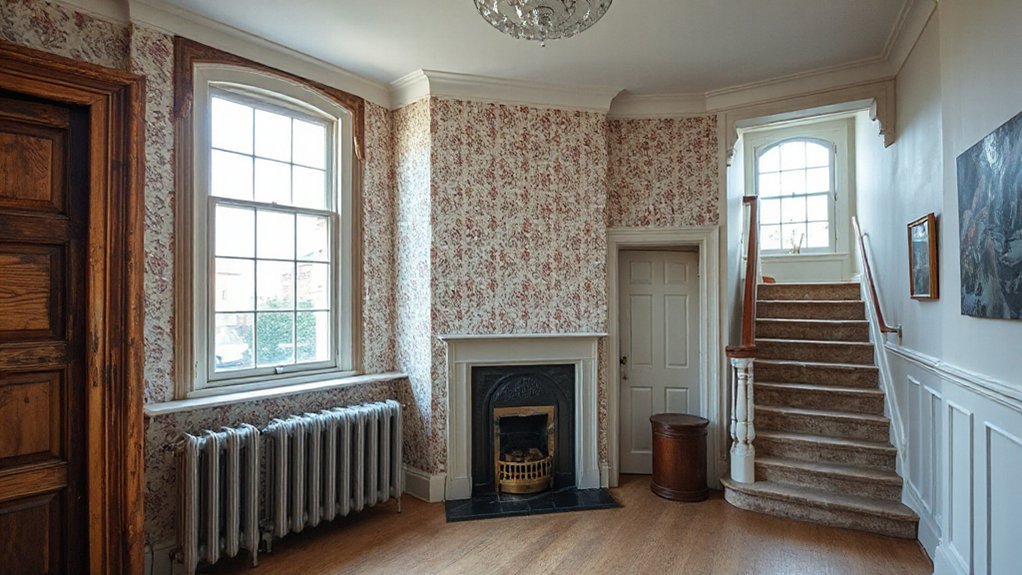
Evaluating the shell of a 1930s semi-detached home sets your renovation course. You inspect load paths, wall thickness, and foundation integrity to establish safe baselines. Prioritize structural baselines: assess joists, beams, and masonry joints for signs of movement or moisture, then chart repair priorities with minimal intrusion.
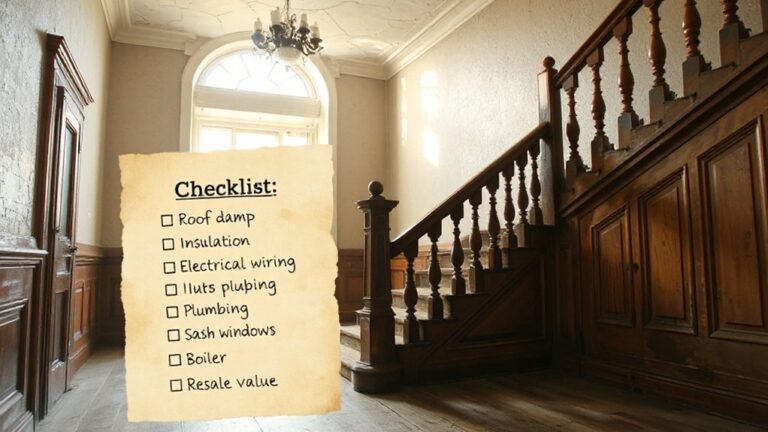
Spot character clues in plaster, cornices, and original timber, using them to gauge preservation potential without overreaching. Architectural details guide restoration choices, ensuring surface refinishes respect era workability and scale.
Material authenticity matters: identify brick patterns, sash windows, and roofing textures to match historical cues. Document findings with measured sketches and photographs, creating a decision framework for upgrades that won’t erase the home’s voice.
Balanced intervention preserves integrity while enabling modern performance.
Plan First: Realistic Budget, Timeline, and Scope for a Semi-Detached Home
Start with a clear budget that ties to the actual scope and your must-haves, not wishful thinking.
Map a realistic timeline with milestones for permits, trades, and inspections, so delays don’t derail progress.
Define constraints up front and track changes promptly to keep decisions tight and trades aligned.
Budgeting Realistic Scope
To plan a realistic budget, timeline, and scope for your semi-detached 1930s home, start with a clear baseline: assess what you can afford, what must be preserved, and what can be adjusted without compromising structural safety or character.
Establish a defensible cap and separate must-haves from nice-to-haves through a strict prioritization.
Practice historic preservation awareness by identifying elements with high cultural value and limiting changes that threaten them.
Implement budget prioritization by allocating reserve funds for contingencies, and stage work to fit cash flow, not just wish lists.
Document decisions in a concise scope, tying each item to outcomes (improved safety, accessibility, or energy efficiency).
Revisit periodically to prevent scope creep and keep repairs aligned with your core renovation goals.
Timeline And Milestones
A solid timeline for a 1930s semi-detached renovation starts with aligning your budget, scope, and milestones, so you can forecast trades, permits, and sequencing with confidence. You’ll map critical path tasks, from structural checks to electrical upgrades, grounding decisions in reality.
Establish milestones for demolition windows, framing, and insulation, then align them with procurement lead times to minimize downtime. Prioritize historical preservation where feasible, recording existing details before alteration and scheduling restoration windows for crawl spaces and plasterwork.
Your plan should integrate interior aesthetics decisions—fixtures, finishes, color palettes—so trades can execute with consistency. Build buffers for unexpected findings, yet avoid scope creep by maintaining a clear change-control process.
Review progress weekly, adjusting timelines only when necessary to sustain momentum and quality.
Restore Walls and Finishes: Plaster, Lath, and Period Details
Restoring walls and finishes in a 1930s semi-detached home centers on carefully evaluating plaster, lath, and period detailing before any patching begins. You assess plaster depth, crack patterns, and lath integrity, then decide whether repair, re-skin, or replacement is warranted.
If plaster is sound but tired, you can consolidate with lime-based patching and gentle skim coats to preserve breathability and texture. For damaged lath or routing, consider reinstalling wooden lath with traditional pony nails and horsehair plaster for authenticity.
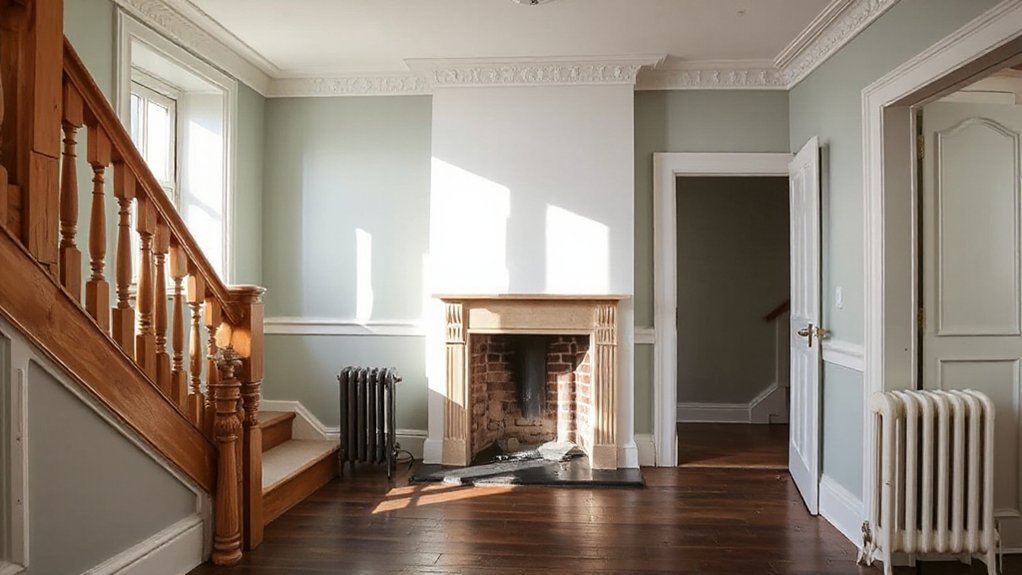
When finishes reveal period details—beadwork, cornices, or Dado rail—protect and repair rather than overwrite. Pair restoration with Modern wall art and Contemporary paint in measured doses to honor character, ensuring clean lines, balanced color, and durable surfaces that respect the home’s history.
Maximize Daylight With Vintage-Style Lighting
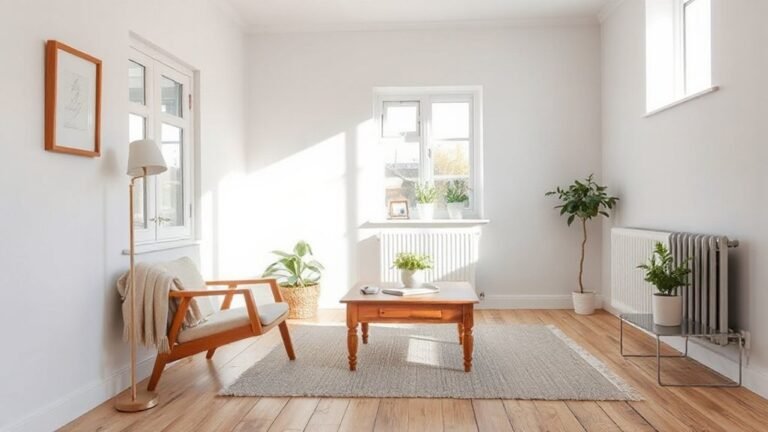
Position daylight forward by planning strategic window placement that captures morning and late-afternoon sun without glare.
Choose reflective surfaces and finishes that amplify natural light, guiding it to darker corners while keeping an even glow.
Pair a soft, warm color temperature with vintage-style lighting cues to preserve period character while maintaining clarity and depth.
Strategic Window Placement
You design the layout to maximize natural light while preserving character. Consider high, narrow glazing for stairwells and galleries, and larger panes on south-facing walls to capture winter sun.
Position sleeves for cross-ventilation to reduce cooling loads without glare. Use differential furring and sill heights to maintain sightlines and intimate scale in living rooms and kitchens.
Prioritize consistent glazing quality and airtight seals to prevent drafts. Document each decision as you test daylight angles across seasons, ensuring window placement supports both function and ambience.
Reflective Surfaces Choices
Reflective surfaces can dramatically amplify daylight in a vintage-style interior by bouncing natural light deeper into rooms and reducing the need for artificial illumination. You’ll prioritize surfaces that reflect without washing color, choosing finishes like high-gloss plaster, carefully polished wood, and restrained metalwork.
Mirror installation becomes a strategic tool when placed opposite windows or light shelves to double the perceived brightness without occupying floor space. Avoid crowded reflections by keeping mirrors appropriately sized and framed in muted tones that align with the period aesthetic.
Glass accentuation should be selective: use beveled edges, slim profiles, and light, clear panes to preserve clarity and avoid visual clutter. This approach sustains authenticity while maximizing daylight, supporting energy efficiency and a breathable, airy ambiance.
Soft Warm Color Temperature
Choose fixtures around 2700–3000K to blend into timber tones and plaster details, preserving period character while modernizing the ambience. Avoid cool whites that mute architectural features and reduce perceived depth.
Instead, curate a layered scheme: ceiling ambient, wall wash for depth, and task lighting near work zones, all in warm color palettes. Dimmer controls let you shift mood as the day progresses, reinforcing daylight cues.
Prioritize LED accuracy to prevent color distortion on original moldings, ensuring a cohesive, luminous, and authentic 1930s-inspired interior.
Thermal Comfort Without Compromise: Quiet, Efficient Insulation
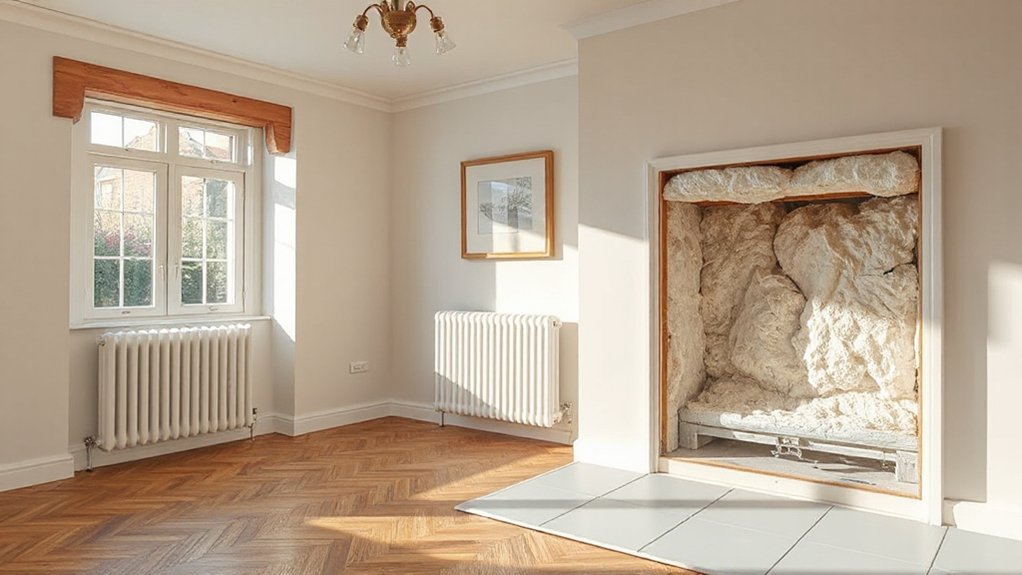
If you want thermal comfort in a 1930s semi‑detached home without sacrificing quiet or energy efficiency, focus on insulation that minimizes air leakage and delivers high performance without bulk.
- Prioritize airtightness with continuous membranes and well-sealed junctions to reduce drafts and heat loss.
- Choose insulation with high R-values per inch and low thermal bridging, supporting soundproofing enhancements without bulky builds.
- Pair with energy efficient ventilation that balances fresh air with minimal heat escape, maintaining comfort while controlling humidity and noise.
This approach keeps rooms evenly heated, enhances quiet, and supports long‑term energy savings.
You’ll notice steadier temperatures, fewer cold spots, and a calmer interior without sacrificing performance.
Ground the Era: Floor Finishes That Last and Feel Right
Choose durable timber floors or timeless concrete surfaces as the backbone of your 1930s shell, balancing warmth with practicality. You’ll want materials that age well, resist wear, and feel right underfoot in living and traffic zones.
Start by evaluating subfloor conditions and impact on finish choice, then map a path to flooring that lasts and anchors the era.
Durable Timber Floors
- Rustic charm through authentic grain and tone
- Maintenance tips: humidity control, prompt repairs, light cleaning
- Finishes that resist wear without sacrificing warmth
Timeless Concrete Surfaces
Begin with polished concrete for a refined, modern aesthetic that still nods to period solidity; its low sheen can echo original plaster tones while brightening interiors. If you prefer texture, decorative overlays deliver pattern, color, and depth without sacrificing durability.
They mask imperfections and help unify disparate spaces—hall and kitchen—into a cohesive flow. Consider integral color for warmth or stains that mimic stone, then seal properly to guard against wear.
Maintenance stays simple: dust, mop, reseal periodically. This approach preserves provenance while delivering practical, long-lasting floors.
Upgrade Windows and Doors: Draft-Proofing for an 1930s Home
Draft-proofing is essential in a 1930s semi-detached home, where drafty sash cords and single-glazed panes can waste heat and lower comfort. You upgrade windows and doors by prioritizing fit, materials, and performance, not just appearance.
Choose window styles that preserve character while improving insulation, and pair them with doors that seal tightly without compromising access. Emphasize robust drafts-proofing techniques, including weatherstripping, sash cords replacement, and high-performance glazing where appropriate.
This approach reduces heat loss, minimizes drafts, and enhances overall security. Focus on proportion, scale, and installation quality to maintain period authenticity while delivering modern comfort.
- Window styles and sash hardware that balance heritage with efficiency
- Draft proofing techniques for seals, gaps, and operation
- Maintenance routines that sustain performance and safety
Safe and Sound: Electrical and Plumbing Safeguards for Old Homes
As you’ve upgraded fabric and fittings to improve comfort, it’s time to shield your old home with solid electrical and plumbing safeguards. You should start with a full electrical assessment, locating outdated fuse boxes, exposed circuits, and moisture-prone outlets.
Prioritize Electrical safety by upgrading to a modern consumer unit, installing RCD protection, and replacing worn wiring. In parallel, inspect plumbing for lead pipes, corroded joints, and hidden leaks.
Plan plumbing upgrades that use copper or PEX, with pressure- and leak-tested lines. Confirm proper earth bonding and GFCI protection in wet areas.
Address insulation around pipes and junctions to prevent freezing. Maintain clear access for future servicing.
Implement conservative restoration standards, balancing heritage with safety.
Kitchen and Bath Refreshes: Modern Convenience With a Vintage Feel
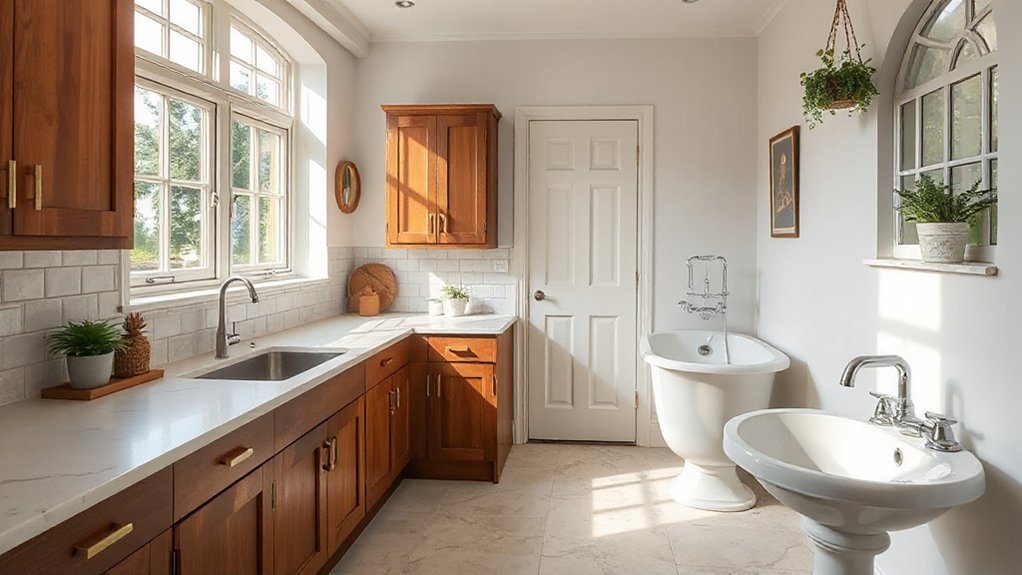
If you’re revitalizing a 1930s semi, prioritize kitchen and bath updates that deliver modern convenience without erasing character. In these spaces, blend functionality with period details by selecting vintage fixtures and durable materials that age gracefully.
Embrace efficient layouts, smart storage, and contemporary fixtures concealed behind classic façades.
- Integrate energy-efficient appliances with vintage-inspired styling
- Use retro color palettes to maintain period charm while delivering a fresh, cohesive look
- Choose durable surfaces that resist wear and reveal authentic patina over time
Prioritize detailed caulking, proper ventilation, and accessible controls to guarantee comfort and safety. Keep plumbing and wiring upgrades discreet, so you preserve the home’s silhouette.
The result is spaces that feel timeless yet perform for modern life.
Maintain and Future-Proof: Seasonal Care and Value-Add Hacks
Seasonal care and value-add hacks keep a 1930s semi efficient and resilient year-round, while quietly boosting long-term worth. You’ll establish a routine of seasonal maintenance that targets the roofline, gutters, and damp-prone walls to prevent costly damage.
Prioritize airtight seals and insulation upgrades in key areas—attic, basement, and crawlspaces—so heating and cooling stay predictable, not wasteful. When planning value enhancement, align projects with durability, not novelty; durable siding, energy-efficient windows, and smart thermostats deliver steady savings and appeal.
Schedule proactive inspections twice a year, addressing minor issues before they become structural risks. Document improvements with receipts and warranties to support resale discussions.
Maintain a proactive calendar, and you’ll extend life cycles, reduce operating costs, and sustain steady equity growth.
Frequently Asked Questions
How Can I Identify Hidden Structural Issues Early?
You’ll spot hidden damage by watching for cracks widening, doors sticking, and uneven floors, and you’ll probe foundation concerns with a pro inspection. Schedule ongoing assessments; address moisture, drainage, and structural reinforcements promptly to prevent costly failures.
What Permits Are Required for 1930S Renovations?
Ever wondered what permits you need for 1930s renovations? You generally require building permits, inspections, and compliance with historic preservation guidelines and building codes, so you can proceed legally while preserving character. Obtain approvals from local authorities before starting.
Which Finishes Are Period-Authentic but Durable Long-Term?
You should choose period finishes like oak flooring and tile, and durable materials such as stone countertops, brass hardware, and plaster walls; these options preserve authenticity while standing up to daily use over decades.
How Do I Balance Modern Upgrades With Original Charm?
Balance modern upgrades with original charm by prioritizing historical authenticity and modern integration; you preserve character, you upgrade function, you respect lineage, you improve comfort, you reveal details, you harmonize materials, you guarantee timeless appeal.
What Maintenance Schedule Protects Value and Comfort?
You should establish a quarterly maintenance schedule focusing on historic preservation and energy efficiency, inspecting roof, plumbing, wiring, insulation, and HVAC; seal drafts, upgrade air sealing, service systems regularly, and document improvements to protect value and comfort.
Conclusion
A 1930s semi rewards careful, purposeful updating rather than drastic overhaul. You’ll balance charm with modern reliability by auditing structure, sealing gaps, and choosing period-appropriate details that perform. Start with a clear plan, then layer improvements: plaster repairs, daylighting tweaks, draft-proofed casements, quiet insulation, and safe systems. Think of your home as a vintage watch—reliable gear hidden in classic casing. When you finish, you’ll enjoy steady comfort, timeless character, and value that ages better with care.
About the Author