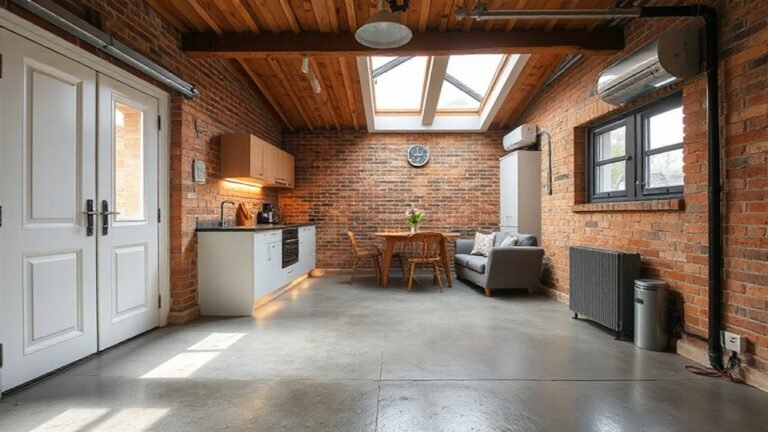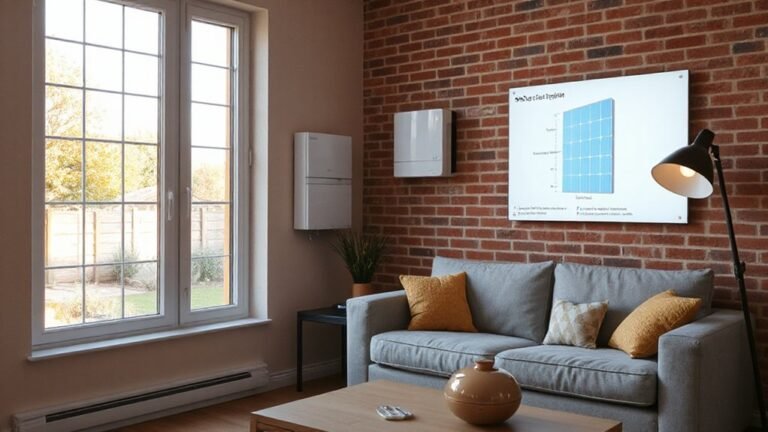
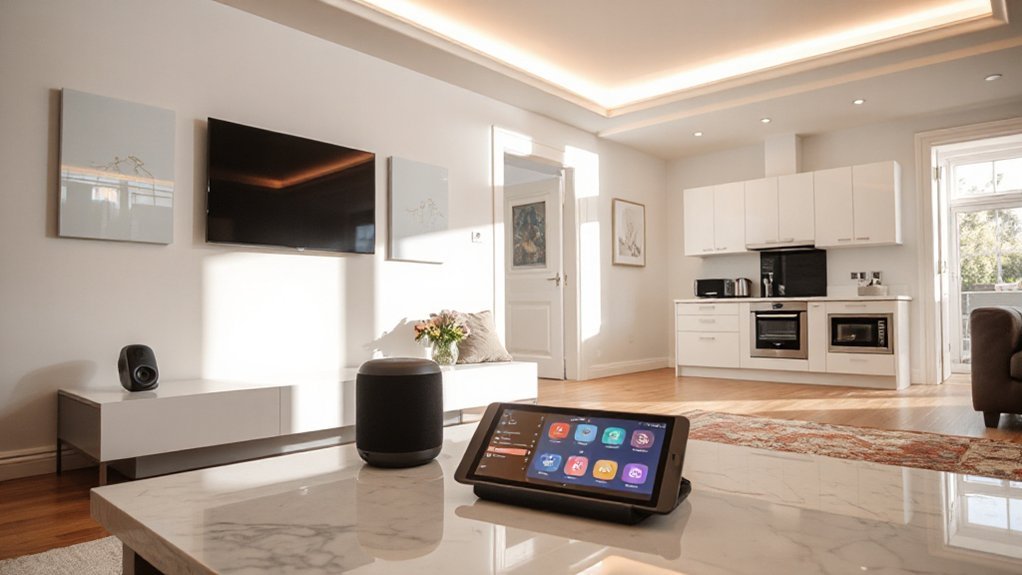
Smart-home features are growing in popularity across UK properties as energy efficiency, security, and convenience become core design drivers. You’ll see smart thermostats optimize heating by occupancy and demand response, connected lighting that adapts to use and daylight, and voice assistants centralizing control and scenes. Interoperability and scalable hubs matter, with secure networks and clear data models guiding integration. Expect modular components and measurable gains in uptime, latency, and energy savings as you expand. Continue to explore for deeper performance benchmarks and ROI implications.
Why UK Homes Are Going Smart
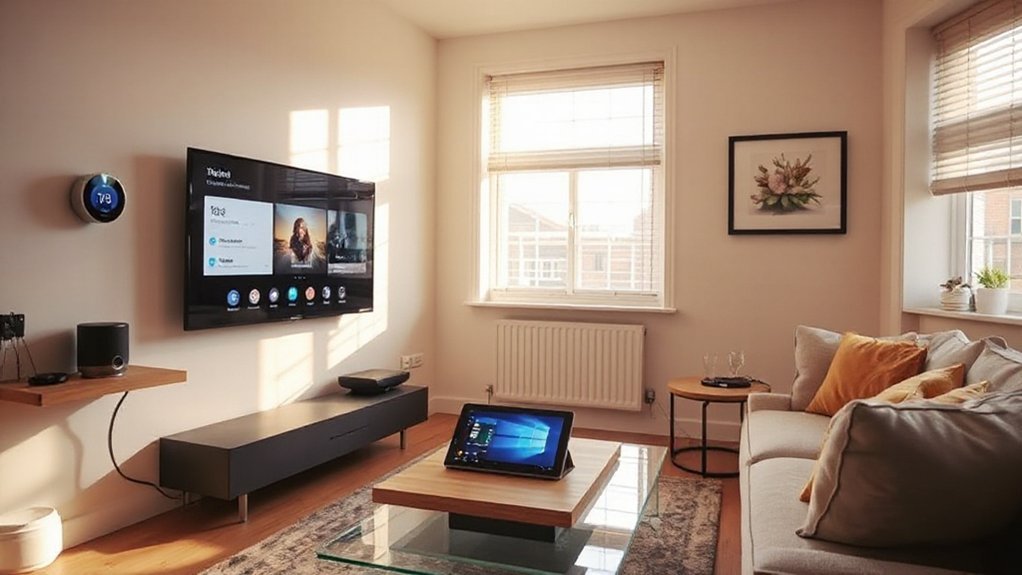
Smart-home adoption in UK properties is rising as homeowners seek greater energy efficiency, security, and convenience. You’re guided by data, not guesswork, as you evaluate controls, sensors, and interfaces that integrate into existing electrical and architectural layouts.
Home automation decisions hinge on reliable communication protocols, interoperability, and scalable processing that support future upgrades without wholesale rewiring. You’ll prioritize energy efficiency by pairing demand response with programmable schedules, occupancy sensing, and thermal zoning, reducing peak loads while maintaining comfort.
Design-centric criteria matter: actuator placement, cable routing, and enclosure accessibility influence long-term maintenance. You’ll quantify benefits through dashboards that track real-time consumption, event logs, and fault diagnostics.
In this framework, Home automation becomes a measurable asset, supporting improved reliability, reduced utility costs, and clearer governance of smart-property investments.
Common Smart Devices and What They Do for UK Properties
To support the energy and security gains outlined earlier, this section catalogs typical devices, their core functions, and how they integrate with UK electrical and architectural layouts.
You’ll encounter voice assistants that centralize control, enabling scene configuration while preserving outlet and circuit integrity.
Smart thermostats optimize heating and cooling schedules through occupancy patterns and real-time demand response.
Connected lighting adapts to occupancy and daylight, reducing energy waste and simplifying dimming and zoning within UK circuits.
Smart security systems provide intrusion alerts, door and window sensing, and camera feeds that align with UK data-presence standards and privacy requirements.
Energy-monitoring plugs quantify device-level consumption, informing balanced circuits and breaker loading in compact UK homes.
Integration hinges on standard low-voltage controls, compliant Wi‑Fi/Ethernet backbones, and scalable hubs.
Voice assistants, Smart security.
How to Evaluate a Smart-Home System for Your Home
Evaluating a smart-home system starts with defining your goals, then mapping them to capability, reliability, and cost. You’ll assess interoperability across devices, ensuring a unified protocol and consistent data models.
Examine controller latency, update cadence, and failover behavior to minimize disruption. Prioritize modular components with clear API access, so future upgrades don’t force a complete rebuild.
Quantify performance with measurable targets: response times under 100 ms for critical controls, 99.9% uptime, and predictable energy profiles.
Assess data handling—privacy, storage, and local control options—alongside security upgrades to reduce attack surfaces.
Compare energy efficiency projections against baseline consumption, validating real-world gains through pilot measurements.
Favor systems with robust diagnostics, remote management, and clear upgrade paths to sustain long-term design rigor.
Costs, Installation, and Value Impact in the UK
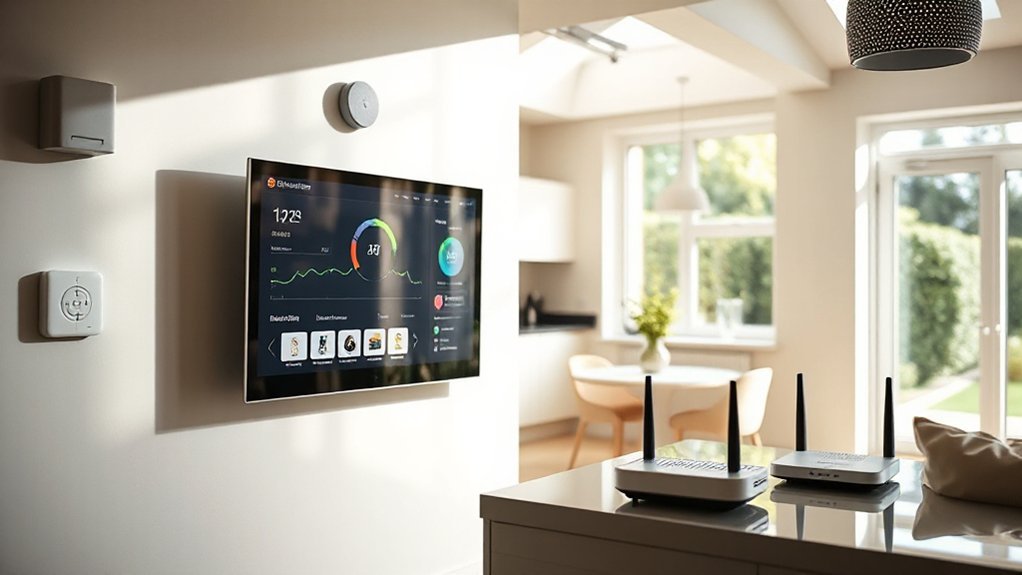
In the UK, the total cost of ownership for smart-home systems hinges on hardware, installation, and ongoing service plans, with savings realized through energy efficiency and remote management offsetting upfront investments. You evaluate upfront capital against long-term operating expense, factoring vendor warranties, integration complexity, and future-proofing.
Installation cost scales with system scope, from single-room retrofits to whole-home ecosystems, driven by topology, device density, and networking maturity. Energy savings occur through optimized load scheduling, efficient devices, and centralized control, measurable via inline metering and telemetry.
Value impact rests on reliability, renewal cadence, and perceived risk reduction, including security enhancements that deter unauthorized access and enable rapid incident response.
Precision budgeting requires scenario modeling, sensitivity analysis, and documented ROI under varying energy tariffs and maintenance intervals.
A Simple 7-Step Starter Plan to Go Smart
Curious how to begin? You’ll approach a 7-step starter plan with precision, focusing on tangible, design-centric outcomes.
Step 1: define objectives using measurable metrics for Smart security and energy management.
Step 2: map your current devices, noting interoperability constraints and platform ecosystems.
Step 3: select a minimal viable smart hub, prioritizing security updates and data governance.
Step 4: deploy shielded network segmentation to reduce attack surfaces.
Step 5: implement routines that optimize energy use, such as schedules and occupancy-triggered control.
Step 6: document wiring, firmware versions, and causal relationships between devices for maintainability.
Step 7: validate performance against targets, then iterate with data-driven refinements.
This plan emphasizes modularity, repeatability, and a clear path to scalable, residential smart integration.
Frequently Asked Questions
How Secure Are UK Smart-Home Systems Against Cyber Threats?
You’re reasonably protected, but cyber vulnerabilities exist; stay vigilant. Guarantee devices use robust encryption standards, regularly update firmware, and segment networks. Your security hinges on end-to-end encryption, threat modeling, and continuous monitoring of access patterns and anomaly detection.
Do Smart Devices Affect Home Insurance Premiums in the UK?
Smart devices can influence premiums, but discounts aren’t guaranteed; insurers base this on risk assessment, device security, and monitoring. You’ll likely see insurance discounts through robust home automation setups and verified risk-reducing features, improving your overall rating.
Can Smart Tech Help With Energy Efficiency Ratings for UK Homes?
Smart tech helps improve energy efficiency ratings by enabling precise controls, real-time monitoring, and automated optimization. You’ll realize energy savings and a reduced carbon footprint through data-driven settings, efficient scheduling, and continuous performance analytics.
What Grants or Rebates Exist for UK Smart-Home Upgrades?
Smart grant programs exist, but eligibility varies by scheme and region. You’ll likely access rebates based on device type and energy savings; verify criteria, application steps, and deadlines. You qualify? Check rebate eligibility, then document energy data for approval.
How Does Data Privacy Differ Across UK Smart-Device Brands?
Data encryption varies by brand; you’ll find stronger defaults with European-compliant devices. You trust, you verify, you compare privacy policies. You should evaluate end-to-end encryption, data minimization, and whether manufacturers offer opt-outs and clear incident reporting.
Conclusion
Smart homes are reshaping UK properties with data-driven reliability and design-first thinking. You’ll see faster ROI as energy use drops and maintenance alerts improve system uptime. One striking stat: homes equipped with smart thermostats reduce energy bills by up to 10–15% on average, translating to meaningful savings. If you design around interoperability, secure zones, and scalable hardware, you’ll future-proof your builds while delivering precise control, seamless user experiences, and measurable performance across lighting, climate, and security.
About the Author