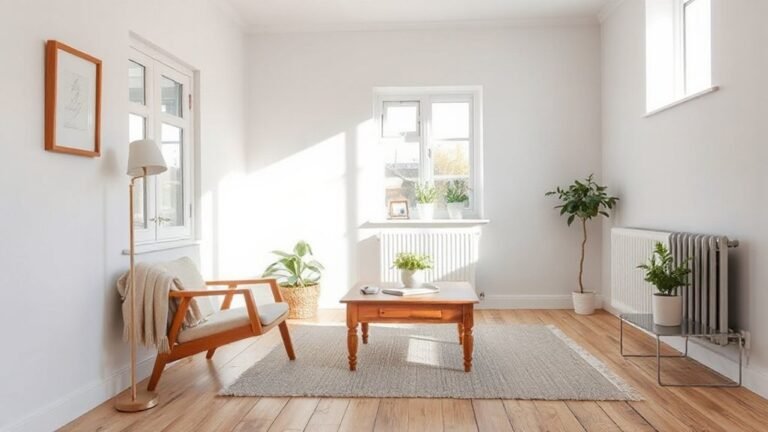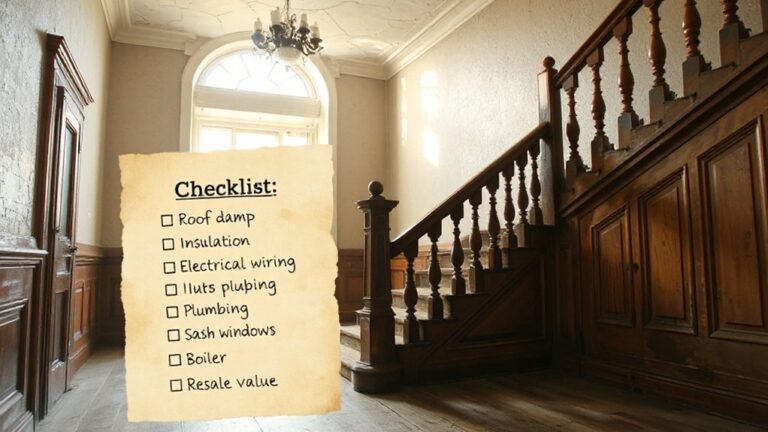
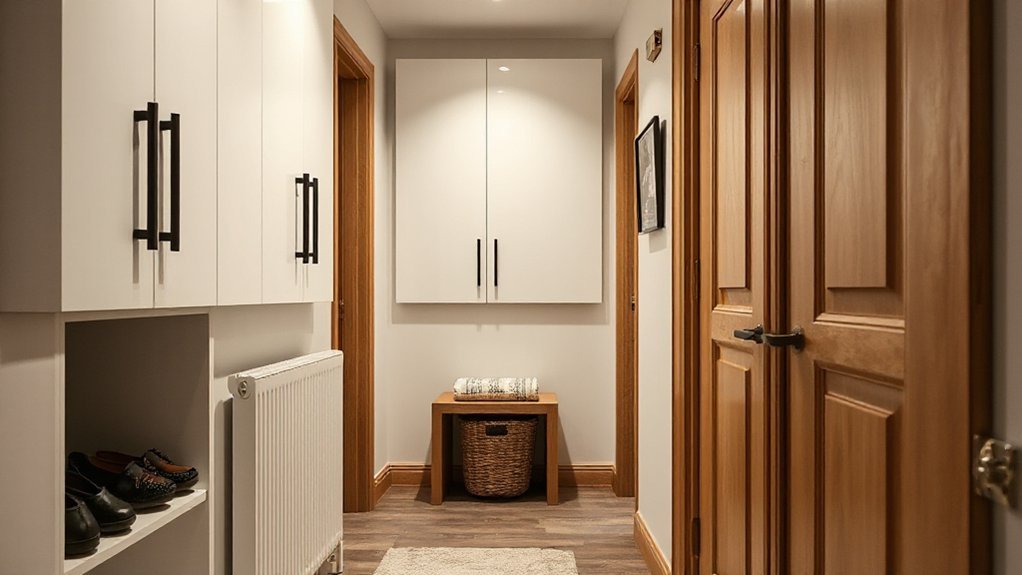
Transform your narrow UK hallway with slimline, wall‑mounted storage that keeps the doorway clear and light flowing. Measure carefully from the door to any alcoves, applying the one‑foot rule to avoid overhangs. Choose wall‑mounted units, corner solutions, and modular panels that fit shallow depths and reflect light with light finishes. Prioritize adjustable shelves, sliding doors, and knee‑wall or under‑stair storage to hide clutter. Want these ideas in action? there’s more to optimize your space as you go.
Measure Your Narrow Hallway: Practical Baseline
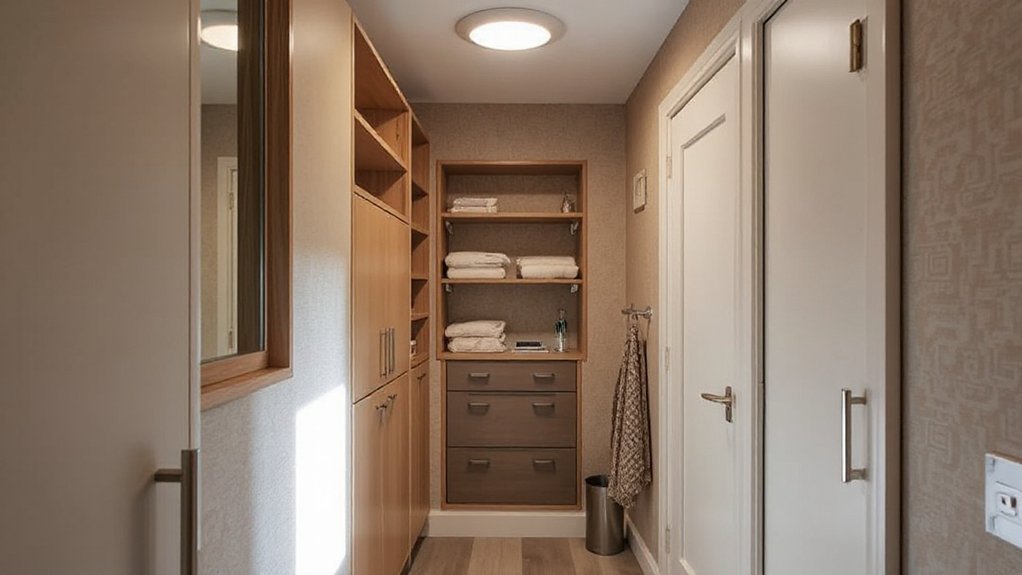
To measure your narrow hallway accurately, start at the doorway and work outward, noting both width and any obstructions. You’ll create a practical baseline you can trust for every storage decision. Use a tape measure to capture width at multiple points, then document ceiling height, corner recesses, and floor irregularities.
Mark spots where doors swing, switch plates, and radiator protrusions affect clearance. Record measurements in a simple grid, linking each dimension to potential storage zones. Consider decorative accents and colour schemes as you map potential focal points, ensuring they won’t conflict with traffic flow or access.
This baseline lets you compare solution options quickly, avoiding overflows or dead space. Precision upfront saves time later, guiding you toward clever, scalable storage that fits your hall without compromising style.
The One-Foot Rule: What Depths Fit You?
The one-foot rule is your quick-screen for depth: if a piece of storage sticks out more than a foot, it disrupts traffic flow and creates collision hazards in a narrow hallway. You measure not just width, but possible overhangs on doors, handles, and trim.
Prioritize depths that keep pathways clear while maximizing storage capacity where it counts. Consider shallow kiosks, slim wall-mounted units, and modular stacks that sit flush with baseboards.
Aesthetic appeal matters, so choose finishes and hardware that blend with your walls rather than fighting them.
Test a few configurations in the actual corridor—place markers, walk the route, and note sightlines. With precise depth choices, you preserve movement, minimize snag points, and maintain a tidy, deliberate look.
Slimline Cabinets That Maximise Footprint
Slimline cabinets pack serious storage into tight hallways without hogging space. You’ll install slimline units that fit between walls and doorframes, preserving width for movement while expanding storage capacity.
Choose modular units that adapt to your footprint: tall, narrow cabinets for vertical reach, shallow drawers for daily essentials, and pull-out trays for quick access.
Sliding doors keep sightlines clean and doors from colliding with traffic, a vital feature in narrow corridors.
Opt for neutral finishes with matte surfaces to minimise dust visibility and reflect light, aiding perception of space.
Use vertical dividers to separate items without widening the footprint, and consider internal organisers to maximise each inch.
Custom widths, integrated lighting, and soft-close hardware elevate practicality without bulk.
Wall-Mounted Units That Keep the Doorway Clear
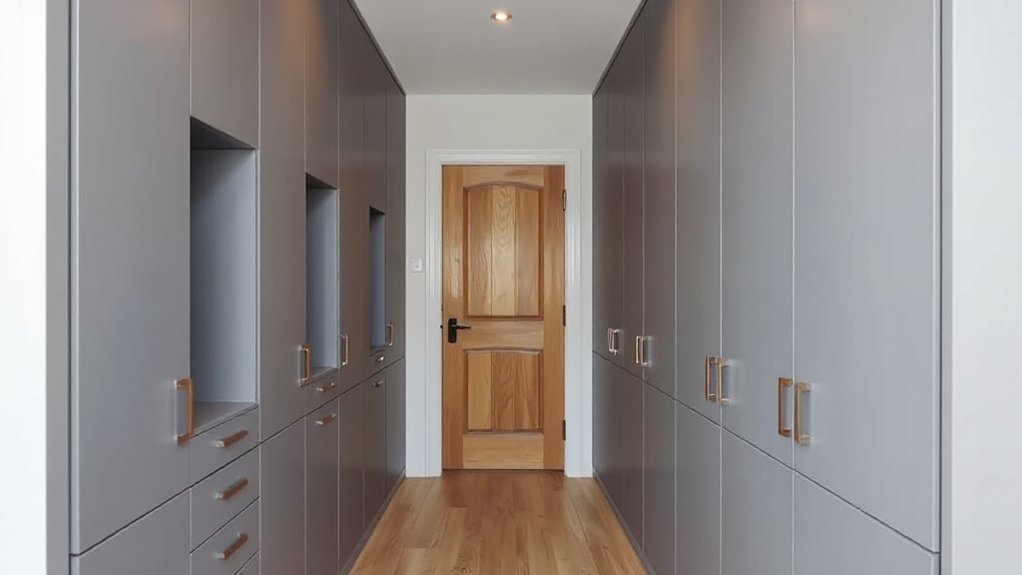
Wall-mounted units keep the doorway clear by freeing floor space while still delivering big storage. You’ll gain vertical versatility without crowding the hall. Choose slim, modular panels that align with wall studs, then anchor shelves at varying heights for gadgets, mail, and keys.
Floating shelves offer open, accessible storage that completes the look without bulk, while decorative baskets tucked beneath add discreet organization. Install a small rail or peg strip along the top rail for quick daily items, and keep cables tidy with routed channels.
Prioritize robust brackets and a finish that resists scuffs; matte tones conceal wear and blend with most UK hallways. Maintain a simple rhythm: one shelf, one basket, one purpose per zone, for effortless flow.
Corner Solutions for Odd Alcoves
Could an awkward alcove finally become a usable nook? Yes, with smart corner solutions tailored to odd shapes.
Start by measuring depth and height to guide shelving, desks, or concealed drawers that hug the wall. Opt for modular units you can stagger along the curve, avoiding wasted space behind doors or radiators.
For impact, mix vintage decor accents with modern frames, bringing warmth without bulk. Use a tall, slim cabinet flanked by open cubbies to display books, plants, or baskets.
Consider a corner desk that folds into a wall panel when not in use, preserving flow. Integrate plant placement by grouping low-maintenance greenery at varying heights, drawing the eye upward and softening angles.
Choose finishes that reflect light, enhancing the alcove’s perceived size.
Coat Hooks and Hangers That Stay Out of the Way
You’ll want slim coat hooks and wall-hung hangers that tuck neatly into a narrow entry.
Choose hardware that sits flush or mounts high to keep skirting space clear for foot traffic.
This keeps coats accessible yet unobtrusive as you move through the hallway.
Slim Coat Hooks
Looking for a neat way to free up hallway space? Slim coat hooks offer a compact solution that stays out of the way. You’ll mount low-profile hooks along a narrow wall or inside a wardrobe alcove, preserving floor area for mobility.
Choose three to five hooks in a straight line for balanced weight distribution and effortless reach. Opt for materials like brushed steel, matte black, or slim oak that resist daily knocks and blend with vintage decor ideas without shouting.
Use hooks with reinforced mounting plates to handle heavier jackets, scarves, or seasonal accessories. Position hooks at mid-chest height for easy access, and group items by function to reduce clutter.
This approach keeps entryways functional, tidy, and ready for quick seasonal updates.
Wall-Hung Hangers
Choose wall hung hangers with sturdy brackets and rounded hooks to reduce snagging on fabrics. Opt for slim profiles and minimal hardware to keep lines clean in tight corridors.
Pair them with space saving racks placed at waist to eye height for quick reach, ensuring you never bend awkwardly to locate coated garments.
Install staggered tiers or a small vertical rail so multiple items fit within a single wall plane. This setup delivers practical, precise organization while staying out of the way and preserving walkway width.
Narrow Shoe Storage That Stays Tidied
Shoe clutter in a tight entryway breaks the flow of the space, so choose narrow storage that performs like a built-in. You’ll want a system that hides chaos yet stays easy to use, maximizing every inch for shoe organization and clutter control.
Opt for staggered, vertical stacks or pull-out trays that keep pairings visible without widening the footprint. A soft-close lid or rotating rack prevents bangs and preserves calm in your hallway.
Choose materials that resist scuffing and wipe clean quickly, so maintenance stays quick and predictable.
- Effortless pair matching with visible trays
- Quiet, smooth action that reduces daily friction
- Slim, modular units you can expand over time
Hidden Storage Behind Doors and Panels
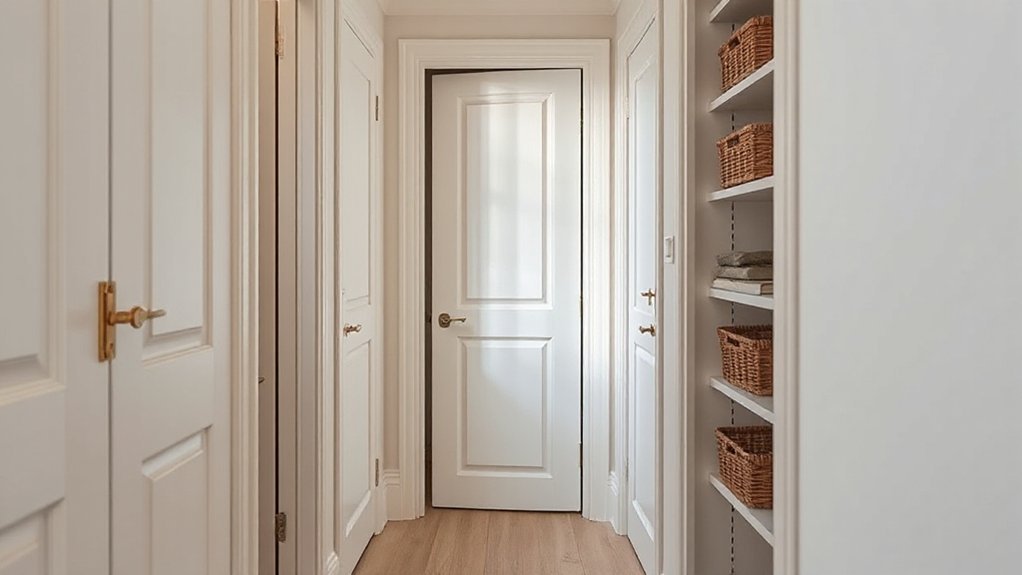
Start with hidden panels that swing or slide for quick access, keeping everyday items ready without exposing contents. Use concealed compartments behind wardrobe doors, pantry panels, or faux walls to create secondary storage for seasonal gear, cleaning supplies, or slim accessories.
Prioritize sturdy hinges, reliable catches, and interior dividers to prevent jumbling. Opt for uniform textures and recessed handles to maintain a seamless look.
Label discreetly inside lids or pockets so you don’t waste time searching. With thoughtful placements, you gain clever storage while preserving a tidy, breathable corridor.
Under-Stair and Knee-Wall Storage Ideas
Under-stair nooks and knee-wall spaces become prime real estate for practical storage, from pull-out bins to slim, built-in cabinets. You’ll explore under-stair organizing ideas, retrofit options for knee-wall storage, and compact cabinet solutions that fit narrow hallways without crowding them.
This discussion starts with precise layouts, smart hardware, and clean accessibility to keep your walkway open and your belongings organized.
Under-Stair Organizing Ideas
Wondering what hidden potential lies beneath your stairs? You can transform that space into smart, accessible storage without bulk. Start with pull-out drawers or hinged doors that tuck neatly behind a panel, keeping clutter out of sight yet easy to access.
Use color contrast to delineate compartments, so you see exactly where each item belongs. Add decorative accents—like a slim lamp, a small plant, or a patterned lining—to make the area feel intentional rather than forgotten.
Choose modular units that adapt as your needs shift, and label clearly for quick retrieval. Prioritize sturdy, moisture-resistant materials and smooth hardware to minimize jamming.
With thoughtful layout, you gain organized storage that enhances flow and reduces hallway bottlenecks.
- Efficient compartments that maximize every inch
- Visual cues using color contrast for quick access
- Decorative accents that elevate the under-stair space
Knee-Wall Storage Solutions
Knee-wall storage takes the same smart efficiency you liked under the stairs and moves it into the narrow, often awkward space along knee walls. You’ll carve out practical, high-impact storage by using low-profile cabinetry, hinged panels, and pull-out bins that fit the contour of the wall.
Design with accessibility in mind: shallow drawers for small items, modular units for seasonal gear, and labeled compartments for quick retrieval. Emphasize knee wall organization by grouping items by frequency of use and by size, so you don’t dredge through clutter.
The trick is to maximize vertical and horizontal space without crowding circulation. Use space-saving niches for inserts, hooks, or slim cubbies, ensuring every inch serves a purpose and remains easy to reach.
Narrow Hallway Cabinets
A narrow hallway can hide big storage potential, especially with cabinets that fit under stairs and along knee walls. You’ll tailor under-stair units to conceal seasonal decorations while preserving floor space. Knee-wall cabinetry can hold everyday essentials without crowding traffic flow.
Use shallow drawers for small items and pull-out trays for quick access to vintage decor. Finish with light, reflective surfaces to keep the space feeling open, and choose doors that blend with wall color to maintain a seamless line. Smart hardware, like soft-close hinges, adds practicality and longevity.
Pair these cabinets with labeled interiors so you find items fast and keep clutter away. Your hallway becomes a tidy, functional hub for daily living.
- Efficient under-stair storage that houses seasonal decorations without bulk
- Knee-wall cabinets that conceal odds and ends with a clean, vintage finish
- Soft-close, labeled compartments for quick access and organized flow
Multipurpose Furniture for Slim Corridors
If you want to maximize function in narrow hallways, multipurpose furniture is your best ally: a bench that folds into a desk, a console that doubles as a storage cabinet, and a bed frame with built-in drawers all reduce clutter without stealing space.
Select pieces with clean lines and compact footprints to preserve traffic flow. Choose modular modules that can shift from seating to work surface in moments, ensuring you adapt to varied daily needs.
Prioritize concealed storage to keep surfaces clear, and integrate decorative accents to add personality without bulk.
Coordinate colour schemes across pieces to create visual continuity, making the corridor feel longer.
Measure doorways and turning radii first, then test access, so every item fits as intended.
Lighting Tricks to Make Hallways Feel Bigger
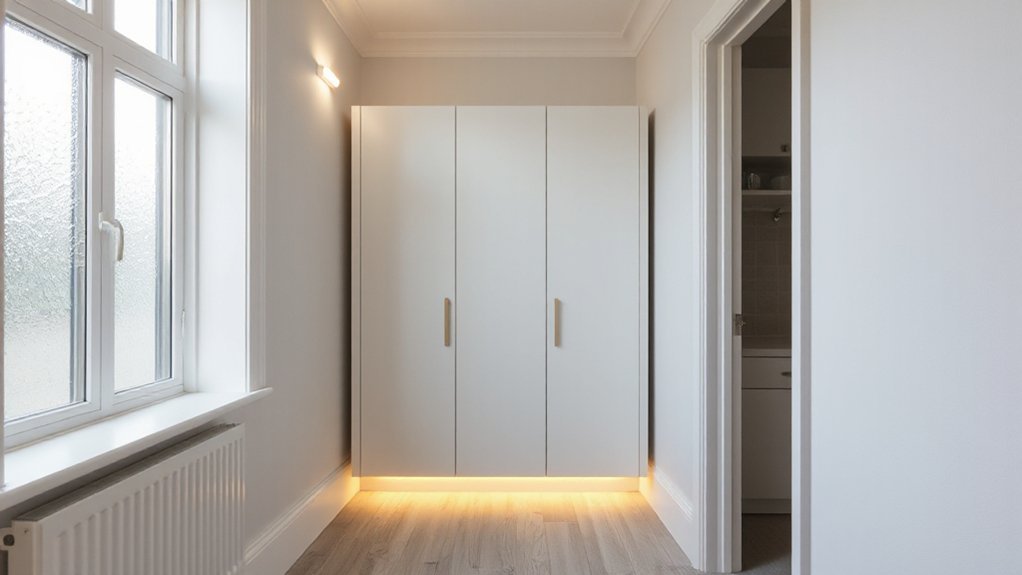
You’ll boost hallways with strategic shelf lighting that casts even, low-level illumination, reducing shadows and making the space feel wider. Pair this with light-reflecting accessories—mirror finishes, glossy surfaces, and bright textiles—to bounce more light without crowding the footprint.
Start by outlining a simple lighting plan that highlights key nooks and aligns with your storage goals for a perceptibly larger corridor.
Strategic Shelf Lighting
- Elevate shelves with continuous LED runs for seamless coverage
- Combine warm color temperature with dimmable controls for mood and clarity
- Zone lighting by shelf pairings to emphasize function over form
Light-Reflecting Accessories
Bright hallways feel roomier when you mirror light with reflective accessories. You’ll transform narrow paths by using Reflective surfaces strategically: gloss-painted walls, glass panels, metallic frames, and mirrored backs on slim cabinets.
Place mirrors opposite lighting to bounce daylight or lamp glow, doubling perceived depth without widening your footprint. Choose luminous accents—chrome, brass, or brushed aluminum—that catch and scatter illumination along the corridor, guiding sightlines forward.
Avoid clutter; select two to three reflective items per wall to maintain balance. Incorporate translucent or high-gloss surfaces on doors, skirting boards, and storage fronts to reflect ambient light softly.
For flexibility, mount adjustable sconces or clip-on LEDs near reflective elements, enabling you to tweak brightness and mood as you move through the space.
Material and Finish Choices for Busy UK Homes
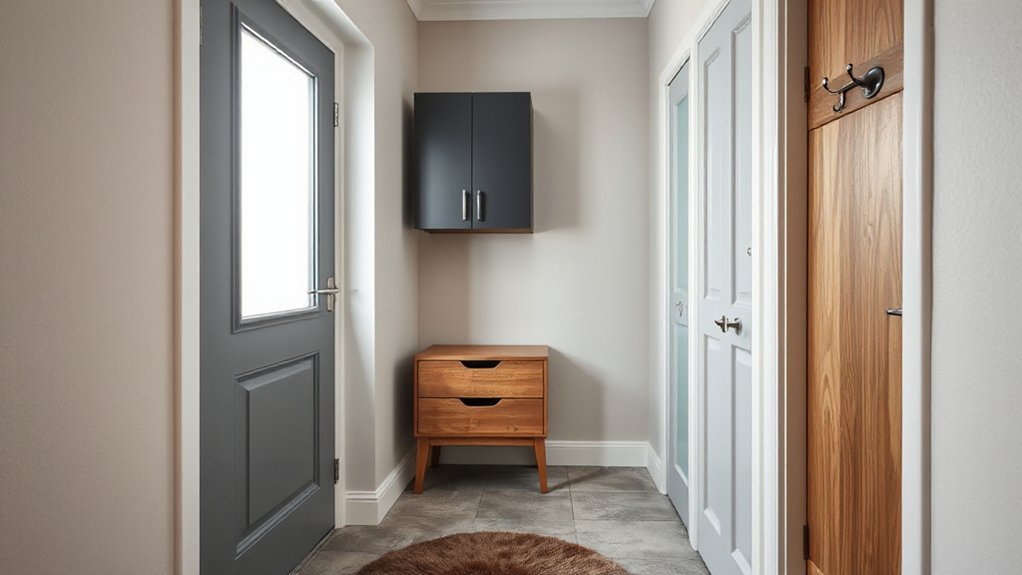
In busy UK homes, choosing materials and finishes that withstand daily wear while staying practical and stylish matters more than ever. You’ll balance resilience with look, selecting surfaces that shrug off scuffs and fingerprints while keeping hallways bright.
Prioritize material durability without sacrificing ease of cleaning, and lean into finish styles that hide wear while reflecting light. Choose low-maintenance laminates, treated timber, or porcelain for robust performance, then pair with matte, satin, or semi-gloss sheens to control glare and fingerprints.
Align colors with traffic patterns to avoid visible wear. Practical testing: scratch, stain, and abrasion resistance matter as much as tone and texture.
- Enduring textures that feel premium yet forgiving
- Light-reflecting finishes to brighten narrow space
- Color choices that disguise everyday scrapes
Budget Storage Ideas Under £100
You don’t need to spend a fortune to add practical storage in a tight hallway. Under £100, you can craft smart shelving that multiplies vertical space without crowding the floor. Look for slim, wall-mounted units with adjustable shelves to fit odd gaps and corners.
Stackable baskets or fabric bins keep odds and ends neat, yet accessible, and pair them with a slim hall console that doubles as a charging station. Consider over-the-door organizers for coats, bags, or gloves to save floor space.
Use modular, hideaway hooks inside a shallow cabinet to create grab-and-go storage near the entrance. Choose durable finishes in neutral tones for a calm, cohesive look.
These stylish solutions prove budget doesn’t mean compromise on function.
Mid-Range Storage Options for UK Interiors
Mid-range storage solutions strike a balance between price and practicality, offering sturdier builds and smarter layouts than budget options without reaching high-end designer tiers. You’ll find products with solid shelves, modular components, and integrated lighting that feel premium without the cost. Think compact wardrobes, multi-drawer chests, and wall-mounted units that maximize depth in tight hallways.
Materials should be durable, like veneered boards or powder-coated metal, with thoughtful cable management and soft-close hardware. Pair these pieces with vintage accessories and seasonal decor to add character without clutter. Aim for cohesive finishes that echo your room’s palette, ensuring easy progression between storage zones and living areas.
This approach delivers function, longevity, and a polished look.
- Discover modular systems that adapt as you move
- Opt for concealed storage to reduce visual clutter
- Include seasonal decor in rotation for fresh appeal
DIY-Friendly Upcycled Storage Projects
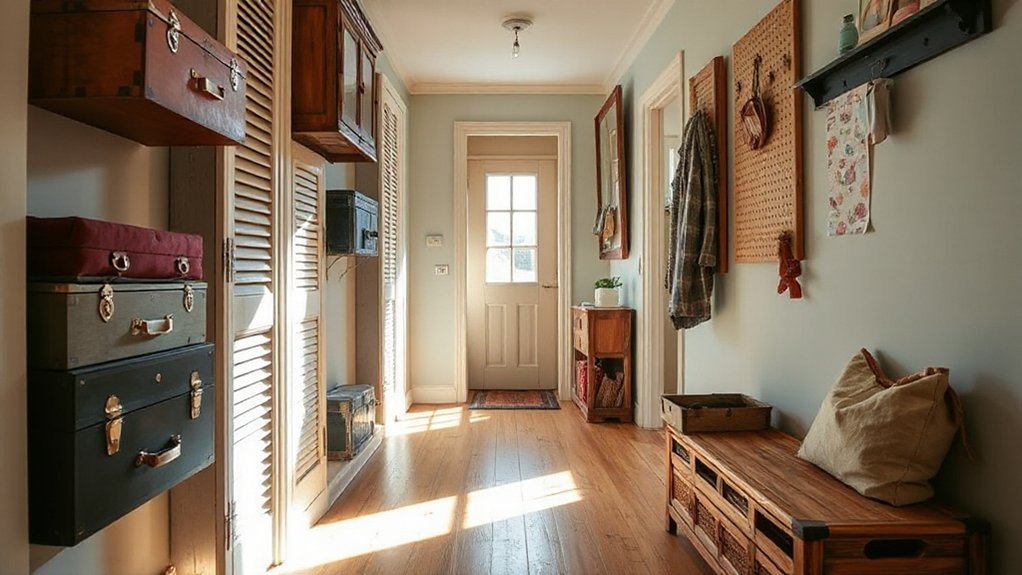
Turn your space into a clever storage hub with upcycled wall storage that fits tight hallways. Use narrow hallway hacks like mounting lightweight shelves at varying heights and creating DIY vertical shelving that keeps floor space open.
This approach blends practicality with innovation, targeting every wall for organized, accessible storage without bulk.
Upcycled Wall Storage
Maximize narrow hallways with upcycled wall storage that’s practical, affordable, and easy to install. You’ll convert vertical space into high-impact storage using simple, DIY-friendly methods. Mount lightweight shelves, shallow cubbies, or a rail system at eye level to keep foot traffic clear.
Incorporate vintage crates and repurposed jars for character and function, without sacrificing durability. Secure fasteners appropriate to your wall type, and finish with a wipeable seal to handle daily use.
Design emphasizes modularity so you can adjust layout as needs shift. Keep cables and cords hidden behind, not in front, for a clean, breathable corridor.
This approach blends practicality with creativity, giving you accessible storage that feels intentional and simple to maintain.
- Craftable charm that transforms mood and flow
- Clear organization with visual appeal
- Reusable aesthetics that stay tidy and durable
Narrow Hallway Hacks
Upcycled storage hooks, rails, and shallow wall nests are perfect for narrow halls where every inch counts. You’ll repurpose sturdy strips and salvaged brackets to create ultra-clean, low-profile storage that’s easy to install.
Start with a slim rail near the door for keys and daily essentials, then add shallow, staggered nests at waist height for magazines, mail, and small decor. Use hooks off the main path for bags and coats without crowding the floor.
Align pieces with a cohesive color or finish to read like an art gallery, not clutter. Consider Feng shui by spacing items evenly, leaving negative space, and placing frequently used objects within arm’s reach.
Label zones for quick access, and test clearance with your daily motions to preserve flow.
DIY Vertical Shelving
If you’re chasing vertical storage that doesn’t overwhelm a tight space, DIY vertical shelving is the answer: it stacks capacity without expanding footprints. You’ll repurpose materials into sturdy units that fit awkward corners and alcoves, using floating shelves for clean lines and easy mid-height access.
Pair shelves with decorative baskets to conceal clutter while keeping essentials within reach. Build modular stacks that adapt as needs shift, preserving floor area and airflow.
Precision cuts, level mounting, and thoughtful spacing ensure stability and style. This approach delivers practical storage without bulk, tapping into upcycled charm that suits narrow hallways and busy households.
- Quick swaps that transform a wall into a clean, organized zone
- Hidden trays and baskets that keep clutter out of sight
- Upcycled materials with a minimal footprint and maximum impact
Ventilation and Safety in Tight Hallways
In tight hallways, proper ventilation and clear safety measures are essential to prevent heat buildup, odors, and hazardous air stagnation. You’ll optimize airflow circulation by placing vents discreetly along walls, using low-profile diffusers, and avoiding blockages near stored goods.
Choose lightweight, breathable storage areas that don’t trap heat, and schedule periodic room refreshes to maintain air quality.
Implement simple person-centric safety checks: clear paths, visible exit routes, and easy access to extinguishers. Train yourself to spot signs of overheating, such as warped boxes or musty smells, and respond promptly.
Prioritize fire safety with a compact smoke detector placement plan and a clear, unobstructed corridor width. Regular audits keep systems active, ensuring compliance without compromising space efficiency.
Maintaining Accessibility in Storage-Forward Hallways
Keep pathways clear to prevent trips and jams, using unobstructed 36-inch circulation space as your baseline.
Opt for compact, easy-to-reach units that don’t crowd doors or exits, so every item remains accessible.
Plan your layout around a simple rule: clear paths first, then place storage, with adjustable zones to support Clear Pathways Matter, Compact Units Fit, and Accessible Layout Planning.
Clear Pathways Matter
Clearing a path through storage-forward hallways isn’t optional—it’s essential for safe, efficient access. You’ll keep traffic flowing and reduce trips, bending, or collisions. Clear routes boost quick retrieval and minimize damage to items and walls.
Use clear sightlines, so you spot hazards before they become problems. Maintain accessibility by grouping frequently used items near the door, not deep into the stash. Integrate decorative accents and cohesive Colour schemes to make pathways feel calm, not cluttered.
- Prioritize wide, unobstructed corridors for everyday use
- Label zones clearly and keep cords, tools, and bags off the floor
- Use modular, open-backed storage to preserve sightlines while staying organized
Compact Units Fit
Compact units can keep storage tight without sacrificing access. In narrow hallways, you’ll benefit from compact furniture that tucks in beside doors and under stairs, leaving clear pathways for daily traffic. Choose modular pieces that align with wall contours, not bulky footprints that crowd every inch.
Prioritize vertical storage: tall, slender cabinets, wall-mounted shelves, and corner units maximize capacity without widening your route. Opt for pull-out mechanisms and soft-close fronts to reduce noise and hassle during busy mornings.
Use labels and a simple tagging system to keep items reachable without digging. Think multi-use surfaces—benches with hidden bins or a console with built‑in drawers—to minimize clutter.
Space saving designs keep accessibility intact while expanding what a hallway can hold.
Accessible Layout Planning
- You feel empowered by a space that respects diverse needs and sparks confidence
- You’ll notice fewer friction points, smoother moves, and calmer routines
- Accessibility becomes a measurable, integral design outcome
Real-World UK Hallway Layouts: Before and After
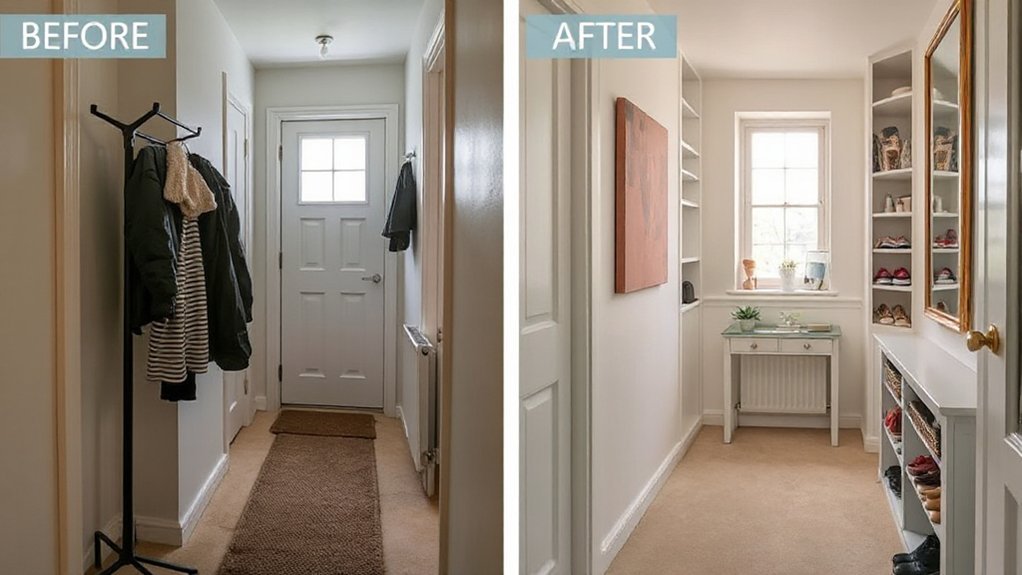
Real-world UK hallways often reveal how space constraints shape storage decisions, and before-and-after layouts highlight the impact of smart design. You’ll notice tight corridors prompting lean solutions: vertical storage, slim shoe cabinets, and wall-mounted hooks that keep traffic clear.
In before shots, clutter bottlenecks become obvious, with doors swinging into open space and lighting casting harsh shadows. After layouts, you’ll see clear pathways, recessed lighting, and integrated fixtures that maximize width without feeling cramped.
Hallway lighting becomes a tool for perception, brighter zones making walls recede and doors easier to access. Door hardware moves from bulky to streamlined, reducing snag points and improving flow.
The result is practical, scalable, and ready for everyday use, not a showroom ideal. Your own corridor can transform with intentional positioning and thoughtful finishes.
Choosing Storage Plans for Tenancy vs Long-Term Homes
Choosing storage plans for tenancy versus long-term homes means matching what you own to how you’ll live there. You’ll balance cost, space, and access, aiming for flexibility without clutter.
For tenancy, prioritize modular, movable pieces and compact boxes that fit tight corridors; emphasize quick turnover and easy reconfiguration.
For long-term homes, favor durable builds, smarter material choices, and systems that endure daily use.
Consider Tenant restrictions and building rules when selecting units, labels, and access times.
Plan for longevity with durable hardware and stackable options that resist wear, reducing future replacements.
- You feel relieved when plans align with your daily rhythm and space
- You gain confidence from durable, adaptable storage that stays neat
- You save energy and time by choosing simple, compliant setups
Maintenance Tips to Keep Narrow Storage Snag-Free
To keep narrow storage snag-free, start with a simple routine: inspect hardware weekly, lubricate slides, and tighten screws before they loosen into jams. You’ll reduce friction points that derail smooth operation and extend component life.
Create a concise maintenance cadence: quick daily wipe-downs to remove dust, weekly checks for alignment, and monthly torque verification to prevent drift. Prioritize high-use zones to minimize snag risks, and label all fasteners so you don’t guess during reassembly.
Implement cleaning schedules that double as inspection checkpoints, noting wear or corrosion early. Address pest prevention by sealing gaps and keeping pantry or utility areas dry, as moisture invites pests that compromise rails and trackers.
Document actions and outcomes, then iterate to keep performance predictable and snag-free.
Frequently Asked Questions
How Much Clearance Is Required for a New Doorway After Installation?
You’ll need at least 1,000 mm of doorway clearance if you’re standard doors, but check local clearance standards for niche layouts; verify doorway width and clearance standards align with your passage needs and safety codes, avoiding tight turns.
Are There Weight Limits for Wall-Mounted Units in Narrow Halls?
Yes, there are weight limits for wall-mounted units in narrow halls. Check the unit’s weight capacity and guarantee proper wall reinforcement before installation; use studs, anchors, and maybe a backing rail to distribute loads evenly.
Can You Retrofit Hidden Storage Without Repainting Walls?
Yes, you can retrofit concealed compartments and sliding doors without repainting walls; choose reversible panels, magnetic catches, and slim track hardware, then install carefully to minimize disturbance while preserving aesthetics and accessibility in tight hallways.
What’s the Best Hinge Type for Tight Door Swings?
You should choose concealed European hinges for tight door swings; they minimize intrusion and offer quick adjustability. Prioritize hinge durability and guarantee precise hinge installation tips, fine-tuning clearance, mounting height, and soft-close options for smooth, space-efficient operation.
Do Narrow Halls Affect Fire and Safety Exit Routes?
You rise like Icarus at dawn: narrow halls do affect fire safety and exit routes, so you plan clear paths, labeled egress, and unobstructed doors; you’ll prioritize signage, lighting, and compartmentalization for dependable exit routes.
Conclusion
You’ve mapped the space, and that’s half your win. With slimline and wall-mounted options, you’ll reclaim floor area without sacrificing access or airflow. Think modular, adjustable, and ready for tenancy twists or long stays. Measure once, plan twice, then install once. Don’t overlook corners and door clearances—small tweaks compound into big gains. Your hallway becomes a smart, quiet organizer, not a cluttered bottleneck. In short: small footprint, big function—the art of patient efficiency. The takeaway: space sings when you listen.
About the Author