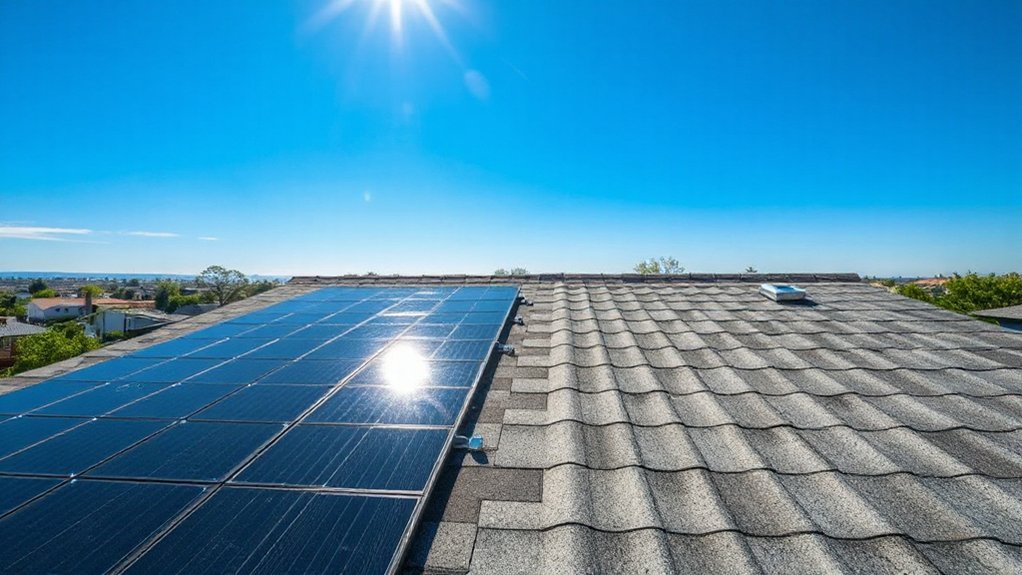
Like a verdict tucked behind a roofline, your choice between solar panels and solar tiles hinges on aesthetics, budget, and installation practicality. You’ll weigh efficiency, cost, and long-term value against style and roof compatibility, then decide what fits your home and goals. But the trade-offs aren’t trivial, and the best path isn’t obvious at first glance. You’ll want a clear framework to compare performance, durability, and incentives before committing.
Key Takeaways
- Compare upfront costs: solar tiles usually cost more than panels, but incentives can offset expenses; analyze total life-cycle value.
- Aesthetics and integration: tiles offer a seamless roof look, while panels are more modular and easier to customize.
- Installation and durability: panels are lighter with simpler installs; tiles require specialized mounting and sealing for longevity.
- Performance and monitoring: panels and tiles differ in efficiency, shading impact, and system design; monitor performance via dashboards.
- Long-term value and maintenance: both require upkeep and warranties; tile systems may have higher maintenance needs but can boost resale appeal.
Solar Panels vs. Solar Tiles: Which Fits Your Roof and Budget?
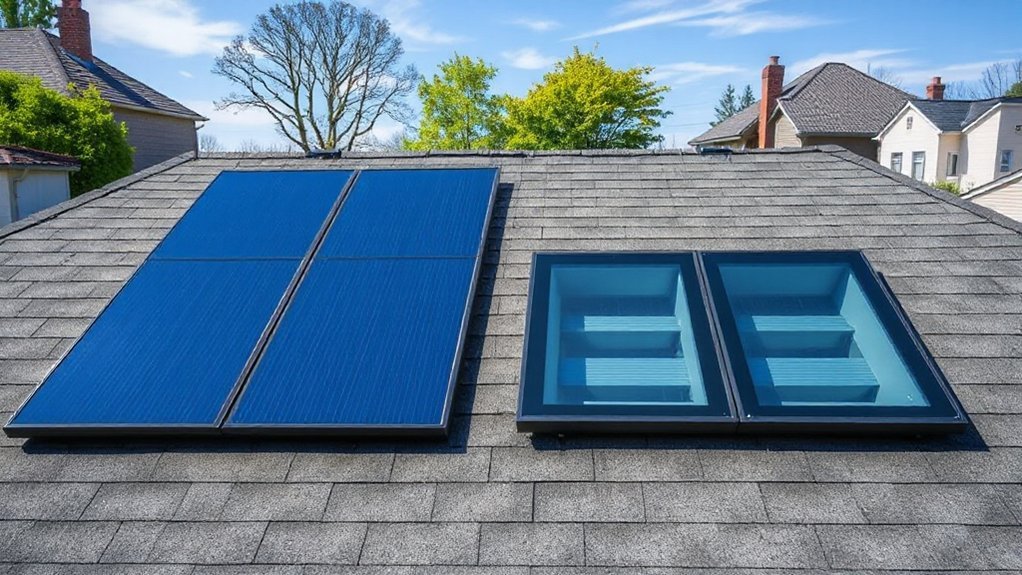
When choosing between solar panels and solar tiles, assess your roof type, budget, and long-term goals to determine which option delivers the best balance of efficiency, aesthetics, and value.
You weigh installation complexity, system efficiency, and maintenance needs against upfront costs and long-term savings. Solar panels deliver established performance with modular replacement and flexible financing—benefits you’ll appreciate on roofs with ample exposure and scalable wattage.
Solar tiles offer integrated aesthetics that can reduce visual impact, but they often come with higher material costs and specialized installation.
In either path, evaluate material durability to withstand climate, UV exposure, and weather cycles.
Prioritize aesthetic integration to preserve home lines, while ensuring you meet load, warranty, and performance expectations for a durable, cost-effective solution.
Criteria for Choosing: What Matters to You
Choosing between solar panels and solar tiles hinges on what you value most: cost dynamics, aesthetic impact, and long-term performance. You’ll evaluate initial install costs, expected maintenance, and potential energy yield, then weigh payback timelines and financing options.
Material durability matters: select systems rated for load, weather resistance, and warranty coverage, aligning with your climate and roof structure.
Aesthetic integration drives compatibility with your home’s design and roofing materials, influencing installation constraints and future resale appeal.
Reliability and performance guarantees should be scrutinized, including degradation rates, module efficiency, and inverter lifespan.
Consider system scalability and compatibility with existing electrical infrastructure.
Finally, assess serviceability, local support, and installation timelines to ensure your choice remains practical through its entire life.
Aesthetics and Curb Appeal: Visual Impact on Your Home
Aesthetics and curb appeal play a pivotal role in how solar installations integrate with your home’s character. You consider how roof integration affects overall lines, materials, and perceived value, whether you choose panels or tiles. Visual harmony guides your selection toward forms that complement existing architecture, color palettes, and textures while maintaining roof functionality.
You’ll evaluate edge treatments, mounting depth, and shading risk to guarantee the system remains discreet yet effective. The goal is a cohesive silhouette that enhances rather than distracts from your façade. Decisions should balance performance with style, prioritizing durable finishes and consistent alignment across panels or tiles.
Roof integration strategies and visual harmony standards drive a confident, design-conscious choice.
- Roof integration considerations
- Visual harmony with existing materials
- Edge treatment and mounting depth
- Color, texture, and silhouette alignment
- Long-term curb appeal goals
Real-Roof Performance: Efficiency in Everyday Conditions
Real-world efficiency depends on how modules perform under typical roof conditions, not just ideal test scenarios.
You’ll compare real-roof data on panel and tile systems, considering shading, temperature, and installation quality that affect everyday output.
This discussion frames how daily performance is influenced by practical factors and what that means for your long-term energy results.
Real-World Efficiency Insights
Real-world efficiency tracks how panels perform under everyday conditions, not just lab specs. You’ll measure true output by factoring shading, temperature, and angle, then compare to ideal results.
In practice, real-world data shows efficiency drifts modestly due to weather and installation quality, yet modern systems sustain strong yields. You evaluate this through system-level performance, inverter efficiency, and string design, not just module rating.
Material durability and aesthetic versatility influence sustained performance and installer confidence, especially in harsh climates or mixed-roof scenarios.
Expect minor degradation over years, with warranties covering typical mid-life losses. Use performance dashboards to flag anomalies early, ensuring predictable energy gains.
Your choice should balance reliability, visual impact, and long-term return on investment. Precision monitoring closes the loop on expected versus actual efficiency.
Everyday Performance Factors
On real-roof conditions, everyday performance reflects how shading, temperature, orientation, and soiling interact with system design to set actual output. You’ll assess panel or tile layouts, module mismatch, and string sizing to minimize losses under typical conditions.
Temperature coefficients matter; high-heat days reduce efficiency, while cool mornings may boost early output.
Shading from vents, chimneys, or nearby foliage can cause disproportionate output drops if not mitigated by bypass diodes or microinverters.
Cleaning frequency and surface texture influence soiling losses, especially in dusty environments.
Material innovation drives higher tolerance to soiling and better low-irradiance response, while energy storage smooths variability, enabling you to store excess for peak demand.
Integrating storage and durable materials yields more reliable, real-world performance.
Durability and Warranties: Longevity You Can Trust
Durability and warranties for solar panels and solar tiles directly impact long-term performance and total cost of ownership. You need clear reliability metrics to compare options, since weather resistance and material quality drive maintenance needs and replacement timing.
Warranties should cover performance (power output) and physical integrity, with transparent terms on labor and installation. Panels commonly offer 25-year performance guarantees; tiles may provide similar durations but with different service models.
Consider degradation rates, thermal cycling tolerance, and resistance to moisture ingress. Choose products with proven field data and reputable certifications.
Understand service response times and transferability when you sell or rehome the system. Then, verify maintenance requirements align with your site conditions and budget.
- Weather resistance
- Material quality
- Degradation rate
- Warranty scope
- Serviceability and transferability
Installation Realities: Compatibility and Process
Setting up either solar panels or solar tiles requires careful alignment with your site conditions and system design. You’ll assess roof structure, orientation, and shading to determine mounting approach and array layout.
Compatibility hinges on existing roof types, ballast vs. penetrating mounts, and flashing details, plus local code adherence for electrical and fire-safety standards. Expect structural reinforcement considerations if retrofitting older roofs or upgrading to heavier tile configurations.
Ventilation paths must remain unobstructed, so plan for continuous roof ventilation where required. Wiring integration, inverter placement, and monitoring connections shape the installation timeline and access for maintenance.
Coordination with roofing trades minimizes leaks and reaches compliance for wind and seismic criteria. In all cases, document tolerances and engage qualified installers to guarantee durable performance and safe operation.
Cost, Incentives, and Net Value Over Time
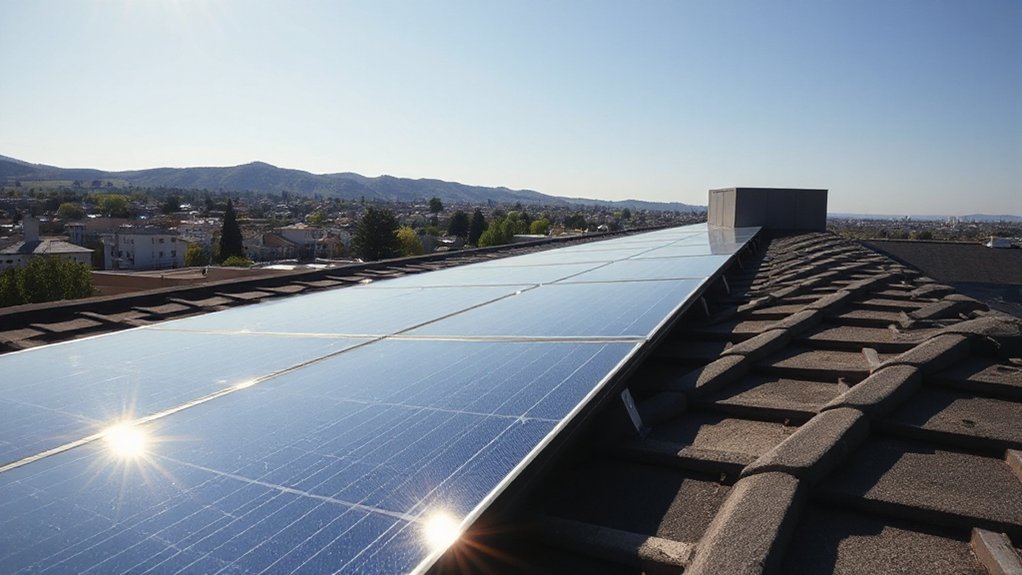
You’ll compare upfront costs and long-term value between panels and tiles, focusing on installation price, maintenance, and lifecycle costs.
We’ll break down incentives over time, highlighting how rebates, tax credits, and utility programs vary by system type and region.
Over the long horizon, we’ll quantify net value by factoring energy yield, degradation, and resale or replacement considerations.
Cost Comparison Overview
Cost considerations are where solar panels and solar tiles diverge most clearly: upfront costs, long-term incentives, and net value over time determine total ownership. You’ll compare material durability, installation complexity, and aesthetic integration to gauge long-term performance and maintenance needs.
Solar tiles often carry higher initial costs but can offer superior aesthetic integration and potentially lower incremental maintenance if integrated with roofing membranes. Panels typically deliver lower upfront prices and broader financing options, yet installation simplicity may reduce labor risk.
Net value hinges on performance degradation, warranty terms, and eligible incentives. Consider system lifespan, replacement cycles, and potential roof-related costs. Your choice should balance first-year expenditure with projected energy savings and resale value.
- Upfront cost distinctions and financing options
- Material durability implications over time
- Aesthetic integration impact on property value
- Maintenance, warranty, and degradation rates
- Long-term net value and payback timelines
Incentives Timeline Breakdown
Incentives shape the true cost and value trajectory of solar investments, aligning upfront outlays with longer-term savings. You’ll see how tax credits, rebates, and performance incentives compress payback periods, while depreciation rules affect early cash flow.
The timeline matters: initial costs drop when incentives align with installation milestones, then stabilize as you accrue energy savings.
When evaluating environmental impact, incentives may bias choices toward faster payback rather than lifecycle optimization, so verify the broader environmental credentials of the chosen technology.
Manufacturing process efficiency and supply chain resilience influence long-term value, since tighter programs can shift supplier dynamics and pricing.
Track policy changes predictively, estimate potential reductions, and compare net costs across scenarios to avoid surprises in subsequent years.
Net Value Over Time
- Upfront vs. long-term cash flow implications
- Incentive timing and impact on payback
- Energy storage’s effect on value
- Grid integration and tariff optimization
- Sensitivity assumptions and risk factors
Maintenance and Long-Term Resilience
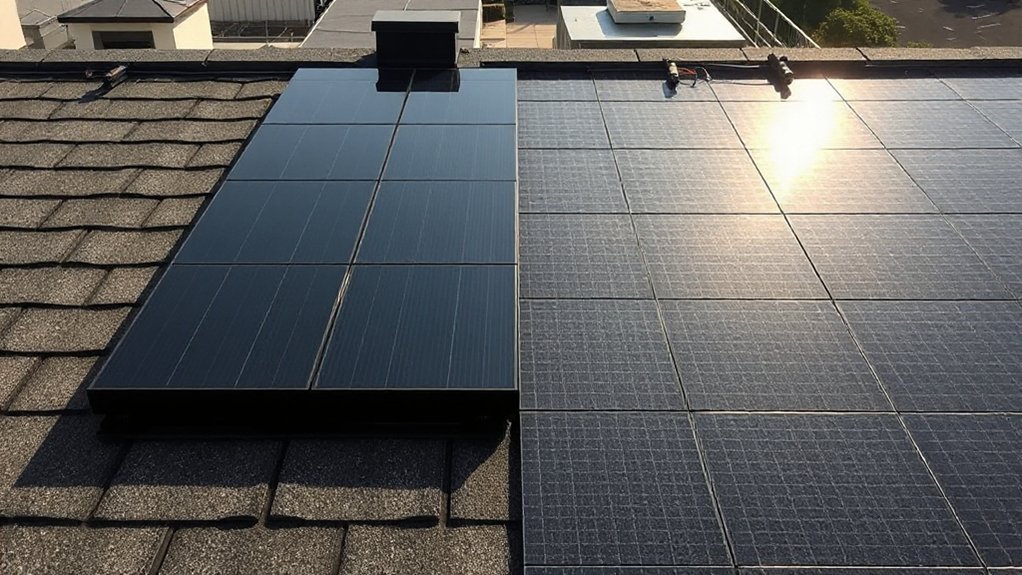
For panels, guarantee robust mounting, corrosion resistance, and effective sealing to prevent leaks and micro-cracking. Tiles require watertight integration with roofing, reliable sealants, and wind uplift resistance to minimize debris intrusion and panel displacement.
You’ll benefit from easy access for inspections and straightforward cleaning routines, since dirt, dust, and shading losses accumulate if neglected. Routine checks of electrical connections, junction boxes, and inverters prevent gradual efficiency decay.
Consider warranty coverage as a baseline: compare duration, coverage scope, and conditions for labor versus parts.
Predictable maintenance reduces downtime and optimizes return on investment, while durable components lower replacement frequency.
In both options, proactive planning sustains performance, reliability, and energy yield over the system’s life.
Frequently Asked Questions
How Do Solar Tiles Affect Roof Warranty Coverage Compared to Panels?
Solar tiles generally maintain warranty coverage and roof protection, but specifics vary by manufacturer and installer.
Panels often have separate PV and roof warranties; tiles may combine these, reducing gaps in coverage.
Check if the roof deck is included and whether penetrations are warrantied.
You’ll want explicit terms on exclusions, maintenance, and hail or wind events.
Confirm transferability and alignment with local codes.
This matters for long‑term roof protection and overall warranty coverage.
Are Solar Tiles More Resistant to Weather and Hail Than Panels?
Solar tiles offer better weather resilience and hail resistance than panels. You’ll notice fewer micro-cracks and less impact damage because tiles distribute force more evenly and are integrated with the roof structure.
Weather resilience is enhanced by their seam-tight design, reducing water intrusion risk. You’ll want to verify hail performance ratings and warranty specifics for your climate, but tiles generally stand up better to severe weather while maintaining energy output.
Can Roof Orientation and Shading Influence Tile Performance Differently From Panels?
Yes, roof orientation and shading influence tile performance differently from panels. You should consider roof angle and shading impact for tiles, as tiles can trap more shade refraction and heat at certain angles, altering efficiency.
With panels, airflow and frame mounting mitigate some effects. You’ll optimize by aligning tiles to maximize sun exposure during peak hours, while accounting for seasonal shading.
In practice, measure shading patterns, adjust orientation, and verify performance projections.
Do Solar Tiles Require Specialized Roofers or Higher Installation Costs?
Tiles can, sometimes, require specialized roofers, and installation costs tend to be higher than panels. You’ll encounter steeper labor time and precise flashing needs, which raise expenses.
Consider material durability and aesthetic appeal, since durable tiles can offset some price by longevity. However, aesthetic demands may impact crew choice and warranties.
Make certain your roofer has solar tile experience and confirm compatibility with your roof type to avoid installation deltas and warranty issues.
Which Option Has Better Resale Value for a Classic or Historic Home?
Panels or tiles—pick practical resale potential for your historic home: panels offer better retrofitting resale value, while tiles preserve historical authenticity longer.
You’ll boost appeal by prioritizing historical authenticity and architectural compatibility in your choice and installation. Opt for high‑efficiency options that blend with the roofline, and document approvals for compliance.
You’ll secure market value by maintaining stylistic integrity, ensuring installer expertise, and showcasing energy improvements that respect the building’s character and era.
Conclusion
Choose panels for cost efficiency, easy install, and high energy output; choose tiles for seamless aesthetics and roof integrity. Compare aesthetics, performance, and durability; compare installation complexity, warranty terms, and maintenance needs. Weigh upfront costs against incentives and long-term value; weigh real-roof performance against climatic conditions and shading; weigh upgrades against resale impact and curb appeal. Decide based on priorities, balance between budget and design, balance between resilience and compatibility, balance between simplicity and integration. Prioritize informed, strategic, value-driven roofing choices.
About the Author