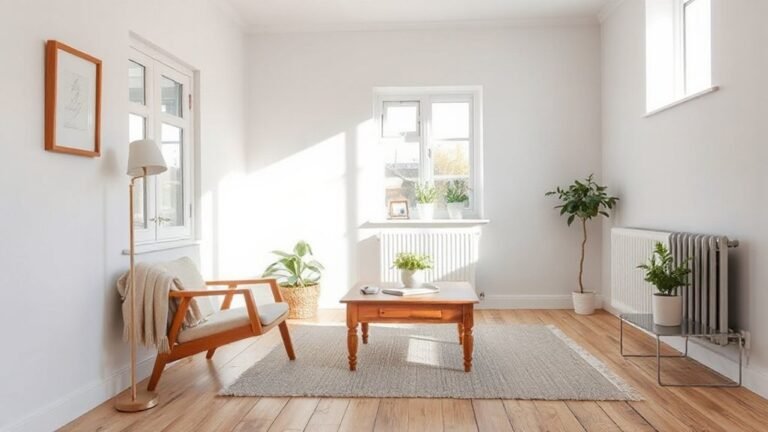
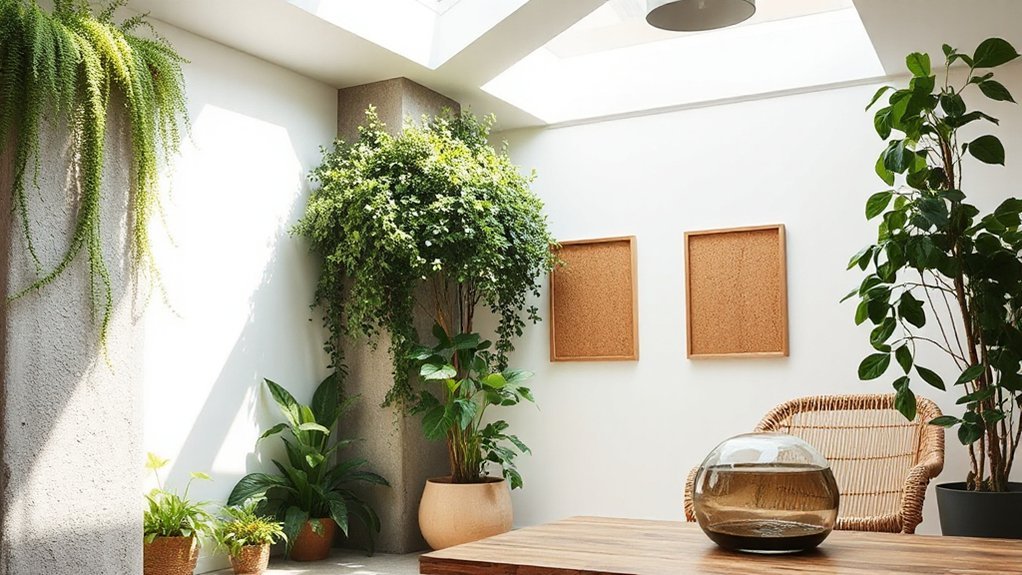
Biophilic design lets you blend nature with daily living by layering greenery, daylight, and texture into practical layouts. You’ll save space with vertical gardens, modular planters, and hidden storage, while skylights and sun-path alignment boost natural brightness. Add calm with gentle water features and tactile materials that feel alive. Start small with a green corner or wall, then scale up as you refine routines—there’s more to optimize than you’d expect, and it’s worth the effort.
Key Takeaways
- Integrate direct nature: views, greenery, and natural materials to boost well-being and focus.
- Use vertical and modular planting: wall planters, green walls, and stacking planters for space efficiency.
- Optimize natural light: daylight-forward layouts, skylights, and shading to reduce artificial lighting needs.
- Implement hidden storage: dual-purpose furniture and concealed compartments to keep a clean, nature-focused environment.
- Schedule seasonal care: biweekly maintenance, phased propagation, and habit-based routines for healthy indoor gardens.
Biophilic Design: What It Is and Why It Works
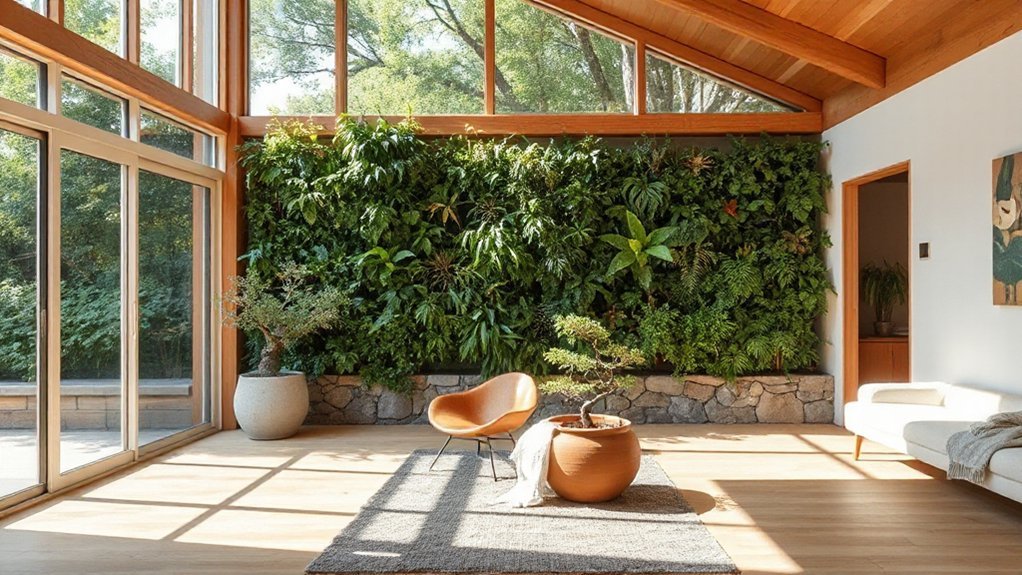
Biophilic design is a practical approach that connects people with nature to boost well-being, focus, and creativity. You aim to understand how it works, not just what it looks like.
At its core, biophilic design principles guide you to create spaces that feel alive, using light, texture, and spatial variety to cue natural responses. You’ll balance direct nature, like greenery and views, with indirect cues such as natural materials, organic patterns, and color palettes drawn from the outdoors.
You assess how daily routines interact with these elements, tuning layouts, ventilation, and acoustics to support calm and alert states. Nature integration techniques become tools you apply to improve task performance, stress reduction, and rapid recovery after focus-intensive work.
Planting Without Clutter: Smart, Space-Saving Techniques
You’ll explore space-saving planting with compact containers and modular systems that maximize every square inch.
Consider vertical green solutions like wall planters and trellises that turn unused surfaces into living texture, while hidden storage techniques keep tools and soils out of sight.
Together, these approaches help you maintain a calm, clutter-free environment without sacrificing greenery or accessibility.
Space-Saving Planting
There are plenty of smart ways to fit greenery into tight spaces without clutter. You’ll maximize impact with compact tools that fit flush against walls and corners, creating lush visuals without crowding rooms. Choose modular planters that snap together, letting you reconfigure as needs change.
Favor container gardens that double as sculpture, using shallow trays for cascading succulents and low-profile shelves for miniature ecosystems. Optimize light by placing plants where they’ll receive bright, indirect exposure, and group species with similar water needs to simplify care. Label each cluster so maintenance stays quick and precise.
Maintain airiness with negative space between groups, and use vertical trellises to elevate interest.
- Wall-mounted succulent arrangements for gravity-defying appeal
- Corner shelves hosting staggered, miniature ecosystems
- Magnetic or modular pots that hug surfaces
- Slim, multi-tiered trays for cascading greenery
Vertical Green Solutions
Vertical greenery is your ally for sleek, clutter-free spaces, blending plants with architecture to maximize impact without taking over square footage. In this section, you’ll optimize vertical green solutions through practical, space-saving tactics.
Begin with a modular wall system designed for rapid swapping, maintenance trays, and hidden irrigation that minimizes drips. Prioritize lightweight substrates and scalable custom frames to support heavier species without structural strain.
For urban planting, choose compact varieties with low root spread and high foliage density to maximize coverage per panel. Implement smart moisture sensors and a drip-free plumbing layout to reduce upkeep.
Plan vertical installation with sightlines in mind: stagger plant heights for texture, and use color accents to guide attention. Regularly prune and rotate specimens to sustain vigor and visual balance.
Hidden Storage Techniques
Hidden storage is the backbone of a clutter-free plant space. You’ll optimize every corner with purpose-built solutions that blend form and function, keeping soil, tools, and flashes of color neatly tucked away.
Think modular, dual-purpose furniture, and concealed compartments that double as planters or pedestals. Use magnetic, Velcro, or gasket seals to keep humidity in while dust stays out. Each choice reduces visual noise, so your greens thrive without distraction.
Implement vertical cargo nets inside cabinet doors, rolling carts that nest under benches, and seed trays stored in hollow stems or hidden compartments. Your goal is clean lines, easy access, and consistent plant care through well-planned storage solutions.
- Hidden compartments above potting benches
- Magnetic herb bars on cabinet doors
- Rolling carts that tuck under shelves
- Secret trays inside hollow plant stands
Daylight-Forward Layouts for Natural Light and Calm
You design spaces that maximize daylight by orienting key zones along glow-rich facades and open sightlines. Keep layouts flexible for shifting sun angles.
Use task- and threat-light planning to keep calm, with layers of natural light that reduce glare and shadows while guiding flow.
Explore practical patterns that balance daylight-maximized layouts with a serene, natural ambience.
Daylight Maximized Layouts
Daylight-forward layouts place windows, openings, and work zones to harvest natural light from sunrise to sundown, reducing reliance on artificial lighting and creating a calmer interior.
- Align desks with southern exposures to maximize steady daylight and minimize glare.
- Use tall, narrow windows and transom openings to pull light deeper into rooms without overheating.
- Place frequently used zones near skylights or light wells for Sunlight control without sacrificing privacy.
- Implement shading and reflective surfaces that bounce daylight while preserving color accuracy.
In practice, you prioritize window placement to guide daylight flow, design task areas around sun paths, and choose materials that maintain brightness without high energy use.
The result is a clearer, more productive environment with calmer, natural illumination.
Calm With Natural Light
Natural light shapes calm workspaces by guiding where you orient tasks and furniture for steady illumination and minimal glare. In Calm With Natural Light, you arrange zones around sunlit alcoves to leverage seasonal shifts without sacrificing focus.
Position desks to face windows or diffused views, using glare-reducing screens and perforated screens when needed. Skylight placement matters: place them to bathe work zones with indirect light, avoiding harsh midday reflections on screens.
Use light shelves to bounce daylight deeper into rooms, creating a layered glow that sustains attention. For breaks, orient seating toward soft, ambient daylight to reduce cognitive fatigue.
Minimize artificial lighting during peak hours; automate dimming and daylight sensors to preserve a tranquil, energy-efficient environment.
Natural Materials for Texture, Warmth, and Comfort
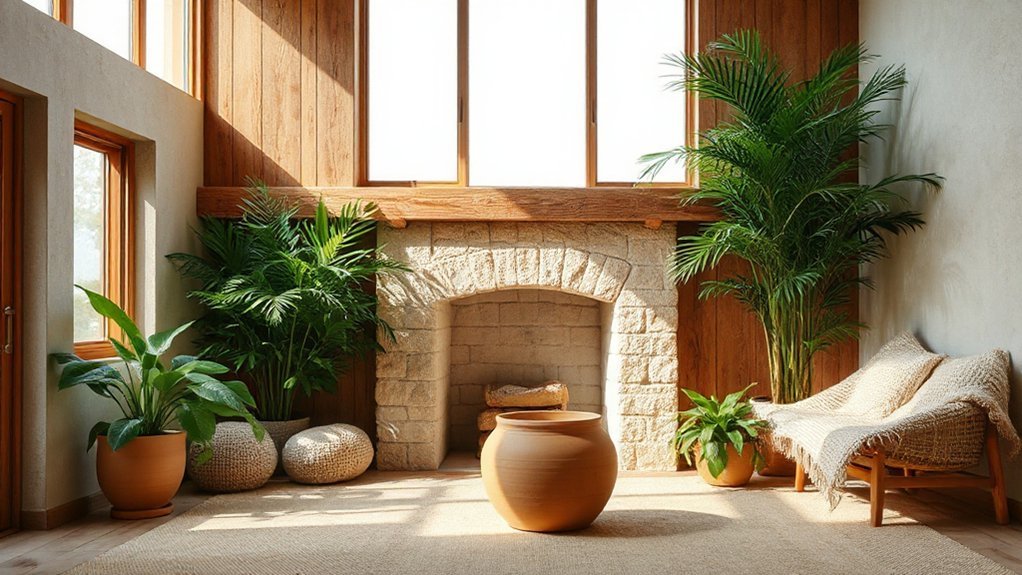
Texture, warmth, and comfort come alive when you mix natural materials like wood, stone, clay, and hemp with smart details: thick, tactile surfaces, visible grain, and honest finishes that age gracefully.
Natural textures and cozy warmth emerge from material choices you can feel and see every day. Choose pieces that patina with use, not polish away character. Combine burl wood with warm wool textiles, limestone floors, and clay plaster walls for depth.
Include sustainable fibers, leathers, and linen to balance weight with softness. Install lighting at eye level to enhance texture without glare. Seal with breathable finishes to maintain air quality and touch. Let gaps and joints reveal honesty in craft rather than perfection.
- Visible grain and tactile surfaces
- Warm stone and wood pairings
- Clay plaster walls with natural pigments
- Soft textiles in earthy tones
Calm Spaces With Water Features and Gentle Sounds
Water features tucked into calm spaces soften rooms with sound, sight, and airflow. You’ll choose compact setups that maximize zen without crowding. Start with a quiet basin, then add a subtle fountain to create gentle ripples that you can hear from seating nooks.
Position the feature near a doorway or window to catch natural drafts for a micro-ventilation effect, while avoiding direct airflow that would rattle water. Use materials with warm tones—stone, ceramic, or wood—to reflect light and invite touch.
Integrate soft lighting to enhance movement after dusk, ensuring reflections don’t overpower room echoes. Maintain the system with simple filters and regular cleaning, preserving water features and their gentle sounds as steady anchors for focus and relaxation.
Green Nooks and Vertical Gardens Inside Your Home
If you want to bring life indoors without a full renovation, green nooks and vertical gardens offer a compact, high-impact option. You set up lean, modular planters, stacking foliage where light is strongest, and you tailor irrigation to keep roots happy.
Use vertical grids or rails to create living backdrops that double as room dividers. Choose low-maintenance species for steady color and texture, and stagger plant heights for depth.
Integrate smart lighting to extend growing times, and hide cables with Green wall accessories that read as deliberate design details. Track moisture, rotate specimens seasonally, and optimize airflow to prevent mold.
Your space gains energy without bulk or mess.
- Whitewashed shelves with cascading greenery
- Slim trellises supporting herb spirals
- Modular pockets arranged as a living mural
- Hidden drip lines and cable covers for clean lines
Indoor plant arrangements, Green wall accessories
Everyday Habits to Maintain Indoor Nature (and Scale It Over Time)
To keep indoor nature thriving without constant fuss, build simple daily and weekly rhythms that fit into real life. You’ll start with a quick morning check: water needs, leaf dust, and a note on any yellowing leaves. Use a 10-minute rhythm to inspect, mist, and rotate plants for even light.
Track Indoor air quality with a simple monitor, adjusting ventilation and airflow as needed.
For seasonal plant care, align pruning and fertilizing with monthly calendars, tagging tasks by urgency.
Create a compact care kit: spray bottle, small tools, and labeler for plant IDs.
Schedule a biweekly refresh of soil surface and mulch to deter pests.
Simplify propagation by staging one promising cutting per quarter, expanding your indoor garden progressively without overwhelm.
Frequently Asked Questions
How Can I Measure the Impact of Biophilic Design on Well-Being at Home?
To measure the impact, track stress reduction and mental health shifts using simple, practical methods.
Start with daily brief surveys rating mood, alertness, and stress on a 1–10 scale.
Monitor sleep quality, heart rate variability, steps, and energy at home after adding plants, natural light, and nature sounds.
Use a weekly composite score, and compare before/after changes.
Analyze trends, adjust designs, and document correlations between environmental tweaks and well-being.
Which Plants Are Best for Allergy-Prone Households Indoors?
“An ounce of prevention is worth a pound of cure.” You should opt for air purifying plants with low pollen and minimal fragrance, like snake plants and pothos.
Choose allergy-friendly foliage such as peace lilies in controlled spaces. Avoid flowering varieties.
Place plants away from sleeping areas, rinse leaves weekly, and monitor dust.
This practical setup reduces irritants, supports air quality, and keeps allergy symptoms in check while you enjoy greenery indoors.
How Should I Prioritize Biophilic Elements in Small Spaces?
Prioritize flexibility and clarity in small spaces: start with natural lighting, then add wall greenery to maximize impact without crowding.
Place sun-loving elements near windows, use reflective surfaces to bounce light, and choose compact, low-profile plants.
Integrate wall greenery with modular shelves and vertical planters to keep floor area open.
Use multi-functional features like glazed dividers and plant-led screens to define zones.
Regularly rotate plants for variety and health, ensuring easy access for maintenance.
What Budget-Friendly Ways Create Nature Without Maintenance Stress?
Can you get lush without stress? You can. Choose low-maintenance, budget-friendly greenery like pothos, snake plants, and ZZ plants, then place them where light steady but not harsh.
Use self-watering tips and drip trays to cut upkeep. Opt for compact planters and monthly rotation to keep visuals fresh.
Plan for plant maintenance in your routine, not disruption. You’ll enjoy real texture with minimal effort and smarter, durable solutions.
Can Biophilic Design Help With Productivity and Focus Workspaces?
Yes, biophilic design can boost your productivity and focus. You optimize Natural lighting by arranging desks near windows and using light-reflecting surfaces to reduce glare.
You integrate Indoor water features for gentle ambience and subtle sound masking, which helps concentration.
You choose plants with air-purifying benefits and varied textures to cue work zones.
You modularize layouts so natural elements stay close yet don’t distract, keeping tasks clear, organized, and energized throughout the day.
Conclusion
Turn your space into a sanctuary with practical, playful biophilia. Plan where sunlight pours, place plants purposefully, and prune clutter with clever, compact storage. Build green nooks that breathe easy—vertical gardens, modular planters, and textured, natural materials invite touch and calm. Add gentle water sounds and soft shadows to anchor focus. Stay steady, scalable, and savvy: sustain subtle seasonal shifts, celebrate small successes, and steadily simplify as your nature-forward home grows richly alive.
About the Author