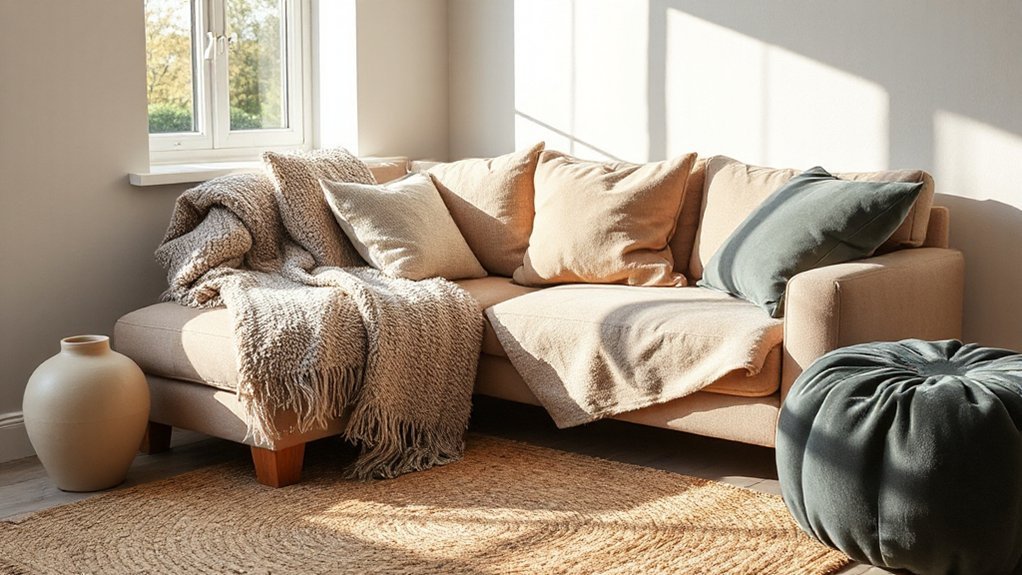
You’ll know a home is welcoming the moment a guest sinks into a plush throw and notices the texture of bouclé cushions against a neutral backdrop, like a warm embrace that stays put. Layer textiles to soften lines, mix velvet with wool, and pair natural-weight curtains with durable upholstery to balance practicality and style. You’ll get practical upgrades that look premium without shouting. Curious how small tweaks create instant coziness and cohesion, while staying easy to maintain and adaptable for new-builds?
Key Takeaways
- Use a calm, cohesive material palette with 2–3 fabrics per room: durable base, midweight textiles, and soft, tactile accents.
- Layer textures—boucle, velvet, linen, and wool—to add warmth without busy patterns.
- Start with a neutral dominant color, add two complementary tones, and echo hues in cushions, throws, and drapery.
- Prioritize easy-care, midweight fabrics with tight weaves for longevity in a new-build environment.
- Plan lighting to enhance warmth and highlight fabric edges, seams, and texture contrasts.
How to Layer Textiles for Warm, Modern New-Builds
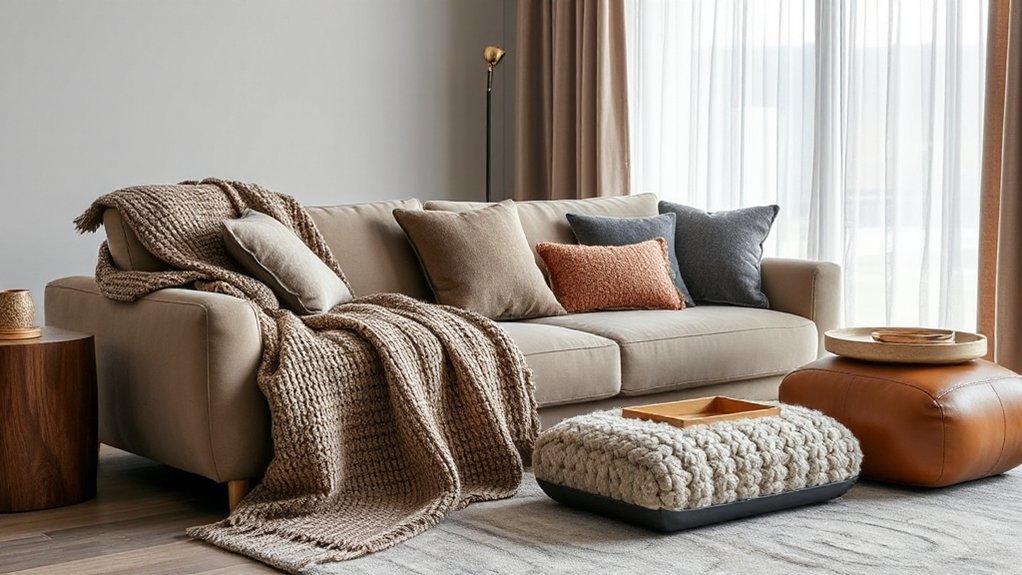
Layering textiles is your quickest path to warmth and a modern look in new builds. Start with a neutral base: a solid sofa in charcoal, a wool rug, and cotton drapery.
Add color pops with cushions in complementary hues; aim for color coordination so each piece supports the whole palette without clashing.
Layer different textures to build depth—think a boucle throw over a sleek leather chair, a linen blend drape, and a velvet cushion for contrast.
Keep scale deliberate: don’t overwhelm with too many large patterns; pair a subtle print with solid, texture-rich surfaces.
Use lighting to highlight fabric edges and seams, enhancing the tactile feel.
Finish by matching metals and wood tones to reinforce cohesion, ensuring texture contrast remains tactile, not chaotic.
Choose Pattern Scale: Balance Large and Small Motifs
Pair large and small motifs to create visual balance: start with a dominant pattern and anchor it with a quieter repeat, then vary scale within textiles to guide the eye.
Use proportion play tactics—contrast, rhythm, and context—to prevent clashing vibes while keeping the room cohesive.
Apply scale pairing essentials by testing with swatches in your space, adjusting until the mix feels intentional and calm.
Scale Pairing Essentials
One effective way to balance large and small motifs is to pair a dominant pattern with a complementary, quieter one, keeping the scale ratio roughly 2:1 or 3:1 to maintain visual harmony. You’ll want to anchor the room with a large motif in a rug or drapery, then support it with smaller accents on cushions or lampshades.
Check repeat lengths: match the larger scale’s dominant direction with the smaller pattern’s subtle echoes to avoid clash. Consider color harmony by repeating a shared color across both motifs, not just a single hue.
Introduce material contrast—woven textiles against smooth leather or matte velvet—strengthens depth. Keep edge gradations clean, and maintain consistent spacing between patterns to prevent visual fatigue.
Proportion Play Tactics
Begin by selecting a dominant motif scale for fabrics and a contrasting secondary scale for accents, then test with swatches in natural light to confirm balance.
Use color contrast deliberately: a high-contrast palette can amplify large motifs, while softer contrasts temper busy repeats.
Introduce texture variation through yarn thickness, weave structure, or pile height to add depth without clutter.
Apply the same proportion logic to cushions, curtains, and upholstery, keeping a unifying thread—either color family or motif silhouette.
Finally, review the overall rhythm in the room to ensure comfort and coherence.
Pick Textiles That Feel Luxe Without Clutter
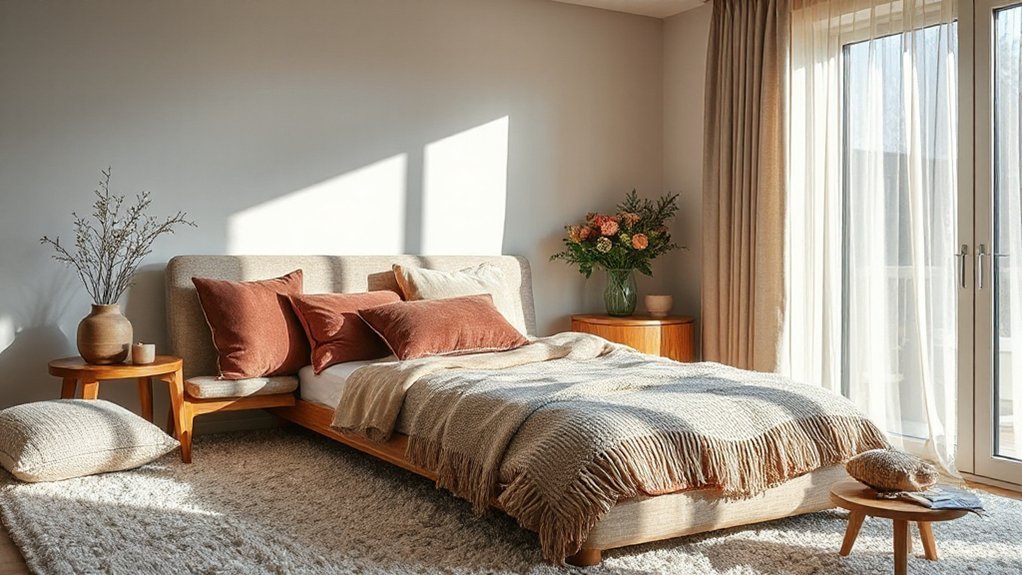
Wind can feel luxe without feeling cluttered by choosing textiles that read as refined but stay restrained. You’ll prioritize quality over quantity, selecting a core palette and a few high-impact textures to anchor rooms.
Look for luxury textures like brushed velvet, heavy weave, and silk-blend drapery that read as elevated rather than flashy. Keep patterns subtle—tone-on-tone or small-scale weaves—to preserve clutter-free elegance.
Favor solid or near-solid upholstery with crisp silhouettes, and pair with a single patterned cushion or throw for focal points. Choose textiles with tight, durable weaves and easy-care finishes to reduce maintenance.
Size down the assortment: two to three fabrics per room, one statement texture, one coordinating accent, and one durable base.
Quick Budget Upgrades: Premium-Looking Textiles Under $100
You can transform a new-build fast with budget-friendly luxe textiles that read premium without the price tag. Start with under-$100 basics—lush throw blankets, velvet cushions, and crisp curtains—that mix textures and finishes for a high-end feel.
We’ll explore practical ideas to maximize impact, like pairing contrasting fabrics, selecting durable weaves, and choosing colorways that anchor the room.
Budget-Friendly Luxe Textiles
Ever wonder how to achieve a luxe look without blowing your budget? You can craft upscale ambiance with careful textile choices that read premium without the upscale price tag.
Start with tightly woven, midweight fabrics in neutral tones like charcoal, warm taupe, or creamy oat. These textures photograph well and wear well, helping surfaces feel more expensive over time.
Prioritize durability: a high GSM or denier, and a dense weave reduce pilling and snagging, preserving a refined finish.
Mix matte and subtle sheen textiles to add depth without shouting luxury.
Consider textile sustainability by selecting fabrics that minimize environmental impact, and opt for repairable, timeless patterns over fast-fashion prints.
Fabric sustainability matters; it supports long-term value and lower replacement costs.
Under-$100 Upgrade Ideas
Even on a tight budget, you can elevate a space with under-$100 textile upgrades that look premium and perform well. Start with a solid foundation: choose midweight fabrics with tight weaves for durability, ensuring textiles withstand daily use without pilling or snagging.
Prioritize color coordination across pieces—curtains, cushions, and throws should share a cohesive palette to create a dressed, intentional look. Opt for versatile neutrals as bases, then add a single accent hue for depth.
Consider multi-purpose textiles, like a throw that doubles as a sofa cover or a duvet cover that works year-round. Swap out lamp shades or pillow inserts rather than full sets to refresh ambiance cheaply.
Measure carefully, compare thread counts, and choose easy-care fabrics to maximize textile durability and maintain a refined, cohesive finish.
Premium Look, Low Cost
If you’re aiming for a premium look without blowing the budget, focus on textiles that read high-end because of finish, fit, and versatility. Prioritize fabrics with refined textures and solid drape—think velvet-esque weaves, matte satins, and brushed surfaces.
Look for tight weaves and consistent backing to avoid puckering on curtains and cushions, ensuring a polished silhouette. Colorwise, choose monochrome neutrals or subtle two-tones to convey luxury textures without flash.
Mix scales: large panels for drama, smaller toss cushions for contrast, all under $100 each. Invest in versatile basics—blackout linings, easy-care blends, and removable cover options—to boost longevity.
Pair with metal accents or matte wood for affordable elegance and cohesive, refined spaces.
Create Daily Warmth: Practical Styling Moves for Everyday Living
Start with a warm, lived-in base: layer textures and colors you actually use every day, then build in small, practical touches that make rooms feel inviting fast.
You select durable fabrics for sofas and throws to withstand daily use, prioritizing fabric durability without sacrificing style. Pair textiles in color families that align with your scheme, ensuring color coordination across cushions, curtains, and rugs.
Add functional accents: washable slipcovers, easy-care upholstery, and reconfigurable throws that adapt to seasons or guests.
Use layering to create depth—pair matte and subtle sheen without visual clutter. Keep trims simple and hardware consistent for a cohesive look.
Finally, test lighting and placement to enhance warmth, ensuring every surface reads as cozy, usable, and ready for everyday life.
Finish With a Cohesive, Low-Maintenance Look
To finish with a cohesive, low-maintenance look, lock in a simple, consistent palette and repeat key textures across rooms so fabrics, finishes, and accents coordinate without effort.
You’ll prevent visual clutter by grouping materials with a shared undertone and using the same weave or finish on three main surfaces per space.
Prioritize color coordination: select a dominant shade and two complementary tones, then restock with accent pillows, throws, and drapery that echo those hues.
Introduce texture contrast deliberately—hard-wearing fabrics in seating paired with softer textiles in curtains and cushions—so tactility adds depth without busy patterns.
Plan lighting to reinforce hue consistency, and choose finishes that age gracefully.
This approach yields a calm, functional home you can maintain with minimal fuss.
Frequently Asked Questions
How Can Textiles Improve Acoustics in New-Builds?
Textiles improve acoustics by increasing sound absorption and reducing echoes. You’ll want strategic material layering: start with an economical, porous base (acoustic panels or mineral wool).
Then add dense layers (milled fabric, heavier drapes) to trap and dampen sound. Place panels at first reflection points and use carpets to cushion floors.
Consider varied textures and densities to broaden absorption bands. This practical approach delivers clearer speech, less noise, and better room comfort.
Which Sustainable Fabrics Perform Best in Modern Homes?
You’ll want sustainable fabrics that balance performance and style, like those using Eco friendly dyes and recycled fibers.
Choose tightly woven, durable materials for high-traffic rooms and breathable options for comfort.
Opt for natural fibers blended with recycled content to reduce waste, and verify certifications for low emissions.
Prioritize stain resistance, easy care, and colorfastness, so maintenance stays practical.
Consider modular sets and reusability to extend life and minimize replacements.
What Are Fire-Safety Considerations for Fabric Choices?
Did you know a single treated couch saves lives in a fire? You must consider fire-safety when choosing fabrics. Look for fabrics with proper fire retardants and inquire about shipboard or home-use certifications.
Opt for tested fabric treatments that don’t off-gas toxic fumes. Check drapery and upholstery standards, flame resistance ratings, and maintenance requirements.
Keep smoke alarms active, replace worn fabrics, and follow manufacturers’ care guidelines to keep rooms safer.
How Often Should Soft Furnishings Be Updated Post-Construction?
You should update soft furnishings every 5–7 years to keep safety, style, and durability current. Inspect for wear, fading, and fabric integrity, then replace high-traffic items first.
Prioritize color coordination and pattern mixing to maintain cohesive rooms while updating textures.
If a renovation occurs, refresh sooner, especially with flame-retardant fabrics. Maintain backups of fire-safety labels.
Schedule reminders and track warranty dates to stay proactive rather than reactive.
What Maintenance Routines Extend Textile Life in Busy Homes?
You can extend textile life in busy homes by implementing routine maintenance: vacuum weekly, rotate cushions monthly, and spot-clean spills immediately with mild detergent.
Invest in protective finishes for high-traffic fabrics, and schedule professional refreshes every 12–18 months. These actions boost Fabric durability, reduce wear, and preserve stain resistance.
Wash care labels, use protective covers, and avoid direct sun. With consistent care, you’ll enjoy longer-lasting furnishings that stay looking fresh and comfortable.
Conclusion
You can make new-builds feel instantly inviting by layering textiles—plush throws, velvet cushions, and natural-fabric curtains that blend warmth with modernity. If you’re worried this looks busy, pick a neutral palette, then add one or two textured accents for depth. Start small: a bouclé throw, a velvet pillow, and coordinated curtains under $100 each can transform the room without clutter. Practical, cohesive upgrades keep maintenance simple while delivering a luxe, lived-in vibe.
About the Author