Did you know that up to 60% of homes with basement moisture issues could benefit from both interior and exterior waterproofing? You’ll want a practical plan that blends drainage, sealing, and backups, not a single fix. Start by evaluating exterior barriers, then pair them with interior measures like crack sealing and a sump with backup power. The right mix shields your space and saves you trouble later, but choosing the best approach requires weighing your climate, budget, and home details.
Key Takeaways
- Use exterior barriers and proper grading to redirect water away from the foundation and reduce hydrostatic pressure.
- Install a robust interior waterproofing system with sealed subfloor, vapor barriers, sump pump, and battery backup.
- Add interior and exterior drainage, including perforated drains and cleanouts, to channel water to sump zones or outlets.
- Maintain seals, joints, and foundation interfaces; inspect after heavy rain and replace deteriorated coatings promptly.
- Control humidity with dehumidifiers and moisture-rated materials to prevent mold and condensation in flood-prone areas.
Common Basement Flooding Problems and What Waterproofing Must Fix
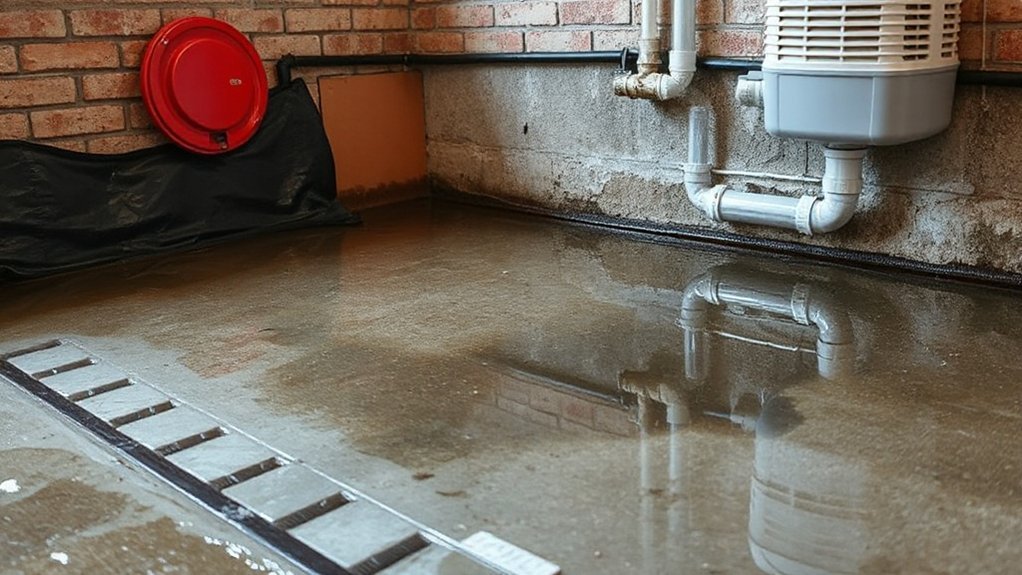
Common basement flooding usually stems from three core issues: poor drainage around the foundation, compromised or absent waterproofing, and interior water sources like plumbing leaks or high humidity.
You’ll address three recurring problems: basement mold, sump pump reliability, and overwhelmed interior systems.
Poor drainage lets water pool against walls and saturate the floor, so you need proper grading, gutter downspouts, and an effective perforated drain layout.
Basement mold emerges where humidity remains elevated after water intrusion; manage it by sealing gaps, improving ventilation, and eliminating moisture sources.
Sump pump reliability matters: guarantee continuous operation, confirm discharge lines aren’t blocked, and schedule regular testing and maintenance.
Finally, identify interior leaks promptly and repair piping, fixtures, and seals to prevent hidden water damage.
Exterior Barriers and Drainage: How They Protect Your Foundation
Exterior barriers and drainage form the first line of defense against foundation damage. You’ll deploy perimeter barriers to block water entry and redirect soil moisture away from the footing.
Exterior barriers include sturdy footing enclosures, surface grading, and proper landscaping to limit water pooling near walls. Pair these with effective drainage systems that channel water to sump zones or external outlets, preventing hydrostatic pressure from forcing cracks open.
Install cleanouts and filters to keep pathways clear, ensuring continuous flow during heavy rain. Regularly inspect and maintain seals, joints, and interfaces where the foundation meets exterior surfaces.
When designed and staged correctly, this combination minimizes erosion, mitigates frost damage, and preserves structural integrity over time.
Interior Waterproofing Methods That Work in Flood-Prone Homes
Flood-prone homes benefit from interior waterproofing that stops water where it enters and reduces damage before it spreads. You implement reliable interior barriers that channel moisture to drains and sump pumps, then seal walls and floors to limit intrusion.
Focus on a proven sequence: address cracks, install a vapor barrier, and verify a continuous, sealed subfloor system. Use moisture-rated drywall and epoxy coatings for durability where water contact is possible.
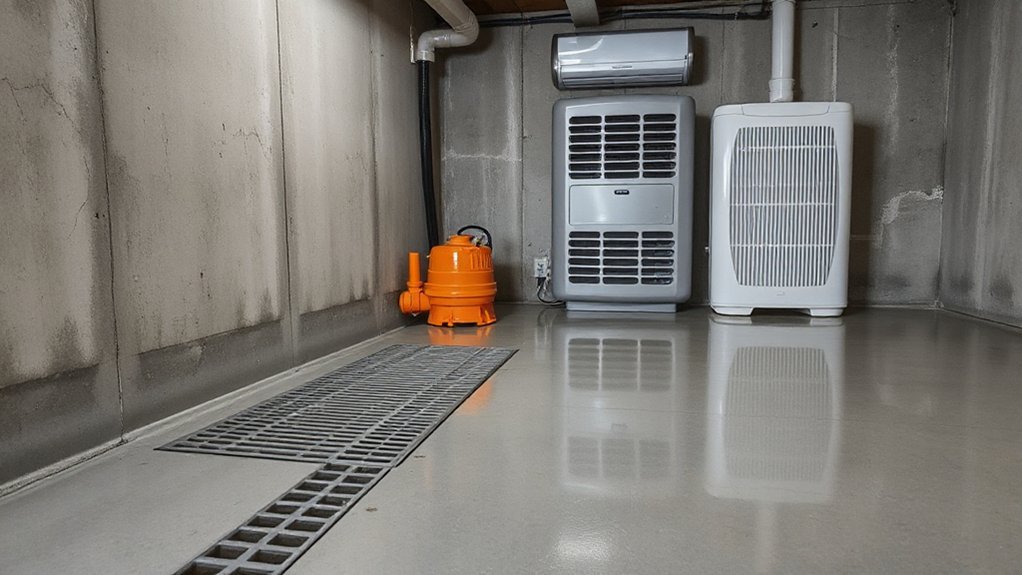
A conditioned sump area with a high-capacity pump and battery backup minimizes flooding duration. Manage humidity with a dehumidifier to reduce basement odor and control condensation.
Planning includes proper drainage gradient inside, perimeter stops, and backwater valves to prevent sewer backup. These steps support mold prevention by maintaining dry, stable conditions after flood events.
How to Choose Your Basement Plan: Budget, Climate, and Home Details
Choosing a basement plan hinges on your budget, climate, and home layout, so start with clear priorities: what you can spend, how weather behaves in your area, and how your house’s footprint supports future use.
You’ll balance cost against features that guard against flood risk and moisture. Prioritize foundations and service routes, plumbing access, and potential add-ons like sump pumps or a dedicated utility room.
Consider climate-driven needs: insulation, vapor barriers, and drainage alignment with seasonal precipitation.
Foundation vents can impact moisture control and energy efficiency, so map their placement to airflow and backup strategies.
Evaluate load-bearing requirements, egress options, and future-proofing for expansions or added living spaces without overextending your budget.
Installation, Maintenance, and When to Upgrade Your System
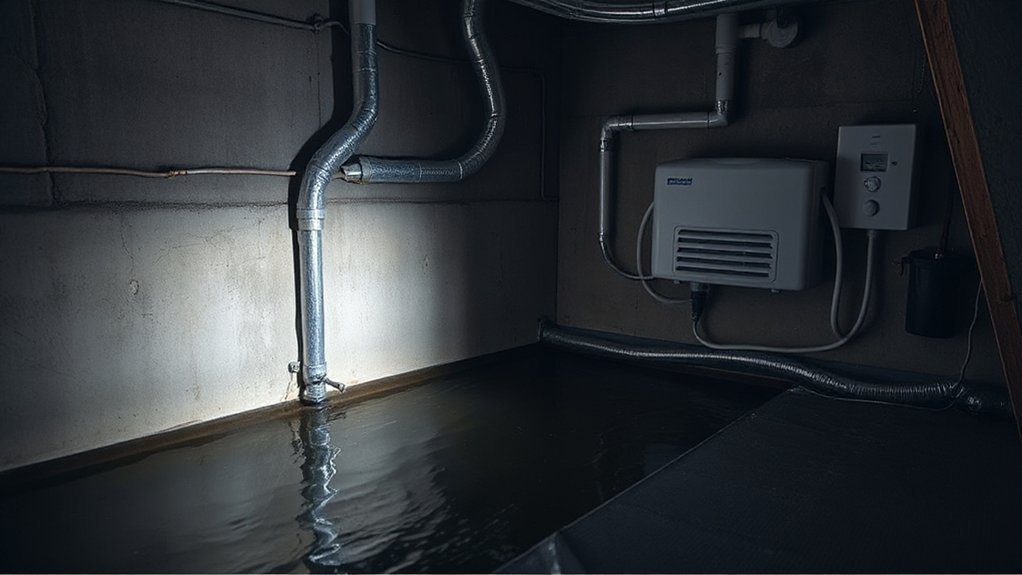
Installing and maintaining a basement waterproofing system isn’t a one-and-done task; it’s an ongoing process you should actively manage. You should schedule annual inspections of seals, drains, and any exterior coatings, and test systems after heavy rains.
Prioritize effective basement insulation to reduce condensation and energy loss, ensuring panels, vapor barriers, and insulation boards stay intact.
Keep your sump pump well-maintained: test monthly, clean intake, replace batteries, and consider a backup power source for outages. If you notice rising water in the pit, listen for unusual noises and verify discharge lines aren’t blocked.
Upgrade when you see cracking, material deterioration, or persistent moisture despite routine care. Choose components with accessible serviceability to simplify future maintenance and repairs.
Regular attention prevents costly failures and preserves structural dry conditions.
Frequently Asked Questions
What Is the Typical Lifespan of a Basement Waterproofing System?
A typical basement waterproofing system lasts about 20 to 30 years, depending on materials and installation quality.
You’ll maximize longevity by addressing foundation cracks and choosing proven drainage solutions.
Regular maintenance, prompt repair of any leaks, and proper grading help prevent premature failure.
A well‑installed system with durable membranes or a sump setup remains effective longer when you monitor for wear, reseal joints, and keep drains flowing, especially around foundation cracks and blocked outlets.
Do All Systems Require Sump Pumps or Batteries Backup?
You won’t find a universal “yes.” Not all systems require a sump pump or battery backup, but most flood-prone setups rely on one for gravity drainage and to stay functional during outages.
You should plan for sump pump maintenance and explore Battery backup options to avoid failure. If you skip them, you risk water intrusion.
Make certain your design includes reliable drainage, regular checks, and an emergency power plan for critical periods.
Can DIY Waterproofing Cause Moisture Problems Elsewhere?
Yes, DIY waterproofing can cause moisture problems elsewhere. If you seal areas without addressing root causes, you’ll push moisture into walls, floors, and framing, triggering rot and mold.
Watch for moisture migration from exterior barriers to interior spaces, and avoid over-drying or improper drainage.
DIY pitfalls include improper ventilation, inadequate vapor barriers, and contaminated sealants.
You must test, document, and seal cohesively to prevent hidden moisture issues and protect overall structural health.
How Often Should Exterior Drainage Grates Be Cleaned?
You should clean exterior drainage grates at least quarterly, and more often after heavy rains or snowmelt.
Incorporate drainage maintenance checks into your routine, inspecting for clogging debris and displaced grates.
Use gloves, remove debris, and rinse with a hose to restore flow.
Grate inspection should be thorough, ensuring the surrounding surface remains properly graded and free of obstruction.
Regular maintenance prevents backups and prolongs system effectiveness.
Are There Grants or Tax Credits for Basement Waterproofing?
Did you know 1 in 3 homeowners report basement dampness issues? Yes—there are government incentives and financial assistance available for basement waterproofing in many areas.
You can explore grants, tax credits, and subsidized loans, though programs vary by region. Check federal, state, and local options, including energy-efficiency credits tied to waterproofing work with proper insulation.
Apply early, keep receipts, and document improvements. Government incentives can help offset costs, so researching eligibility now saves you money later.
Conclusion
Flood-prone homes benefit most when you combine exterior drainage with solid interior protections. Exterior barriers redirect water, while interior systems remove what gets through. In practice, most homes cut flood damage by about 50% with a proper sump pump and backup, plus continuous maintenance. Stay proactive: reseal cracks, clear gutters, test pumps annually, and monitor humidity. With coordinated defenses, you’ll protect your basement, improve air quality, and preserve your home’s value during heavy rains.
About the Author