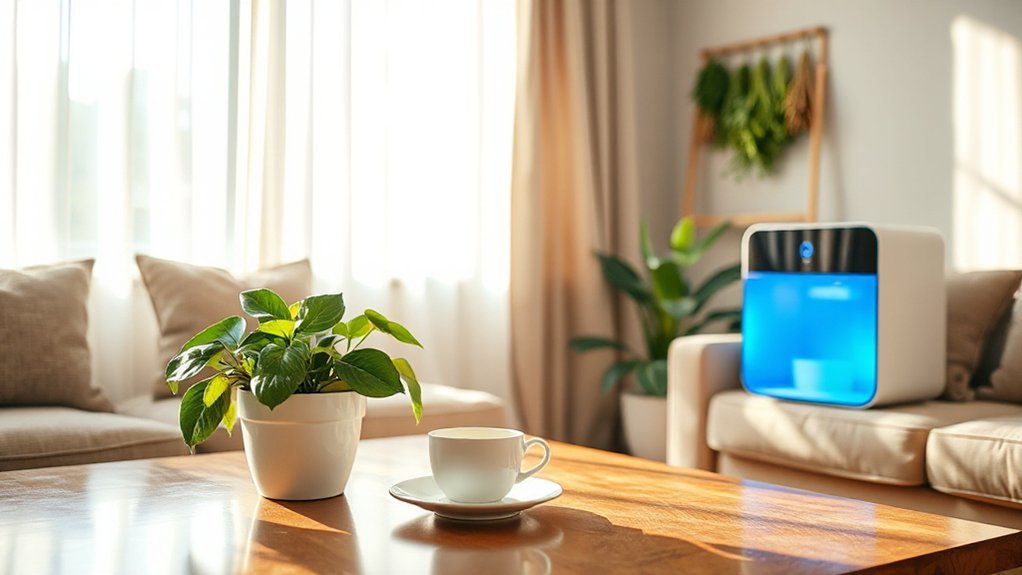
You can start improving indoor air quality by boosting natural ventilation and choosing low-toxicity options for cleaning and maintenance. Open windows for cross-breezes when outdoor conditions are favorable, run exhaust fans in kitchens and baths, and add easy-care plants like snake plants or pothos to help filter the air. It’s about simple, proven steps you can implement gradually—yet there’s more to optimize, from humidity control to furniture choices, that will influence the air you actually breathe.
Key Takeaways
- Improve ventilation with cross-ventilation and short, frequent airing sessions during periods of good outdoor air quality.
- Use low-VOC, fragrance-free cleaners and pair plant care with mechanical filtration to reduce indoor pollutants.
- Add air purifiers strategically, monitor humidity and CO₂ with sensors, and maintain regular cleaning routines.
- Place easy-care plants near high-traffic areas to assist natural filtration while avoiding vent blockages.
- Maintain consistent humidity (30–50%) with dehumidifiers or humidifiers, and reseal gaps seasonally to minimize moisture intrusion.
Why Indoor Air Feels Stuffy (And How to Fix It)
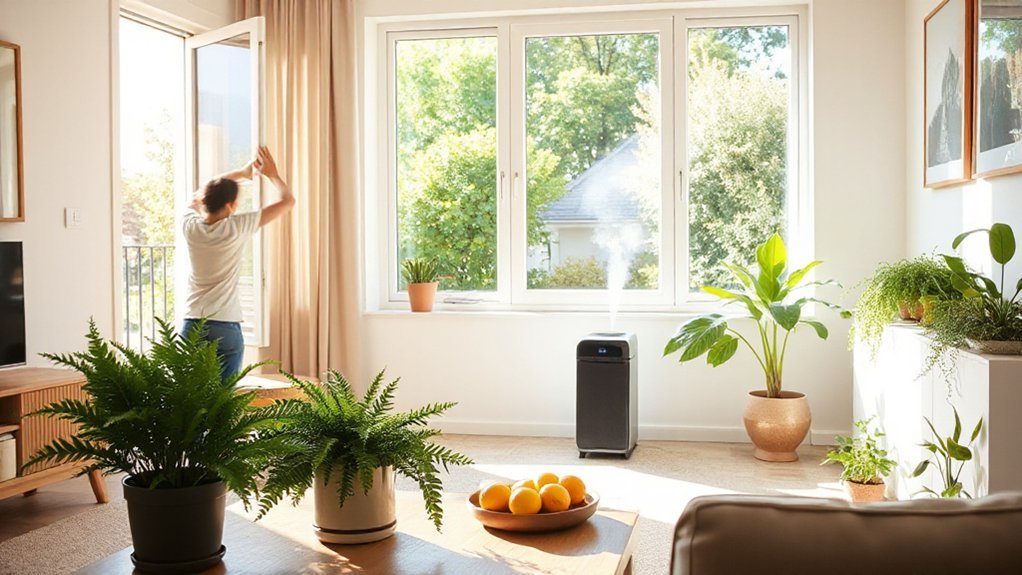
Stuffy indoor air often happens when there’s too little fresh air and too much moisture, dust, or pollutants circulating in the space. You’ll notice a lingering 느낌 of stuffiness, headaches, or fatigue, especially in sealed rooms.
Start with practical steps: improve ventilation where possible, and reduce moisture via exhaust fans and dehumidifiers in damp areas. Use targeted indoor air filtration to remove particles, allergens, and odors, selecting models rated for the space size and pollutant types you encounter.
Install and trust air quality sensors to monitor humidity, CO2, and volatile compounds; they guide when to boost airflow. Keep filters clean and replace per manufacturer guidelines to maintain efficacy.
Pair filtration with source control—dust, pet dander, and damp fabrics—and the air will feel noticeably crisper and clearer.
Quick Wins to Improve Ventilation Today
Open windows strategically to create cross-ventilation when outdoor conditions permit.
Pair this with using exhaust fans to push stale air out of kitchens and bathrooms.
Turn on exhaust fans promptly to clear humidity and odors, and consider brief, targeted use during activities that generate pollutants.
Add air-purifying plants as a supplemental, low-cost measure, recognizing they help modestly with particulates while you implement more effective ventilation steps.
Open Windows Strategically
To improve ventilation quickly, open windows strategically to create a cross-breeze that draws stale indoor air outside and pulls fresh air inside.
- Open windows on opposite walls or ends of a room to maximize cross-ventilation.
- Time openings for peak outdoor air quality (avoid high pollen or pollution moments).
- Pair with sealing gaps around frames briefly after airing to maintain energy balance.
This approach supports Air filtration through dilution and Odor elimination by expelling indoor compounds.
Monitor indoor conditions with a simple timer and adjust for weather—cool mornings or breezy evenings often work best. If outdoor air is cleaner, keep windows ajar longer; if noisy or dusty, use brief, staggered intervals.
Consistency matters: short, frequent airing beats long, sporadic sessions.
Use Exhaust Fans Timely
Using exhaust fans at the right moments can quickly move indoor air toward outdoors, pulling contaminated air out of kitchens, bathrooms, and utility rooms while drawing in fresher air from other parts of the home.
To maximize effectiveness, run exhaust fans during and shortly after cooking, showering, or heavy cleaning, and avoid extended run times when humidity is already high. Maintain consistent exhaust fan timing aligned with activities that release moisture, odors, or volatile compounds.
Pair this with air filter maintenance to reduce indoor pollutant loads between ventilation events. Guarantee seals around fans are intact and ducts are clean to sustain efficiency.
Schedule routine checks, replace filters per manufacturer guidance, and keep fan speeds appropriate for the space size to prevent under- or over-ventilation.
Air Purifying Plants Aid
Air-purifying plants can contribute to better indoor air quality by reducing some common pollutants and adding a touch of greenery. You’ll want pragmatic, evidence-based guidance that’s easy to apply.
- Choose low-maintenance species and monitor light, water, and drainage to support consistent plant care.
- Place species known for pollutant removal near workspaces or high-traffic areas to maximize exposure and impact.
- Pair with regular dusting and soil refreshment to maintain effectiveness and prevent mold or pests.
Air purifying plants offer a supplementary approach to ventilation, not a replacement for mechanical systems. Use as a quick win while you optimize filtration and airflow.
Apply plant care routines consistently, track any changes in odor or irritation, and adjust placement as needed for best results.
Clean Air Without Harsh Chemicals: Safe Product Choices
Choosing safe products is essential for clean indoor air without exposing yourself to harsh chemicals. When you opt for low-emission, fragrance-free, and EPA- or FDA-approved options, you reduce respiratory irritation and headaches while maintaining effective air quality.
Start with cleaning supplies labeled for low or no VOCs, and favor enzyme- or mineral-based formulations over solvent-heavy formulas. Look for third-party certifications such as Green Seal or Safer Choice to verify claims.
For air freshening, skip synthetic fragrances; choose essential-oil blends only if you’re sure they’re low-emission. Replace aerosols with pump sprays or wipe-down methods.
For furniture and flooring, select options labeled eco-friendly products and avoid treated fabrics with strong coatings. Regularly rotate products to minimize buildup and maintain consistent air quality.
Plants That Actually Help Air Quality (And Simple Care)
You’ll see which plant types actually improve air quality and why they work, with practical care steps you can follow. I’ll cover easy-care tips, how to select plants for low maintenance, and simple metrics to gauge effectiveness.
We’ll also cover placement tips for maximizing purifier benefits, so you can create a clearer, healthier indoor environment.
Plant Types That Help
Houseplants that actually improve air quality are practical additions to any indoor space, especially when you pick species with well-documented air-cleaning benefits and pair them with simple care routines.
You’ll focus on types proven to help reduce common indoor pollutants, while keeping up with basic plant maintenance. This approach supports healthy indoor gardening without overcomplication.
- Snake plant and pothos: robust, low-maintenance, effective at filtering VOCs with minimal care.
- Spider plant and peace lily: moderate light needs, frequent misting, better humidity and cleaner air.
- Areca palm and rubber plant: higher light tolerance, steady filtration, pair with regular pruning.
Regular watering, lighting, and airflow matter.
Stay consistent with routine checks to sustain results in indoor gardening.
Easy Care Tips
To keep air safer with minimal effort, focus on easy-care plants that reliably remove common pollutants while fitting into simple routines. You’ll prioritize species proven to influence indoor air quality without demanding high maintenance.
Opt for plants with straightforward watering needs, tolerates low light, and resilient leaves. Pair care with basic air hygiene: rotate pots, wipe foliage monthly, and avoid overwatering to reduce mold risk.
Track impact with simple air readings or odor/visibility cues, tying plant care to air quality monitoring practices. Choose species known to target typical indoor pollution sources, such as volatile organic compounds and formaldehyde, while keeping you in a routine.
Avoid overloading spaces; balance plant count with room size. This approach delivers measurable improvement without complexity, aligning greenery with your daily life.
Placement For Purifiers
Where should you place purifying plants for maximum impact without clutter? Start with practical spots that don’t block airflow or get crowded. Consider air currents, room size, and proximity to common sources of pollutants. You’ll enhance benefit by placing plants where people frequent, but not directly in front of vents or doors.
- Airflow-aware positioning: keep plants an arm’s length from HVAC intakes and doorways, balancing circulation with accessibility.
- Grouping strategy: create small clusters in living areas to maximize air-contact surfaces without creating visual clutter.
- Height and light: choose locations that provide adequate indirect light and don’t overwhelm shelves or desks.
Keywords: Air purifier placement, ideal location.
Manage Humidity Naturally for Healthier Air
Humidity is easier to control than you might think, and small, practical steps can keep indoor levels comfortable and healthy. First, monitor humidity with a reliable hygrometer; aim for a moisture balance around 30–50% depending on activities and season.
If readings drift high, use dehumidification during damp days, improve ventilation, and seal leaks that let moist air in.
For low humidity, introduce moisture with well-sealed humidifiers or containers of water near heat sources, but avoid over-wetting surfaces.
Optimize airflow by exhausting bath and kitchen vent fans after use and using ceiling fans to distribute air evenly.
Maintain HVAC filters and regular service to prevent stale, damp pockets. These actions support humidity control without excessive energy use or unnecessary equipment.
Natural Tactics to Fight Dust, Mold, and Allergens
Natural strategies reduce dust, mold, and allergens by combining simple cleaning habits with environmental tweaks that don’t rely on pricey gear. You can cut airborne irritants by maintaining surfaces, controlling moisture, and supporting steady filtration in daily routines. Focus on practical methods that back up Indoor air filtration and mold prevention without overhauling your space.
1) Vacuum with a HEPA filter at least weekly, so dust and spores don’t recirculate.
2) Wipe high-traffic surfaces daily; damp microfiber traps particles better than dry dusting.
3) Run a modest, continuous exhaust or air purifier when cooking or showering to reduce humidity spikes.
These steps reinforce evidence-based habits, minimize clutter, and keep airflow steady while you monitor air quality without extra equipment.
Arrange Your Space for Better Airflow

To improve airflow in your space, start by evaluating room layout and clearance around vents and seating. You’ll optimize airflow patterns by keeping pathways open and avoiding obstacles that block returns or supply vents.
Place seating to align with the main breeze rather than against it, reducing stagnant pockets. Opt for a simple room organization: furniture in existing zones, not random clusters.
Elevate airflow by nudging tall pieces away from low vents and using lightweight, movable furniture for periodic reconfiguration. Use rugs and textiles strategically, but avoid piling them near intakes.
Check that doors swing freely and adjust curtains to prevent airflow bottlenecks. Regularly inspect for dust buildup around vents, and reseat grills as needed to maintain consistent, efficient air circulation.
Weekly and Seasonal Routines for Clean Air
A practical weekly and seasonal routine keeps indoor air clean without overhauling your space. By scheduling small, repeatable checks, you stay proactive about air quality monitoring and track changes in indoor air chemistry.
Consistency beats intensity, so you develop habits that last.
1) Set a weekly timer to inspect filters, vents, and obvious damp spots, noting any odors or moisture clues.
2) At seasonal shifts, reassess ventilation needs, reseal gaps, and refresh humidity targets to sustain stable indoor air chemistry.
3) Log measurements and actions in a simple chart, then compare months to identify trends and adjust practices accordingly.
These steps empower you to maintain cleaner air with minimal effort and evidence-based vigilance.
Is a Budget-Friendly Natural Upgrade Right for You?
Curious whether a budget-friendly natural upgrade fits your space? You can assess value by matching costs to expected air quality gains. Start with evidence-backed options: improving ventilation with window swaps, using moisture-absorbing dehumidifiers where needed, and choosing low-emission household plants.
These budget options can reduce VOCs and indoor pollutants without major remodeling. Track baselines: measure humidity, note odor events, and monitor any irritations.
Prioritize high-impact, low-cost moves first, like removing clutter that traps dust and ensuring filters in existing systems are clean. Compare costs against potential health benefits and energy use.
If you rent or plan a short-term stay, emphasize portable solutions and simple maintenance. In many homes, careful, incremental upgrades deliver meaningful air quality improvements without significant expense.
Frequently Asked Questions
How Can I Test My Indoor Air Quality at Home?
You can test your indoor air quality at home using air quality sensors and DIY testing. Start with affordable air quality sensors to monitor PM2.5, VOCs, humidity, and CO2, placing them at breathing height in common rooms.
Use DIY testing kits for formaldehyde and radon if concerned, following instructions carefully.
Calibrate devices regularly, track data over several days, and compare readings to guidelines.
Document patterns, ventilate, and address obvious sources like cooking or cleaning fumes.
Do Air Purifiers Use Natural Methods or Filters?
Do air purifiers use filters or natural methods? They mostly rely on filters—air filter types include HEPA, activated carbon, and electrostatic models.
Plus, some units claim natural purification via plant-based or ionization features. You’ll often combine filtration with airflow design for effective removal of particles and odors.
Choose a model suited to your space, check CADR ratings, and pair with regular maintenance.
Would you like tips on selecting the right air filter type for your room?
Can Houseplants Replace Mechanical Ventilation Entirely?
No, houseplants can’t replace mechanical ventilation entirely. They provide limited air cleaning and humidity benefits, but you still need proper ventilation for adequate exchange.
You can supplement with plants, focusing on plant types known for air-prowing, yet they won’t meet sustained air quality standards.
To maximize outcomes, pair plants with continuous mechanical ventilation and consider fresh-air strategies.
Emphasize ventilation benefits, and choose plant types that tolerate indoor conditions while you monitor CO2 levels and humidity.
How Often Should I Replace DIY Air-Cleaning Solutions?
You should replace DIY air-cleaning solutions every 3 to 6 months, depending on usage and condition. Check for reduced airflow, warped frames, or mold, and replace sooner if needed.
Regularly inspect filters, seals, and housings to extend DIY filter longevity. Air purifier maintenance, like cleaning reusable components and documenting replacement dates, helps prevent performance drops.
For best results, follow manufacturer guidance when possible and track performance changes with simple, ongoing observations.
Are Natural Methods as Effective for Odors as Chemicals?
Natural deodorizers can reduce odors, but they’re often less potent than strong chemical alternatives for tough smells. You’ll likely see steadier results with a combination: use natural deodorizers for routine masking and ventilation, and reserve chemical alternatives for persistent odors.
Rely on evidence, test small areas, and monitor air changes. Avoid overuse of fragrances.
Regularly clean sources, improve filtration, and guarantee proper moisture control to complement odor-reducing methods.
Conclusion
Natural air quality isn’t luck; it’s a series of small, well-timed choices you can live with. You’ll notice the pattern when fresh air and clean routines align—open a window during a calm breeze, swap harsh cleaners for simple, green options, and tend plants that clean the air while you tidy. The coincidence of daily habits and seasonal tweaks creates steadier airflow, steadier humidity, and clearer air—practical improvements that fit your life and your lungs.
About the Author