Like a well-tuned engine, your kitchen should run smoothly, blending smart durability with energy-minded choices. You’ll want durable, low-maintenance surfaces, energy-efficient appliances, and flexible layouts with hidden storage to keep countertops calm. Think seamless indoor-outdoor flow and ambient lighting that adapts to tasks and moods. Eco-conscious materials and timeless color palettes keep value steady. The question is: how will you balance practicality with design-forward details to open the space you actually use?
Key Takeaways
- Smart durability in kitchens with wear-resistant materials, humidity-ready substrates, and repair-friendly components for lasting aesthetics.
- ENERGY STAR appliances with inverter tech and smart controls that learn routines and optimize usage.
- Low-maintenance surfaces and impactable materials like quartz, porcelain, and solid-surface options for durability and easy upkeep.
- Flexible layouts featuring hidden storage, modularity, and organized zones to adapt to evolving needs.
- Seamless indoor-outdoor flow with ambient, high-CRI lighting and collapsible openings to unify spaces.
Define Smart Durability: What to Look For in Modern Kitchens
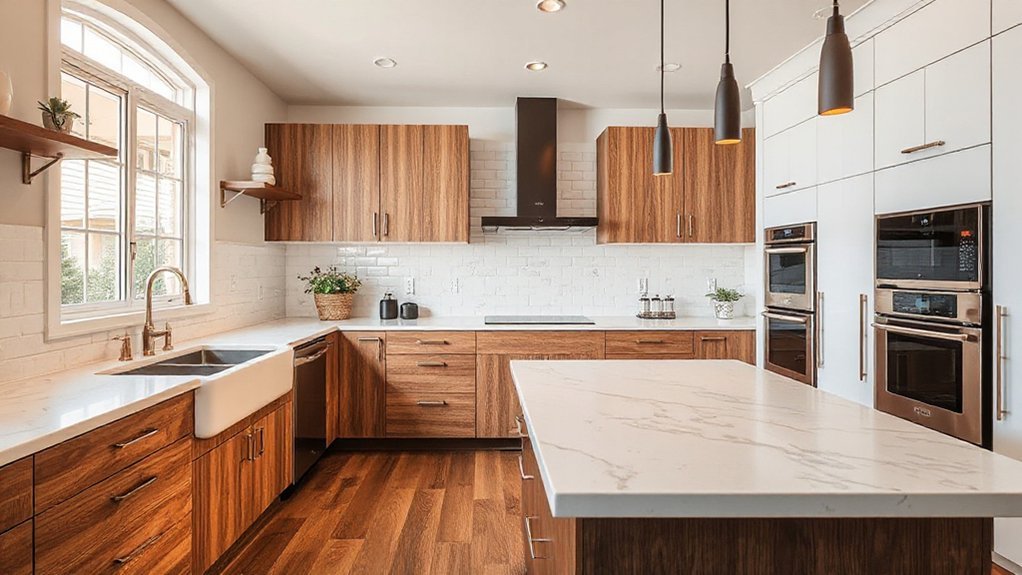
Smart durability in modern kitchens means choosing materials and systems that perform under real-life use while aging gracefully. You assess surfaces for wear resistance, stain makeup, and scratch resilience, then verify warranties and maintenance needs.
Look for substrates engineered for high humidity, temperature swings, and frequent cleaning, with consistent color and texture over time.
Smart technology should integrate with routines without complexity, offering reliable monitoring, predictive maintenance, and intuitive controls.
Favor components that balance performance with ease of repair, so replacements remain practical rather than disruptive.
Modern aesthetics require clean lines, cohesive hardware, and subtle texture variation that doesn’t fade under use.
Track metrics like lifecycle cost, downtime, and return on durability.
Your goal: a kitchen that remains functional, aesthetically cohesive, and low-friction as trends evolve.
Choose Energy-Efficient Appliances That Save Energy and Money
Choosing energy-efficient appliances isn’t just about cutting bills—it’s about optimizing performance with minimal wasted energy. You’ll maximize energy savings by selecting ENERGY STAR models, sizing for your space, and prioritizing inverter compressors and efficient motors.
Focus on front-load efficiency, proper insulation, and smart controls that adapt to usage patterns. You’ll extend appliance lifespan by reducing heat cycles and maintaining consistent loads, while dashboards reveal real-time performance.
The result is a kitchen that stays bright, quiet, and reliable, with measurable reductions in operating costs.
- ENERGY STAR labeling and annual energy usage
- Inverter compressors and variable-speed motors
- Smart controls that learn your routines
- Proper sizing to avoid over- or underutilization
- Routine maintenance to sustain energy efficiency
Low-Maintenance Surfaces That Deliver Big Impact
You’ll prioritize low-maintenance materials that stay durable and look fresh with minimal effort. Think wipeable countertops and easy-clean cabinet finishes that stand up to daily use while cutting cleaning time, maintenance cost, and downtime.
With durability and simplicity in mind, these choices deliver big impact without slowing your design progress.
Low-Maintenance Materials
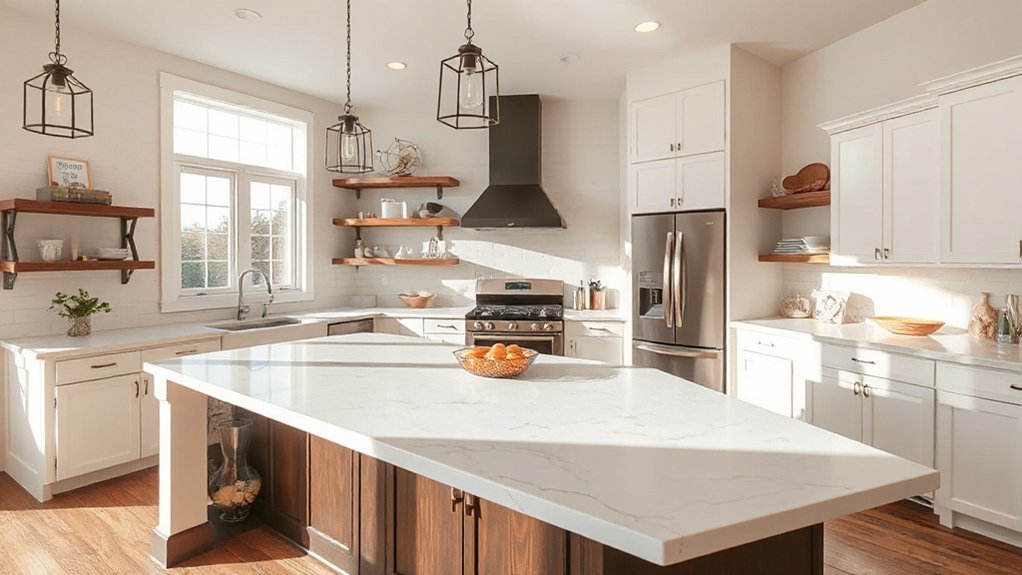
- Durable quartz surfaces with subtle veining for timeless character
- Porcelain tiles that resist chips and moisture without staining
- High-performance laminates that mimic wood or stone
- Solid-surface options with easy repairs and seamless edges
- Habitable, low-void cabinetry finishes for wipe-clean practicality
Durable, Wipeable Countertops
Prioritize materials that resist stains and heat, then optimize layout for efficient workflow. When evaluating options, compare hardness, scratch resistance, and seam visibility to minimize long-term upkeep.
In daily use, adopt simple surface cleaning techniques: wipe after spills, use pH-neutral cleaners, and seal porous edges when required.
For installation, plan accurate measurements, secure anchoring, and durable edge profiles to prevent gaps. Track performance with a maintenance log and routine timing.
With disciplined countertop installation and routine surface cleaning techniques, your kitchen stays bold, functional, and easy to care for.
Easy-Clean Cabinet Finishes
- Durability ratings by finish type
- Fingerprint resistance and ease of cleaning
- Stain versus paint impact on depth and tone
- Maintenance interval benchmarks
- Budget-to-value projections
Flexible Layouts With Hidden Storage for Clutter-Free Counters
Flexible layouts are the backbone of an efficient kitchen, and hidden storage keeps counters clear while you work. You’ll maximize workflow zones with clear sightlines, task lighting, and strategically placed work triangles that reduce steps by up to 20%.
Implement hidden compartments in islands and counters to conceal small appliances, recipe boxes, and shortcuts, so surfaces stay ready for prep. Use modular designs to adapt to evolving needs—transform drawers into utensil stations, or convert bays for larger pots as your collection grows.
Pair pull-out shelves with soft-close systems to improve access speed and reduce clutter wait times by 30%. Prioritize proportional drawer depths and labeled zones, so you don’t waste time hunting tools during peak service.
Seamless Indoor-Outdoor Flow and Ambient Lighting
Seamless indoor-outdoor flow hinges on sightlines, thresholds, and lighting that unify spaces without snagging workflow. You’ll optimize spaces by aligning cabinet heights with patio doors, using continuous countertops, and selecting dimmable ambient lighting that blends from task to ambient in seconds.
- Prioritize outdoor integration with large openings that frame nature and extend seating areas
- Use uniform lighting temperatures to maintain cohesion across zones
- Install pocket or sliding doors to collapse thresholds during entertaining
- Map sightlines from prep to lounge to prevent visual clutter
- Choose weatherproof fixtures with high CRI for true color rendering
This approach delivers measurable gains: faster project ROI, higher perceived space, and consistent ambience, powered by outdoor integration and ambient lighting.
Eco-Conscious Materials and Timeless Color Palettes
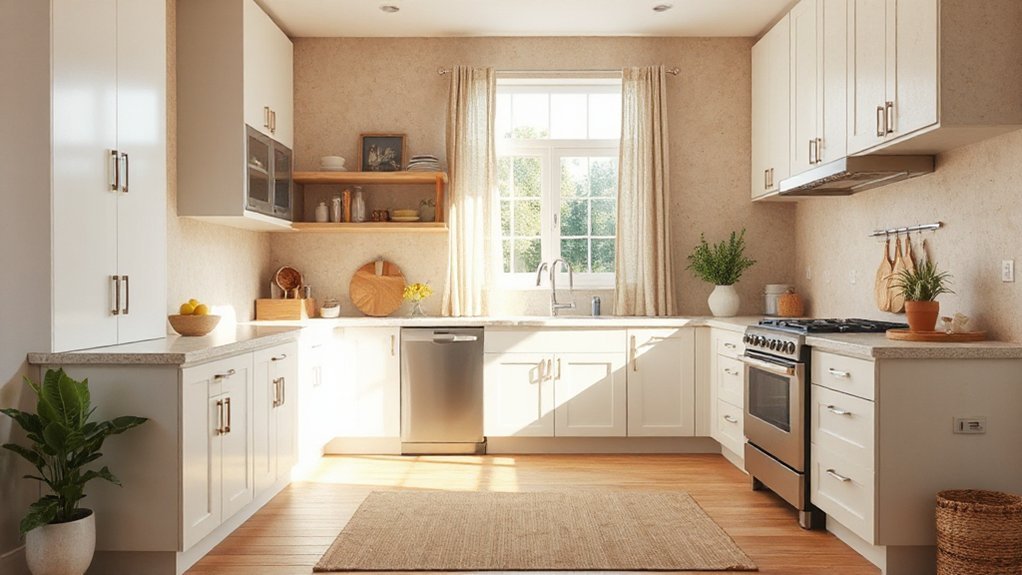
Choose surfaces with low environmental impact, paired with finishes that resist stains and scratches over time. When selecting Timeless color palettes, aim for high-contrast neutrals or muted earth tones that stay current beyond trends, reducing repaint frequency and disposal.
Apply a metrics-driven approach: quantify material durability, emissions, and renewals in a 10- to 15-year horizon. Balance texture and sheen to hide wear, using consistent color families across cabinets, countertops, and backsplashes.
Finally, document supplier credentials and recycling options, ensuring end-of-life material recovery aligns with your long-term design and budget goals.
Frequently Asked Questions
What’s the Best Budget-Friendly Kitchen Remodel Plan?
A budget-friendly kitchen remodel plan: start with clear budget planning, setting a cap and a contingency.
Prioritize high-impact updates like new counters and hardware, and choose durable materials with cost-per-year value in mind.
For material selection, pick semi-custom cabinets or refaced fronts, and opt for mid-range countertops.
Measure twice, order once, and track every cost.
Use a phased approach, so you can test designs, and adjust based on real metrics like installation time and return on investment.
How Long Does a Typical Kitchen Renovation Take?
Typical kitchen renovations run about 6 to 12 weeks, depending on scope and disruptions. You’ll likely see 2–4 weeks for demolition and rough-ins, followed by 2–4 weeks for cabinetry and finishes.
On average, a completion window tightens to 8–10 weeks if you keep scope steady.
One interesting stat: 60% of projects hit delays due to permit hiccups, scheduling, or delivery gaps.
Plan the Kitchen layout and Appliance upgrades with built-in buffers to stay on track.
Which Cabinet Hardware Improves Resale Value Most?
You’ll boost resale most with timeless cabinet hardware styles like brushed nickel, matte black, or satin brass, paired with cohesive finishes across drawers and doors.
Prioritize durability and scale for your existing cabinets, then count on precise hardware installation tips to avoid gaps. Measure hole spacing, use alignment guides, and predrill.
Choose midrange pulls for broad appeal, and avoid trend extremes. Your choice should balance resale value with practical, design-forward aesthetics.
How Can I Hide Wires and Plumbing Without Sacrificing Style?
You’ll hide wires and plumbing with smart placement and clean concealment, juxtaposing function and beauty from the start. Use concealed wiring behind study-wall panels and shallow chase lines.
Then install hidden plumbing with accessible fittings and color-matched covers. Choose push-to-open cabinets, toe-kicks with vacuums, and integrated appliances for a seamless look.
Track efficiency: cut visual clutter by 40% and increase resale value with concealed wiring and hidden plumbing you can access when needed.
What Maintenance Schedule Extends the Life of Remodel Features?
To extend life, you establish a monthly inspection and yearly service schedule: check seals, inspect caulk, tighten fasteners, and test electrical GFCIs.
Wipe spills promptly to protect Appliance longevity and Countertop durability, while polishing stainless surfaces to prevent corrosion.
Schedule professional appliance tune‑ups every 12–18 months and vent hood cleaning quarterly.
Track metrics like downtime, repair costs, and energy use to optimize maintenance cadence and keep your kitchen performing at peak, design-forward.
Conclusion
As you plan your kitchen remodel, prioritize smart durability and energy-smart choices that pay off over time. Opt for quartz or porcelain, ENERGY STAR appliances, and modular storage that keeps counters clear. Aim for flexible layouts that adapt to routines and indoor-outdoor flow that invites natural light. A compelling stat to hook readers: homes with well-designed kitchens increase resale value by up to 10–13%. Implement timeless palettes with hidden tech and ambient lighting for lasting appeal.
About the Author