Think of your UK new-build as a blank canvas you can shape for lasting comfort. Prioritize daylight with smart window placement, open sightlines, and flexible zones that feel spacious. Choose durable, low-maintenance materials and energy-friendly lighting. Maximise storage with tall cabinets, hidden compartments, and modular pieces that reconfigure as needs change. Use a warm, minimalist palette—oak, terracotta, soft textiles—paired with clean lines. Want practical tips that keep evolving with you? Keep reading to learn more.
Fix the Blank Slate: Lighting, Space, and Durability for UK New-Builds
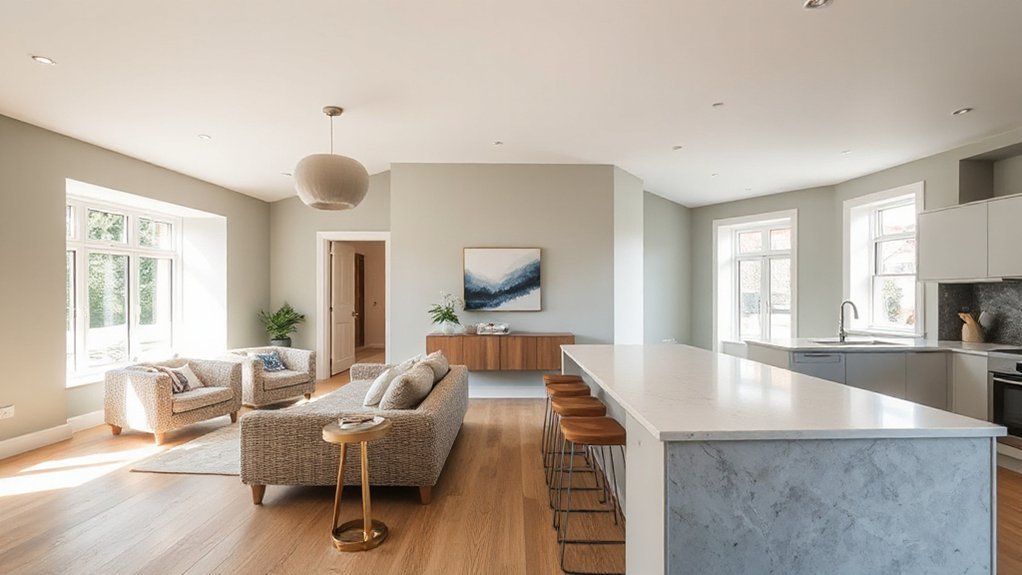
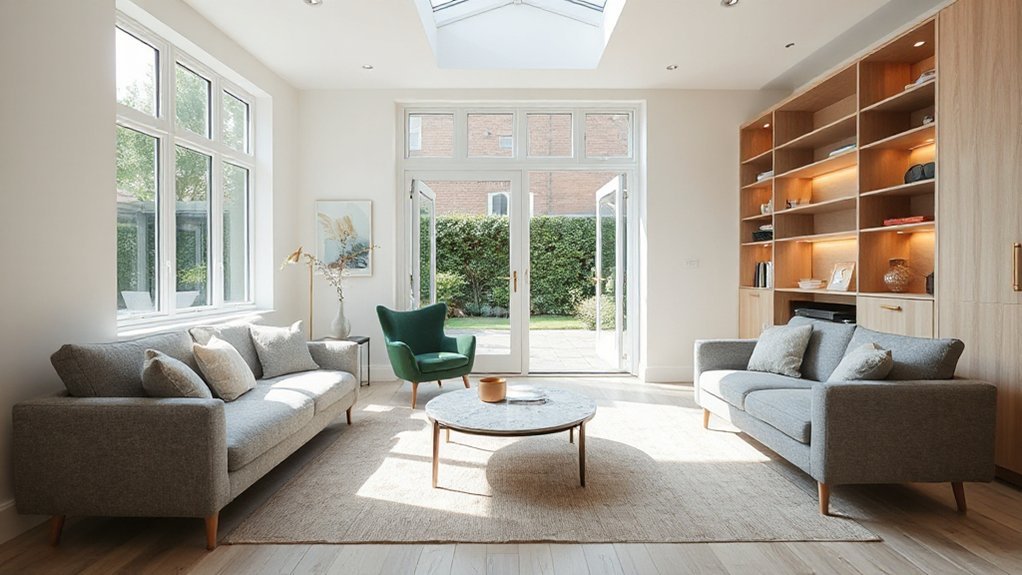
Kicking off a UK new-build means you’re shaping the blank slate from the start, so prioritize lighting, space, and durability early. You design daylight paths first: place windows for natural lighting that maximizes warmth without overheating. Choose glazing and orientation that deliver steady, glare-free comfort throughout seasons.
Plan open sightlines and flexible zones to expand perceived space, using durable materials that withstand active living. Integrate ambient illumination with task lighting at key work areas, so rooms feel coherent after dusk.
Prioritize low-maintenance finishes to save on upkeep and repairs. Consider thermal mass and material resilience to minimize energy use and maintenance.
Document layout with scalable features, like recessed hubs and simple wiring, that accommodate future reconfigurations. This grounded approach yields lasting comfort, efficiency, and timeless practicality.
Natural lighting supports vibrant, balanced interiors.
Smart Storage for Small UK Rooms: Maximise Every Inset and Nook
Small UK rooms demand clever storage that fits the footprint without stealing light or flow. You’ll maximise every inset and nook with targeted, practical design.
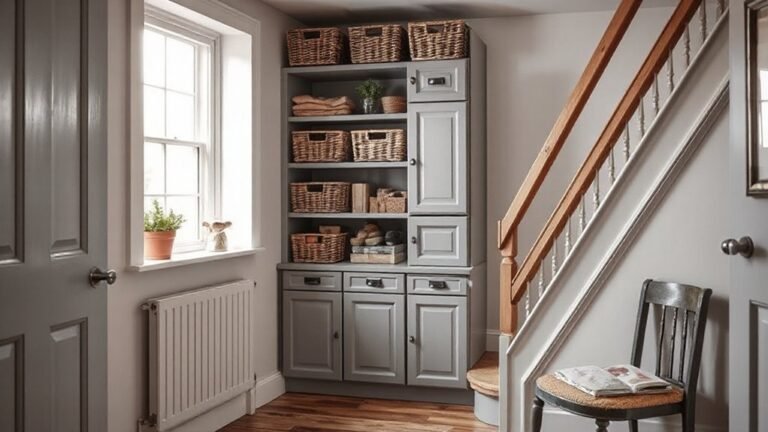
Start with vertical solutions: tall cupboards, recessed shelving, and wall-mounted units pull weight off floors while preserving floor space. Use hidden compartments for essentials like seasonal textiles or documents, keeping surfaces uncluttered.
Choose clever shelving with adjustable heights and slim brackets to adapt as needs change. Integrate beds, sofas, and window seating with built-in storage so you don’t trade livability for capacity.
Opt for shallow cabinetry in alcoves and between studs to avoid bulk. Use uniform finishes to create a seamless look that visually enlarges rooms while delivering discreet, accessible storage.
Durable Materials for Busy UK Homes: Floors, Surfaces, and Upholstery That Last
Durable materials are non-negotiable in busy UK homes, where floors take the most wear and upholstery handles everyday use. You’ll prioritise resilience without sacrificing finish.
For floors, choose engineered timber or high-density laminate with strong wear layers, plus protective coats or UV finishes to resist scratching.
Surfaces benefit from quartz or solid-surface alternatives that resist heat, stains, and moisture while staying easy to clean.
Upholstery should blend performance fabrics—polyester blends or woven nylons—that resist pilling and fading, paired with durable frame construction.
Look for timber trims and hardware in corrosion-resistant finishes for long-term consistency.
Prioritise timeless elegance with simple, durable textures, and lean toward sustainable choices, such as responsibly sourced materials and low-VOC finishes, to support durability and health over time.
Minimalist Palette With Warmth: How to Land a Cozy, Modern Look
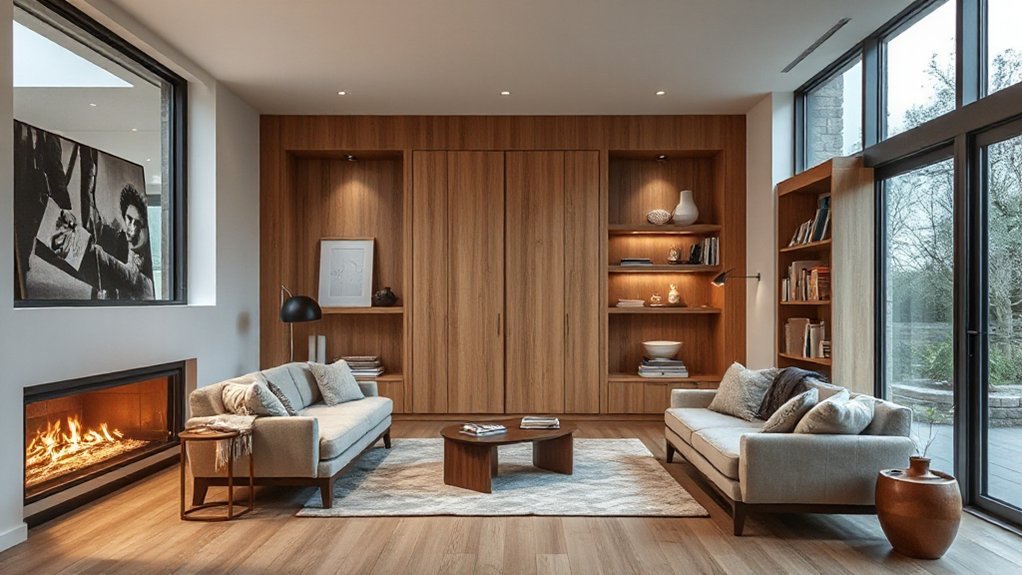
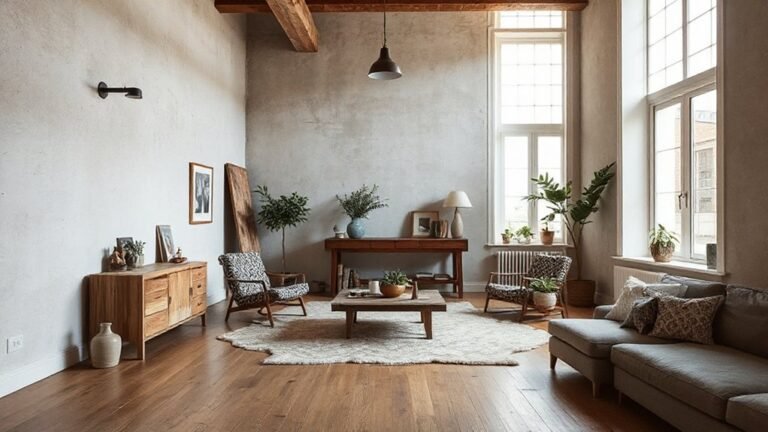
Start with warm-toned materials to create instant coziness without adding clutter. Pair minimalist textures with clean lines to keep the look modern.
Let warmth come through in wood, leather, and soft fabrics. Keep the palette restrained but inviting, so you feel at home in a calm, contemporary space.
Warm-Toned Materials
Opt for oak or maple with a natural matte finish, paired with brass hardware for a subtle glow. Choose ceramic or terracotta tiles in earthy tones to ground kitchens and bathrooms.
In living spaces, mix limestone, travertine, or warm concrete with soft textiles in cream or taupe. Keep contrast minimal and guarantee lighting enhances the warmth.
Create a cozy ambiance by balancing textures: smooth surfaces with tactile fibers. Introduce inviting accents like woven baskets, linen cushions, and wood-framed mirrors to maintain a calm, cohesive look.
Maintain restraint to preserve the minimalist feel.
Minimalist Textures, Warmth
As you shift from warm-toned materials to a minimalist, cozy look, focus on how textures create depth without crowding the palette. Use tactile variety to convey warmth while preserving clean lines.
Start with a restrained base: pale walls, matte surfaces, and a simple, uncluttered furniture silhouette.
Introduce textured accents through carefully chosen finishes—soft wool, brushed concrete, or natural stone—alongside slender metal details to keep the look modern.
Layer lighting to highlight texture without overpowering the space, using warm bulbs and directional spots.
Incorporate cozy textiles in moderation: a throw, a rug, and a limited set of cushions that echo the palette.
Maintain balance by pairing bold texture with quiet surfaces, ensuring every element feels intentional and breathable.
Layout Tweaks for Flow and Future-Proofing UK Homes
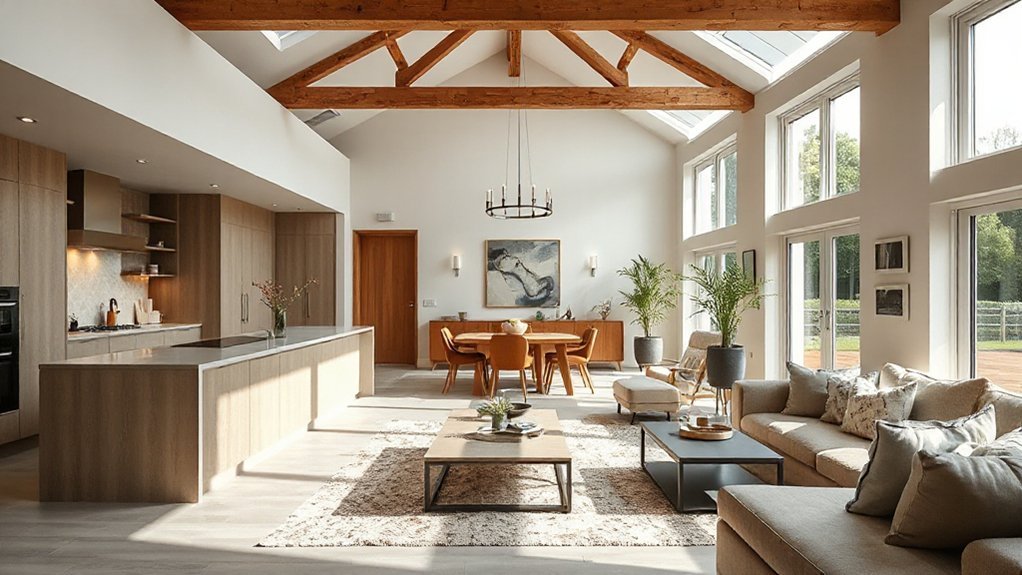
You’ll start with a flexible ground-plan that can adapt as family needs change, keeping main living areas easily reachable. Consider universal design pathways now so doors, thresholds, and circulation stay smooth for all ages and stages.
Identify future-ready utility chokepoints and plan routes that minimize rework as tech and systems evolve.
Flexible Ground-Plan Layouts
Could a flexible ground-plan save you from future renovations? Yes, because flow matters as both rooms and lifestyles evolve.
Start with clearly defined but movable zones: a central hub for daily use, with adaptable zones around it to reconfigure as needs shift. Prioritize door locations, sightlines, and plumbing access so you can rework spaces without major disruption.
Use modular furniture and built-in storage that can reassign function—think benches that tuck under breakfast bars, or shelves that become room dividers.
Plan scalable spaces: a living area that can become a study nook, or a dining zone that doubles as a homework hub.
Keep circulation clear, avoid dead corners, and place power points and data ports where future layouts may emerge. This approach reduces costs and surprises down the line.
Universal Design Pathways
Prioritize continuous corridors, minimal thresholds, and ample toe-kicks under counters to prevent trips. Use consistent flooring, contrasting edges, and clear sightlines to support navigation for all residents.
In kitchens, position work zones on a single plane where possible, with pullout shelves and reachable storage at varied heights.
Bathrooms benefit from level-access showers, grab bars, and lever-handled taps.
Lighting should be glare-free and layered, with motion-activated options for hands-free use.
Consider future-proofing by wiring for smart-control systems and ensuring doorways remain adaptable.
Universal design, accessible features, and thoughtful detailing combine for practical, resilient living spaces.
Future-Ready Utility Chokepoints
Position mains in a central, stable zone—near kitchens and bathrooms, but with separate routes for HVAC and data lines. Use vertical shafts to consolidate plumbing, electrical, and smart utility elements, reducing corridor clutter and friction.
Plan future proofing infrastructure with removable panels and labeled conduits, allowing quick upgrades without wall damage. Limit cross-traffic between public and private zones by aligning utility hubs with load centers.
Choose compact, modular service cores that can expand as demands grow, and document routes clearly for builders. This approach keeps spaces flexible, efficient, and ready for evolving smart utility needs.
Budget-Boosting Upgrades That Deliver Big Impact Now
If you’re aiming to boost your new-build’s appeal without breaking the bank, start with high-impact, affordable upgrades you’ll notice right away. Focus on lighting, hardware, and paints that transform spaces without a full refresh.
Swap dated fixtures for sleek, budget-friendly options to lift ceilings and corners. Choose a neutral, durable paint for walls and ceilings, then add eco-friendly finishes like low-VOC coatings to maintain air quality.
Update cabinet handles, taps, and door hardware in brushed metals to create a cohesive look across rooms. Introduce vintage accents through a few well-chosen accessories, avoiding clutter while adding character.
Prioritize hinges, switches, and outlets with clean lines for a polished finish. This approach delivers visible results quickly and costs less than a full remodel.
Frequently Asked Questions
How Can I Maximize Natural Light in a New-Build UK Home?
Install larger, unobstructed windows or add slim skylights, then use light reflective paints and minimal window treatments to maximize daylight. Choose light fabrics, keep furniture low-profile, and position mirrors strategically to bounce natural light around your space.
What Are Budget-Friendly Durable Flooring Options for Busy Households?
You’ll want budget-friendly, durable flooring like luxury vinyl or laminate; they’re resilient, easy to clean, and eco friendly options. Look for wear layers and warranties. Choose stylish patterns to keep spaces lively without sacrificing practicality or comfort.
Which Finishes Keep Interiors Timeless yet Warm in UK Climates?
Timeless textures and warm color palettes keep interiors inviting in UK climates. You’ll want natural fibers, matte finishes, and layered lighting; these finishes resist trends, feel durable, and create cozy, enduring spaces that stay elegant through seasons and moods.
How Can I Future-Proof Wiring and Smart Tech in New Builds?
Future-proof wiring by planning multiple robust data and power runs, including wireless charging and energy efficient wiring. Install modular smart hubs, mesh networks, and high-capacity circuits now, future-proofing with expandable, compliant infrastructure and simple, secure upgrade paths.
Best Low-Maintenance Materials for Busy Family Spaces?
Start with eco friendly finishes, you’ll keep upkeep low. For busy family spaces, choose durable textures and stain-resistant surfaces. Use artistic wall accents sparingly to avoid fingerprints; wipe-clean, robust materials save time and keep spaces feeling fresh.
Conclusion
You’ve got the blueprint: durable materials, smart storage, and a minimalist, warm palette. But the real payoff lives in the details—the lighting you crave, the layout that feels inevitable, the little insins that future-proof your space. Imagine waking to a home that works as hard as you do, with every inset and nook somehow right where you need it. Stay tuned to the choices that turn a new-build into your everyday. The best part? It’s only just beginning.
About the Author