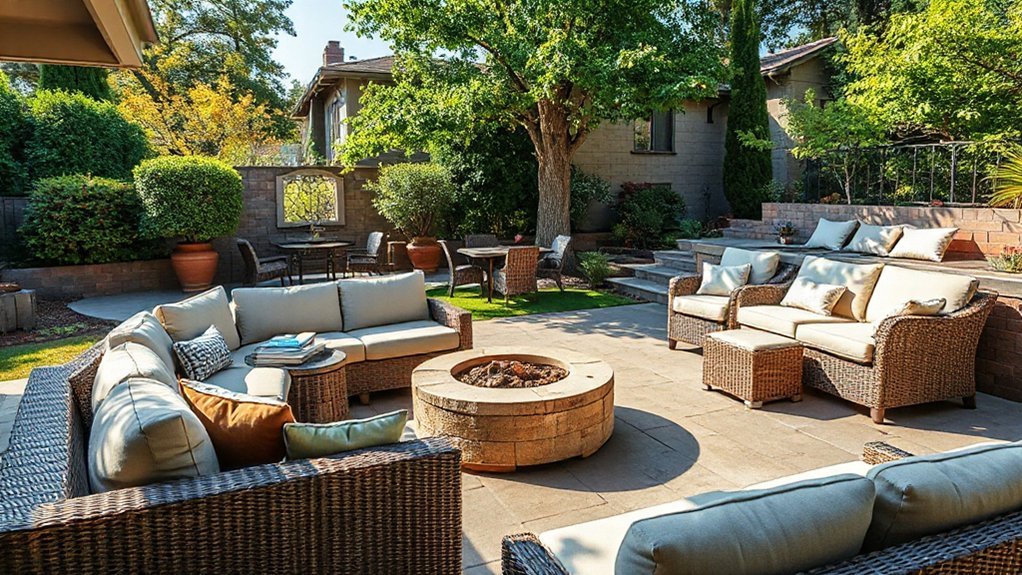
To improve backyard functionality, design distinct zones for dining, lounging, and circulation, using modular furniture that’s easy to rearrange for any gathering. Create intimate conversation corners with varied seating and clear sightlines, and pair low-profile pieces with warm lighting to encourage interaction. Plan a flexible dining nook with foldable leaves and durable cushions, plus a modular chill zone that reconfigures for sun or shade. With durable materials and accessible seating heights, your space stays inviting—and you’ll discover more ways to optimize each area.
Envision Functional Outdoor Seating Zones for Your Space
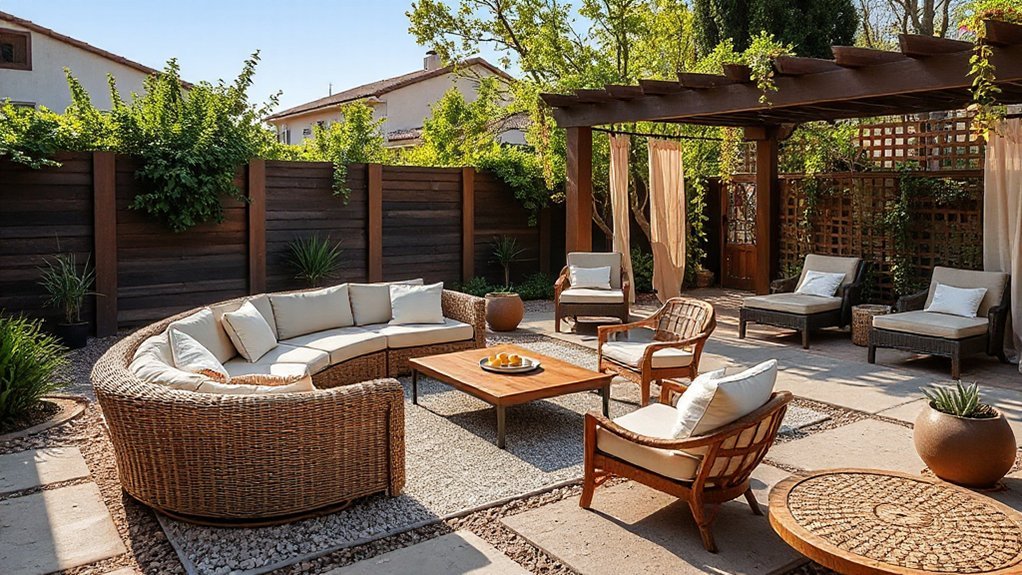
You can design clear, functional outdoor seating zones by mapping distinct areas for dining, lounging, and circulation. When you draft zones, prioritize Seating ergonomics so chairs and cushions support posture during long meals or chats.
Position dining tables where you can enjoy natural light without glare, and guarantee legroom for every guest.
Create a lounging enclave with low-profile seating that invites relaxation while preserving sightlines to the rest of the yard.
Use clear pathways to prevent crowding and maintain safe traffic flow.
Consider Outdoor privacy with screens, plants, or lattices to reduce exposure from neighbors or passersby without trapping the space.
Label each zone’s purpose in your plan to guide furniture choices and maintain cohesive, versatile function.
Define Conversation Corners Without Crowding
To keep conversation corners from feeling crowded, carve out intimate nooks that feel separate yet still connected to the whole yard. Define conversation corners by clear acoustic and visual boundaries, not physical walls. Use low-profile seating arranged in small, intentional clusters to form true conversation zones.
Place each cluster on a subtly different plane or with varied textures—gravel, turf, or pavers—to signal its purpose without isolating it. Maintain sightlines to preserve cohesion and allow easy flow between zones.
Choose furniture in complementary heights to avoid crowding and preserve air around speakers. Equip each area with a single lighting layer and a weather-ready surface for effortless segmentation.
These steps cultivate social clusters that feel inviting, organized, and integrated within the overall landscape.
Plan a Flexible Outdoor Dining Nook for Any Gathering
A flexible outdoor dining nook adapts to gatherings of any size by combining modular seating with a versatile table setup. You opt for lightweight, weathered-finish pieces that can be rearranged without tools, so guests feel welcome whether it’s an intimate dinner or a full family feast.
Choose a rectangular table with folding leaves or a round pedestal base to maximize legroom and flow. Keep the layout open by placing seating along multiple angles, allowing conversations to span the group.
Use cushions with UV protection and subtle outdoor decor that coordinates with your garden colors. Plan for easy access to lighting and power for ambiance.
Integrate gardening tips like container herbs nearby to enhance aroma and usability. This approach stays flexible, practical, and inviting.
Build a Modular Chill Zone You Can Reconfigure on a Whim
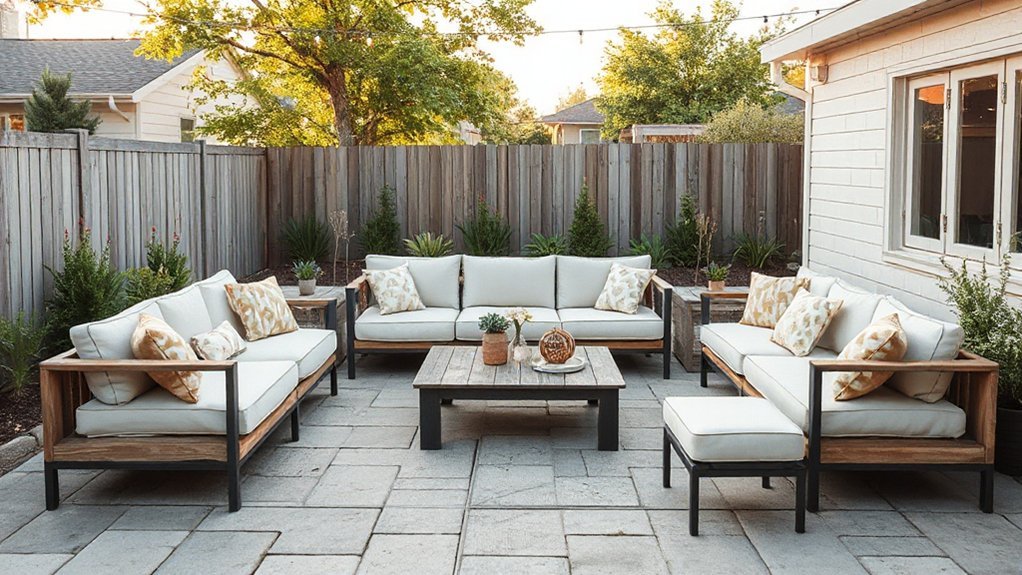
You can design a modular chill zone that reconfigures in minutes, using lightweight pieces that snap or stack for instant comfort changes.
Consider modular pieces that prioritize comfort zones—seating, lighting, and shading—that you can rearrange without tools.
This approach keeps your space flexible, so you can tailor the vibe to the group and weather with minimal effort.
Modular Flexibility Tips
Need a flexible chill zone you can rework on a whim? Start with modular components that lock in place yet rearrange effortlessly. Choose lightweight, weatherproof panels or furniture casters to shift seating angles without tools.
Use a simple grid or color-coded connector system so you can reconfigure layouts in minutes, matching sun exposure and traffic flow. Store compact cushions and foldable tables in weatherproof bins to keep everything accessible yet tidy.
Favor pieces that multitask—benches with built-in storage, ottomans that double as side tables. Align elements with landscape design principles: sightlines, focal points, and safe circulation paths.
For outdoor decor, add removable rug corners and planters that delineate zones without heavy commitment. Practice routine checks for stability and surface wear to preserve modular integrity.
Reconfigurable Comfort Zones
Choose compact lounge chairs, ottomans, and a foldable coffee table that tucks away when other activities take precedence. Use weatherproof fabrics and quick-connect cushions to swap looks without tools.
Position lighting near focal points so you can reconfigure without recalibrating ambiance. Integrate garden lighting along paths and around seating modules to create depth and safety during dusk.
For versatility, store components on a slim rack or in stackable crates, enabling rapid reassembly for gatherings or quiet evenings. Finish with cohesive outdoor decor to maintain a polished, flexible space.
Establish Clear Sightlines With Strategic Seating and Focal Points
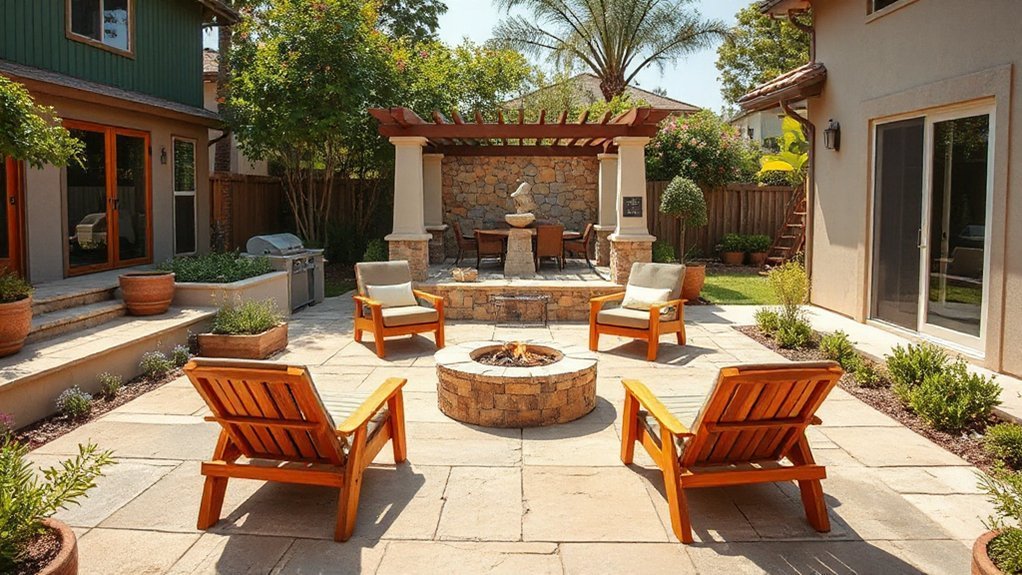
To establish clear sightlines, start with clear sightline principles that prioritize unobstructed views from key seating areas.
Arrange strategic seating so pathways and focal points guide the eye without crowding—center focal points to anchor the layout and draw attention where you want guests looking.
Keep circulation smooth and sightlines continuous to enhance comfort, safety, and social interaction.
Clear Sightline Principles
Clear sightlines are essential for safety, flow, and comfort in an outdoor seating area. You shape sightlines by choosing seating angles, focal points, and clear pathways that guide the eye without clutter.
Prioritize a primary visual axis—from entry or primary gathering zone—to a defined focal point, such as a fire pit or sculpture. Keep sightlines unobstructed by low-profile furniture, planters, or decorative screens that creep into the line of sight.
Use varied elevations to maintain depth while preserving clarity, and position seating to create intimate pockets without breaking the overall line. Consider outdoor privacy elements that don’t interrupt visual sightlines; woven screens or trellises should frame rather than block your view.
This approach yields safe, easy movement and purposeful connection.
Strategic Seating Arrangements
Prioritize modular pieces that can reframe layouts as seasons shift or guests change, ensuring easy access paths without narrowing perspectives. Use low-profile furniture and cohesive materials to maintain openness, letting the landscape remain the star of garden aesthetics.
Position a primary seating cluster to anchor a focal point, then create secondary nooks that invite intimate exchanges without obstructing sightlines. For outdoor decor, select durable textures and finishes that echo surrounding color palettes, enhancing readability and balance throughout the space.
Centering Focal Points
Choose a single, dominant focal point and arrange surrounding pieces to frame it, creating a clear visual path from entry points to the center. Consider focal point placement that maintains openness while avoiding obstructions; low-backed furniture preserves lines of sight and invites conversation without clutter.
Use symmetry or deliberate asymmetry to achieve visual balance, depending on your yard’s shape and vibe. Avoid competing elements near the main feature; limit color variations and texture shifts to support coherence.
When done, the space feels intentional, inviting, and easy to navigate.
Align Pathways for Smooth Transitions Between Areas
Aligning pathways between seating zones guarantees smooth, intuitive circulation from one area to the next. You should map routes that connect seating clusters with minimal detours, using straight or gently curved lines that guide movement naturally.
Choose surface materials that contrast slightly with surrounding turf or decking to define paths without shouting paths, and maintain uniform width to avoid bottlenecks.
Consider sightlines: keep seating openings visible from entry points, so guests can navigate without extra cues.
Integrate garden sculptures at focal points along the route to anchor flow, not distract it, and balance with subtle outdoor lighting to illuminate steps and passages.
Prioritize clear access to shade, water features, and storage, ensuring the layout remains adaptable for gatherings.
Choose Weather-Smart Outdoor Furniture for Year-Round Use
As you plan for year-round enjoyment, choose weather-smart outdoor furniture that withstands sun, rain, and temperature swings while maintaining comfort and style. Prioritize frames built from powder-coated aluminum or teak, which resist corrosion and warping.
Look for cushions with quick-dry foams and mesh-covered cores to shed moisture fast. Opt for rain-resistant fabrics that resist fading and mildew, ensuring longevity in varied conditions.
Favor weatherproof finishes on wood and metal to minimize staining, cracking, or rust after exposure to UV rays and precipitation. Select modular pieces that adapt to changing spaces, enabling easy reconfiguration for unexpected weather shifts.
Finally, verify warranties cover UV exposure, moisture cycling, and fading, reinforcing confidence in year-round outdoor use.
Layer Comfort With Cushions, Textiles, and Warm Lighting
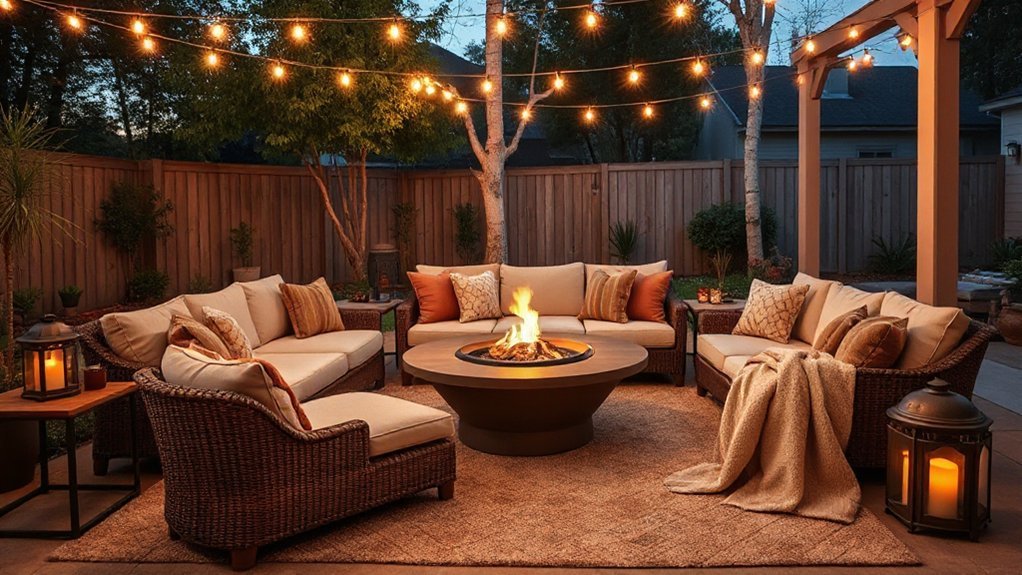
Layer your outdoor setup with cozy cushions and textiles that invite lingering. Then pair them with warm lighting to soften evenings.
Consider how layouts can balance comfort and flow, so guests can relax without crowding the space.
We’ll explore practical choices that highlight comfort, from fabric durability to lighting warmth, for a cohesive, inviting area.
Cozy Cushions and Textiles
Cozy cushions, plush textiles, and warm lighting transform an outdoor space into an intimate retreat. You’ll craft comfort through careful textile layering and smart cushion selection, ensuring durability without sacrificing style.
- Textile layering: mix textures (canvas, linen, velvet) for depth, balancing color and pattern.
- Cushion selection: choose cores that hold shape; pair firm with soft back cushions for mixed support.
- Color coordination: align seating hues with accent textiles to create cohesive contrast.
- Seasonal practicality: use removable covers and weather-ready fabrics for quick refreshes and longevity.
Warm Lighting Effects
Warm lighting enhances comfort by softly washing textures and cushions in a welcoming glow. You’ll elevate evenings by layering light sources that highlight fabrics without glare. Use warm-toned LEDs or fire-safe bulbs to create a steady, gentle spread across seating zones.
Decorative lanterns add focal points, casting patterns that complement pillows and throws rather than overpower them. Position lanterns at varying heights along paths and corners to guide movement and invite lingering.
Integrate subtle uplighting behind planters to sculpt silhouettes and keep conversations readable without strain. Dimmers let you shift the mood from lively to intimate, sustaining a festive ambiance without loud brightness.
Keep cords concealed and fixtures weather-rated for safety and longevity.
Layouts For Comfort
Combining cushions, textiles, and warm lighting transforms a seating area into a comfortable, inviting retreat. You’ll layer softness with durable textures, balancing color and pattern to define zones without clutter.
Choose cushions with quick-dry fills and sun-safe fabrics, then pair textiles that resist fading. Add warm lighting to extend usability after dark, using dimmable options and soft amber tones.
Keep outdoor decor cohesive by repeating motifs in pillows, throws, and lanterns, while ensuring accessibility and airflow. Plant arrangements frame seating, add fragrance, and reduce glare.
Focus on comfort without sacrificing function, and test sightlines from each chair. Your layout should feel intimate yet open, weather-resilient, and easy to refresh seasonally.
- Assess sightlines and traffic flow
- Layer cushions by function and durability
- Integrate lighting for ambiance and safety
- Refresh with strategic plant arrangements
Scale up With Modular Layouts for Parties of Any Size
Modular layouts let you scale seating for any party by combining compact blocks into a custom floor plan. You can adapt blocks to accommodate circulating guests, service zones, and conversation groups without reworking the entire setup.
Start with a core grid of two- to four-seat modules, then add ends for overflow or a focal table as needed. Keep traffic clear by placing aisles between clusters and ensuring access to exits and amenities.
Choose modular pieces that nest securely and resist tipping on uneven ground. Integrate garden lighting to define edges and extend usability after sunset, and weave in patio privacy with screens or planters to create intimate pockets within the larger layout.
The result is flexible hosting space that stays organized, functional, and visually coherent.
Optimize Sun and Shade Through Smart Seating Placement
As you plan seating, track sunrise-to-shade timing to position guests where sun shifts into comfortable shade.
Use shadow play to verify warmth and comfort, adjusting tables and umbrellas so passengers aren’t squinting or overheating.
Clip, cling, and coordinate shade by integrating movable structures with natural cues for a reliable, all-day comfort zone.
Sunrise to Shade Timing
- Identify sunrise planting spots to plant low‑growth, sun-loving seating nearby.
- Track the noon arc to place a shaded lounge area just beyond direct rays.
- Use deciduous plantings to modulate shade as seasons change.
- Schedule meals and gatherings around predictable sun shifts for consistent comfort.
Shadow Play For Comfort
To optimize comfort, place seating where shade shifts with the sun so guests stay cool without losing the view. You’ll use the landscape’s natural shadow patterns to guide placement, not just fixed umbrellas.
Position seating along lines where sun shadows shorten in the morning and lengthen in the afternoon, creating gradual changes rather than abrupt shifts. Consider a pergola, deciduous trees, or tall shrubs to cast changing shade across seating zones.
Allow enough space for recliners and conversation areas to remain in the cooler, shadowed pockets as the day progresses. Mark sightlines to preserve views while maintaining shade continuity.
Test afternoon angles with a simple sun dial or phone app, adjusting chairs to balance glare control and social interaction.
Clip, Cling, and Coordinate Shade
1) Assess sun angles at key times
2) Layer shade with movable elements
3) Place seating for ideal sightlines
4) Test and tweak seasonally
Incorporate Storage and Multi-Purpose Surfaces for Function
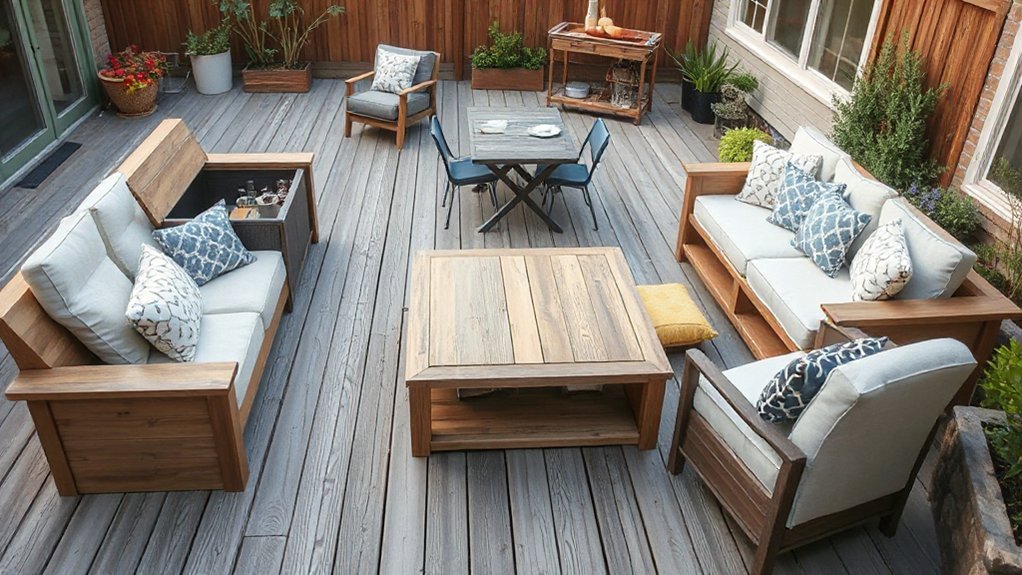
Incorporating storage and multi-purpose surfaces transforms outdoor seating into a practical, efficient space. You’ll unlock a clutter-free zone by choosing benches with built-in drawers or lift-top lids, giving you quick access to cushions, games, and outdoor chargers.
Pair compact underseat storage with a weatherproof cabinet for larger supplies, such as cleanable table linens or picnic sets. Opt for multi purpose surfaces that double as dining space and workstations, like a collapsible-height table attached to a sofa or a phenolic top cart that rolls between seating clusters.
Prioritize durable, fade-resistant materials and simple maintenance. Plan layouts so storage locations stay unobtrusive yet reachable. This approach delivers consistent organization, reduces trips inside, and keeps essentials ready for spontaneous gatherings. storage solutions, multi purpose surfaces.
Use Natural Dividers: Fire Pits, Water Features, and Greenery
Natural dividers master outdoor seating layouts by shaping flow and defining zones without shrinking the space. You’ll use fire pits, water features, and greenery to create natural barriers that guide traffic and establish clear areas for dining, lounging, and socializing. These elements offer aesthetic separation while keeping sightlines open, so the yard feels connected rather than segmented.
Choose materials and heights that complement your furniture and landscape, ensuring safe radii and ease of maintenance. Consider placement to minimize glare, wind, and cold spots. Maintain balance by pairing rugged textures with softer greenery. You’ll gain versatile zones that adapt to weather, gatherings, and daily use without clutter.
- Fire pits as focal dividers
- Water features for soft separation
- Strategic greenery for volume and flow
- Material harmony across zones
Design Intimate Setups for Cozy Backyard Conversations
Design intimate setups that invite conversation by pairing low-profile seating with warm, ambient lighting. You create close, inviting angles by arranging armless benches, compact loveseats, and ottomans so you can lean in without crowding.
Use lighting accents at eye level or just below, avoiding glare that disrupts concentration. Dimmed string lights, subtle lanterns, and recessed soft-glow fixtures establish a calm baseline, encouraging easy dialogue as the evening progresses.
Integrate garden art that naturally anchors conversations—a sculptural planter, a reflective metal piece, or a textured ceramic focal—without dominating sightlines.
Choose materials with tactile contrast: woven textures beside smooth ceramic and wood alongside stone.
Keep pathways clear, seating faces slightly toward a shared focal point, and maintain intimate sightlines for effortless, engaging exchanges.
Prioritize Accessibility and Seating Heights for All Guests
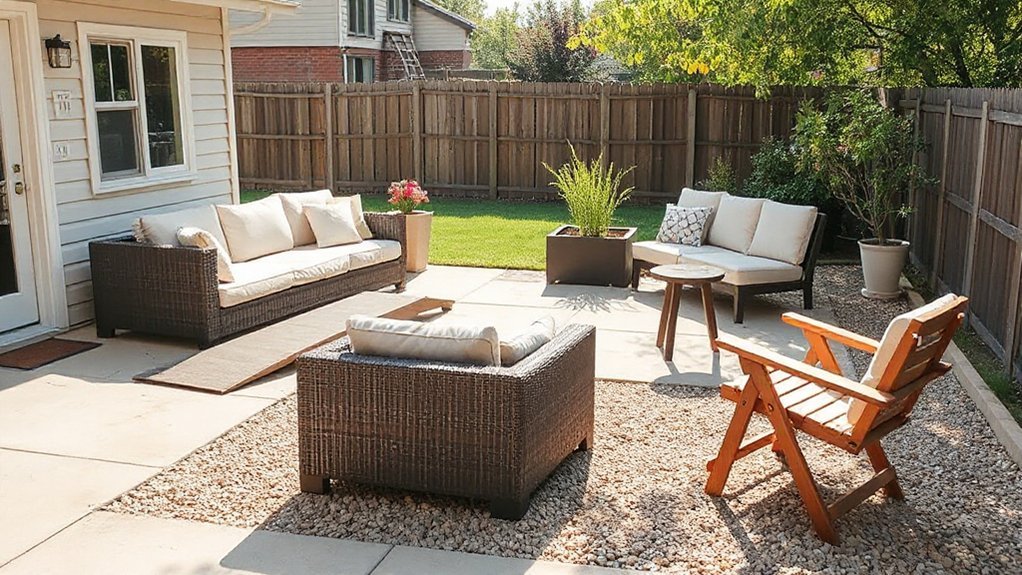
Prioritize accessibility and seating heights so every guest can join the conversation comfortably. When you plan, design for accessible design principles and consider varied needs for easier entry and seating changes.
Aim for clear sightlines and stable, supportive furniture that reduces effort to rise. Height customization matters: offer adjustable chairs or platforms, and place seating at multiple elevations to accommodate wheelchairs, strollers, and shorter guests without sacrificing interaction.
Use rounded edges and slip-resistant surfaces to minimize hazards. Keep aisles wide enough for mobility aids and guarantee at least one option is low-profile or ground-level for floor-seated guests.
Balance aesthetics with function, so everyone feels included and engaged.
- Adjustable seating options
- Multi-height arrangement planning
- Clear sightlines and accessible pathways
- Safe, non-slip surfaces
Budget-Smart Materials: Durable, Stylish, and Easy to Maintain
Budget-smart materials strike the right balance between durability, style, and low maintenance. You’ll choose weather resistant options that withstand sun, rain, and seasonal shifts without frequent replacement. Look for powder-coated metals, UV-stabilized plastics, and composite decking that resist fading and cracking.
Opt for cushions with quick-dry foam and stain-resistant fabrics, and store them during heavy storms or use weatherproof covers. Prioritize materials labeled as budget friendly without sacrificing performance, ensuring you don’t overextend your budget while maintaining a cohesive look.
Consider modular pieces that can be rearranged or expanded, maximizing space efficiency. Verify warranties and maintenance requirements, keeping a simple care routine to extend life.
With thoughtful selection, your backyard stays inviting, functional, and visually balanced year round.
Quick Maintenance Routines to Keep Your Layout Fresh
Ever wonder how to keep your outdoor seating layout looking fresh with minimal effort? A quick routine keeps surfaces clean, cushions vibrant, and plants healthy without a full overhaul. Focus on modest, repeatable steps that deter wear and pests while preserving style and function. Consistency is your ally.
1) Wipe down furniture weekly with a mild cleaner; dry thoroughly to prevent mildew and grime buildup.
2) Rotate cushions and apply a fabric protectant seasonally; air out fabric after rain to prevent mold.
3) Inspect plants for signs of distress; trim dead foliage and refresh mulch to support plant care and pest control.
4) Sweep debris daily and water plants during appropriate windows to reduce pest hotspots.
Regular attention boosts longevity and comfort, balancing plant care and pest control.
Frequently Asked Questions
How Can I Measure Space to Maximize Seating Without Crowding?
Yes—measure in feet, leaving 8–10 ft for main pathways, 6–8 ft between seating clusters, and plan for 9–12 ft total per circle. Include Lighting ambiance and Privacy screens to prevent crowding and enhance comfort.
What Timing and Weather Considerations Affect Material Choices?
Seasonal durability guides your material choices, and weather shapes maintenance needs, so you select weather-resistant finishes and quick-dry fabrics. You’ll plan for seasonal shifts, expect maintenance, and choose materials that handle sun, rain, and humidity with resilience.
Which Seating Heights Best Serve Elderly or Wheelchair Users?
You should choose seating heights that support comfort for elderly or wheelchair users, prioritizing seating ergonomics and Accessibility features; opt chairs with 16–20 inch seat heights, sturdy arms, and easy transfers to maximize stability and independence.
How Often Should I Rotate or Reconfigure Modular Pieces?
Rotate or reconfigure modular pieces as needed, about every few weeks during active use, to preserve adaptability. Regularly assess traffic flow and seating comfort. Emphasize modular flexibility and design adaptability to sustain ideal backyard functionality.
What Budget-Friendly Upgrades Noticeably Improve Comfort and Flow?
“Less is more,” you’ll discover: upgrade with a compact fire pit, warm lighting ambiance, and comfortable cushions. You’ll notice improved flow as you arrange zones, add weatherproof storage, and choose multipurpose pieces that fit your budget.
Conclusion
You sip coffee and notice the layout aligning with your day: a conversation corner, a flexible dining nook, and a modular chill zone, all guiding you toward easy, social moments. Coincidence links the plan to your routines—the sightline to the fire pit mirrors your evening ritual; a pulled-back chair recalls a neighbor’s casual chat. With accessible heights and durable materials, your backyard invites you to linger, reconfigure, and return, again and again.
About the Author