You want to know how much value a pool adds, but the answer isn’t one-size-fits-all. Location, market demand, and your home’s size and design drive the impact, with warm, resort-like markets showing stronger resale gains than cold, dense, or small-lot areas. Maintenance costs, safety, and features matter just as much as size. If you plan to upgrade or install, you’ll want a clear plan for maximizing appeal while weighing total ownership costs—and there’s more to take into account beyond initial price.
Key Takeaways
- The value a pool adds depends on alignment with home footprint, neighborhood norms, and maintenance costs; it often affects value more in resort markets.
- Regional demand, drought considerations, and market conditions shape premiums; oversaturation can reduce value.
- Pool size and features matter: mid-sized pools with efficient, safe upgrades tend to maximize value without excessive upkeep.
- Total ownership costs (installation, maintenance, energy, insurance, safety) influence net value and resale appeal.
- Timing and marketing matter: highlight outdoor appeal in peak season and align pricing with comparable sales and inventory cycles.
What a Pool Adds to Home Value (and Where It Falls Short)
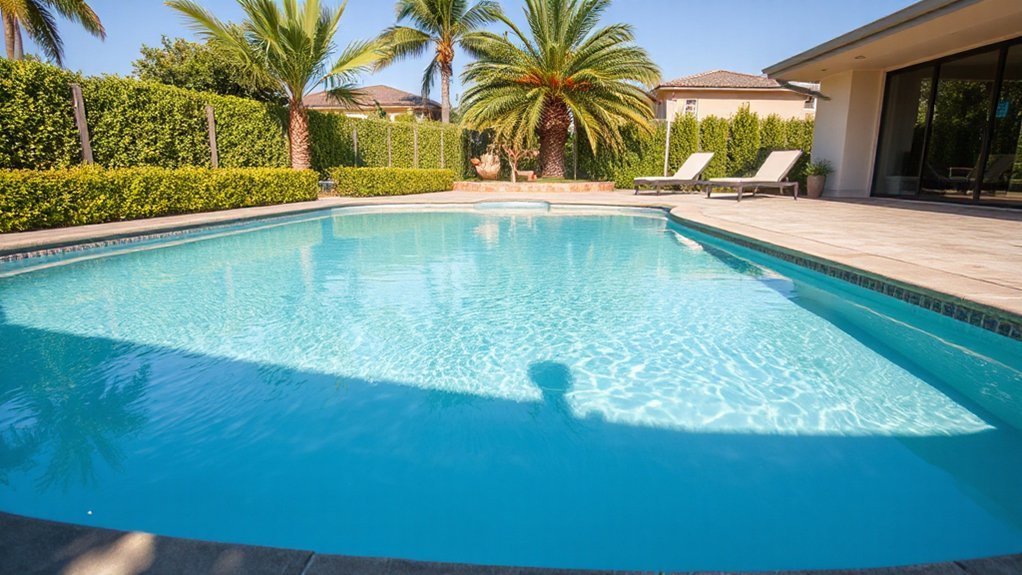
A pool can boost your home’s appeal and potential resale value, but its impact isn’t uniform. You’ll see value when the pool aligns with your home’s footprint, maintenance plan, and neighborhood standards.
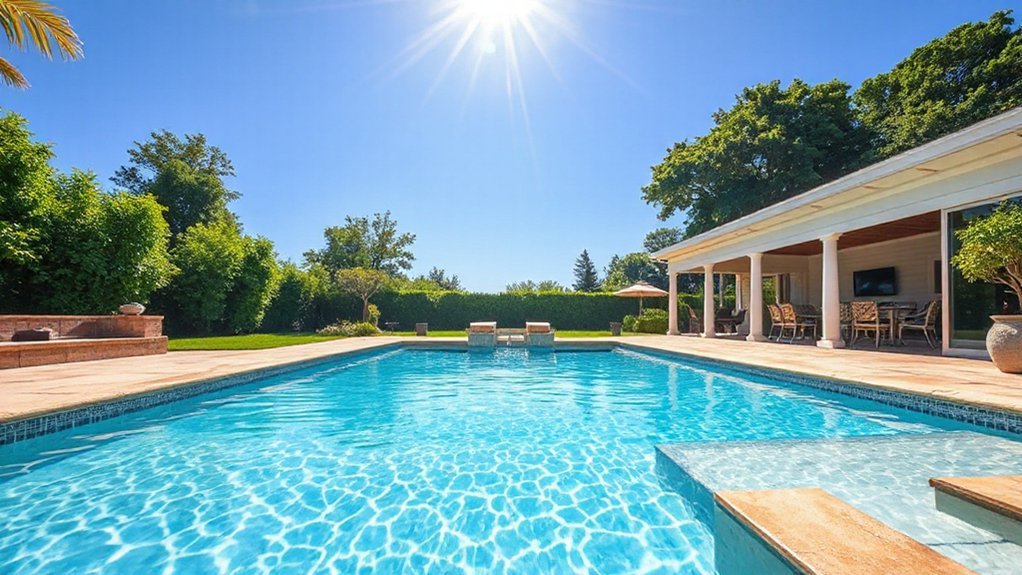
In markets with strong demand for resort-style living, luxury amenities can lift perceived worth, especially if the pool includes upgrades like climate control, durable finishes, and integrated decking. Yet, you’ll also encounter scenarios where cost recoups are limited, particularly in colder climates or smaller lots.
Seasonal considerations matter: long swim seasons or low maintenance burdens improve desirability, while off-season costs and vacancy risks compress value.
Keep your data tight—comparable-property results, maintenance histories, and upfront capital vs. projected resale lift—to gauge whether the pool adds net value for your specific home. Avoid overgeneralizing.
How Location and Market Demand Shape Resale Impact
Location-driven demand shifts and evolving market trends steadily shape resale value, so you’ll want to track where buyers concentrate and how preferences change over time.
As neighborhoods gentrify or age-out, the price you can command for a pool shifts with the local buyer pool and financing conditions.
Data-backed signals—sale premiums by area, time-on-market, and rate environments—help you anticipate how location and demand mix will affect resale outcomes.
Location-Driven Demand Shifts
Where buyers place value can shift quickly as neighborhood dynamics change, and that tilt in demand often drives resale outcomes more than any single feature. In location-driven demand shifts, you’ll see value move with nearby school quality, commute times, and recent development, not just pool size.
Data shows buyers reward properties that align with established lifestyle clusters—walkability, safety, and consistent curb appeal boost perceived desirability. When a neighborhood upgrades with new dining options or parks, your pool’s appeal can rise or fall accordingly.
Track indicators like time-on-market and price per square foot across blocks to gauge momentum. In practice, emphasize durable, low-maintenance improvements that complement the area’s trajectory.
Mention luxury amenities and landscaping enhancements when describing upgrades that reinforce a neighborhood-ready profile.
Market Trends Impacting Value
Market trends shape resale value by altering buyer perception and demand dynamics as much as they reflect price signals. You’ll notice regional shifts in buyer preferences, with markets favoring low-maintenance pools and drought-resilient designs when water costs rise.
Data show seasonality, interest rates, and local development plans influence how quickly a pool sells and at what premium. In high-value areas, homes with luxury amenities tend to command stronger premiums, while oversaturation can dampen gains.
The emergence of outdoor entertainment zones, lighting, and safety features often correlates with higher offers, provided maintenance is predictable. Track neighborhood comps, time-on-market, and renovation cycles to gauge durability of value.
Align upgrades to expected buyer profiles, balancing cost against resale trajectory and financing conditions.
How Pool Size, Features, and Design Affect Resale Value
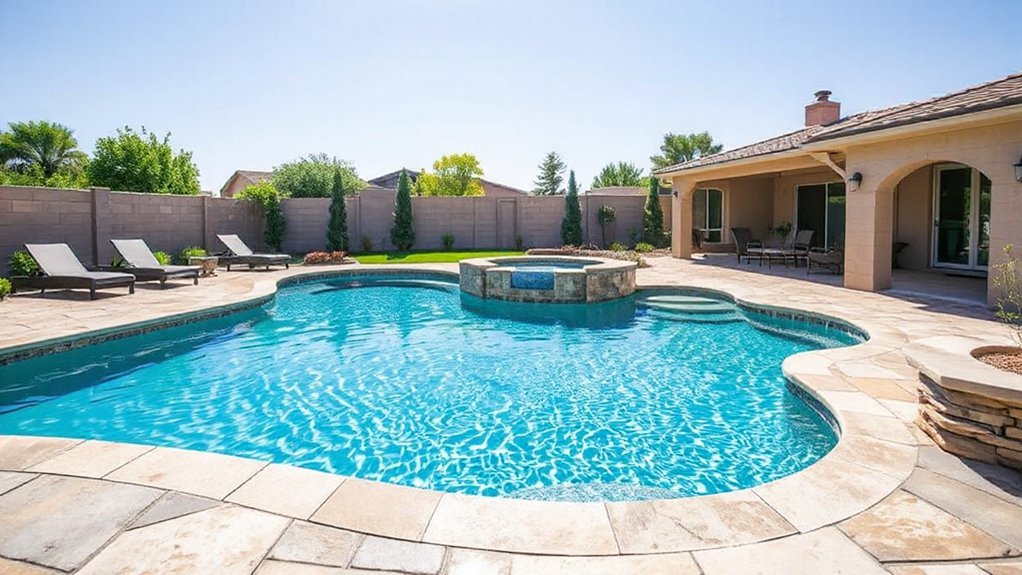
Your pool size affects resale value differently depending on yard space and local norms, so you’ll want to quantify sizing relative to typical homes in your market.
Features like energy efficiency, safety upgrades, and automation show incremental value but with diminishing returns, so prioritize those with clear demand signals.
Design choices—coastlines, decking, and alignment with the home’s style—matter for curb appeal and buyer perception, not just specs.
Pool Size Impact
How does pool size influence resale value? In this section, you’ll see how size interacts with land use, maintenance costs, and buyer expectations. A balanced footprint often yields the best resale impact, while oversized pools can deter buyers due to yard loss and higher upkeep.
Data-backed insights show mid-range dimensions typically command quicker interest and favorable price adjustments, especially when paired with efficient design and durable finishes. Consider how pool aesthetics and water features fit within the overall balance of space, safety, and usability. The goal is a practical, appealing setup that reads as high value without overreaching.
- A mid-sized pool with a clear surrounding area maximizes usable yard space and reduces maintenance load.
- Slightly larger designs attract premium buyers when paired with cost-effective materials and safety features.
- Compact, well-planned layouts often outperform larger, crowding configurations in resale timing.
Feature Value Variations
Feature value varies with size, features, and design decisions that affect resale value. You’ll see value shifts when pool size aligns with yard footprint and maintenance costs, not just sheer square footage.
Features matter: energy-efficient pumps, LED lighting, automated covers, and quality finishes tend to boost appeal. Yet, over-customization can deter buyers seeking lower upkeep.
Design choices influence perceived safety and integration with the home’s exterior, which guides resale trajectory.
Pool safety elements, such as compliant fencing and non-slip surfaces, reduce risk and can expand the buyer pool.
Landscaping integration matters: cohesive plantings and sightlines that blend the pool with the home and outdoor living areas generally improve perceived value.
Consider practical maintenance costs and local climate when evaluating value scenarios.
Design Affects Resale
Design choices directly shape resale value by aligning pool size, features, and aesthetics with buyer expectations and local norms. Your layout, materials, and maintenance plan influence perceived quality and market fit, not just wow factor.
When design aligns with neighborhood standards, it reduces risk for buyers and speeds offers. Data shows case-by-case value shifts, but consistency matters: efficient shapes, durable finishes, and low-maintenance systems tend to outperform flashy but high-maintenance setups.
Focus on proportion, safety, and integration with outdoor living spaces. Pool aesthetics and landscaping integration drive curb appeal and passenger-first impressions, often translating to higher appraisal confidence.
Align upgrades with climate, HOA rules, and resale timelines.
- Assess neighbor benchmarks for size and style
- Prioritize durable finishes and low-maintenance equipment
- Integrate planting and hardscape for cohesive appeal
Total Ownership Costs: Maintenance, Insurance, and Safety
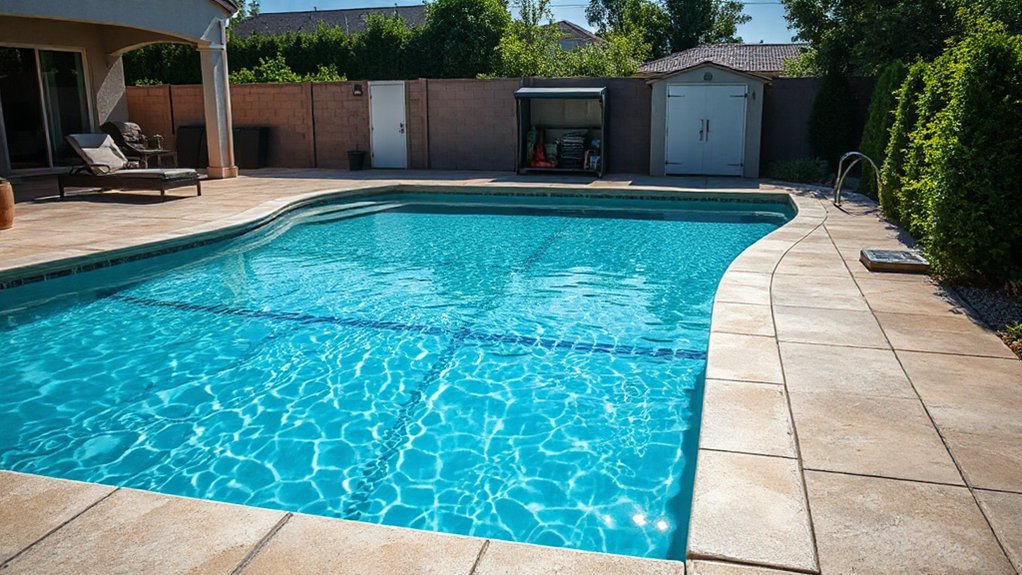
Maintenance, insurance, and safety drive the total ownership cost of a swimming pool. You’ll pay upfront installation and ongoing costs, then monitor annual maintenance, energy, chemicals, and equipment replacements.
Regular maintenance reduces long‑term repairs and keeps water quality steady, with typical monthly spend varying by pool size, climate, and automation level.
Insurance considerations hinge on liability exposure, replacement value, and local codes; expect higher premiums if features like diving boards or nearby hazards exist.
Safety investments—fences, covers, alarms, and anti‑drift measures—lower risk and can affect insurability and claims.
Track metrics such as chemical usage per season, filter runtime, and service frequency to forecast costs, plan reserves, and optimize maintenance cadence without compromising reliability or safety.
Data‑driven budgeting supports smarter ownership decisions.
Timing Strategies to Maximize Resale Value
Timing matters. To maximize resale value, align pool exposure with buyer demand and seasonal shifts, using data-driven timing signals rather than guesswork. You’ll want to emphasize features during peak interest windows and avoid listing during slow months to keep your timing sharp.
- Seasonal timing: schedule open-house or photos when outdoor appeal is highest—late spring peaks interest, while fall listings lose traction unless you highlight year-round usability.
- Market timing: note local inventory cycles, and time your sale after strong comparable sales data or favorable rates, not merely after your own repair work.
- Messaging timing: coordinate pricing, staging, and disclosures to land within buyer budgets when demand is strongest, and adjust promptly if demand softens.
Budgeting Scenarios: Install, Replace, or Upgrade
Budgeting for pool projects hinges on clear cost distinctions and return-on-investment signals: decide whether you should install new features, replace aging components, or upgrade existing systems based on current condition, usable life, and market expectations.
You evaluate upfront costs, operating expenses, and amortization timelines to prevent overinvestment. Installation makes sense when you need foundational gains (energy efficiency, safety, code compliance) and the payback period aligns with expected usage.
Replacement targets deteriorating parts that limit reliability or inflate maintenance, with attention to downtime and warranty coverage.
Upgrades should focus on performance steps—variable-speed pumps, tuned automation, or eco-friendly upgrades—that boost value without full-system disruption.
Plan around seasonal maintenance windows, and align choices with anticipated resale momentum and buyer priorities.
Always document benefits and costs for clarity.
Frequently Asked Questions
How Long Is the Typical ROI Period for a Pool Installation?
A typical ROI period for a pool installation is about 5 to 15 years, depending on climate, home value, and maintenance costs.
You’ll see quicker payback if you optimize pool maintenance and energy efficiency, and your seasonal usage stays steady.
In dry months, high-impact features help justify the expense.
Do Pools Affect Home Insurance Premiums or Coverage Limits?
Pools can affect premiums, but impact varies. You’ll likely see higher base rates due to liability and replacement costs.
Yet some insurers offer pool safety credits or discounts for features like fences, alarms, and heated enclosures. Shop for policies that reward responsible maintenance and safety upgrades, as this can lower costs.
Expect premiums to shift with coverage limits and risk factors; use pool safety and insurance discounts as negotiating points.
Compare quotes for best overall value.
Which Pool Features Most Boost Resale Value Quickly?
A pool feature that boosts resale value quickly is a well-maintained, gunite or fibreglass pool with an energy-efficient pump and modern automation.
Prioritize pool maintenance and landscaping enhancements around the pool area, including drought-tolerant plantings and privacy fencing.
Keep safety features—fencing, non-slip decking—and a simple, clean pool interior.
Data show faster appealing value when maintenance is consistent, costs controlled, and landscaping creates usable outdoor living space rather than crowding it.
How Do Local Codes Impact Pool Installation Costs?
Start by noting that local codes considerably influence pool installation costs due to safety and permitting requirements. You’ll face pool safety standards, fencing, alarms, and self-closing gates, plus zoning regulations that may restrict size or placement.
Budget for inspections, plan reviews, and impact fees. Adhering to codes reduces delays and ensures resale viability.
In short, codes shape materials, labor, and timing, so you should factor these elements into your project budget from the outset.
Are Rental or Short-Term Markets Influenced by Pool Presence?
Yes, pool presence can influence rental markets, especially in warmer seasons and in markets that prize outdoor living. You’ll see higher rental appeal in listings offering Pool maintenance and reliable Seasonal utility, and guests expect responsive upkeep.
Data suggests demand spikes when pools are well-maintained and ready for use. You should emphasize maintenance schedules, chemical stability, and safety features, since these reduce deposits and cancellation risk and improve occupancy reliability.
Conclusion
A pool can boost appeal in warm, high-demand markets, but it’s not a guaranteed return. You’ll often see resale value shifts tied to local norms and pool quality, not just size. For example, in sunbelt metros, well-maintained pools can nudge offers higher—sometimes by several percentage points—yet in cooler climates the effect fades. You should weigh maintenance costs (roughly 1–3% of home value annually) and safety investments against potential buyer interest before deciding.
About the Author