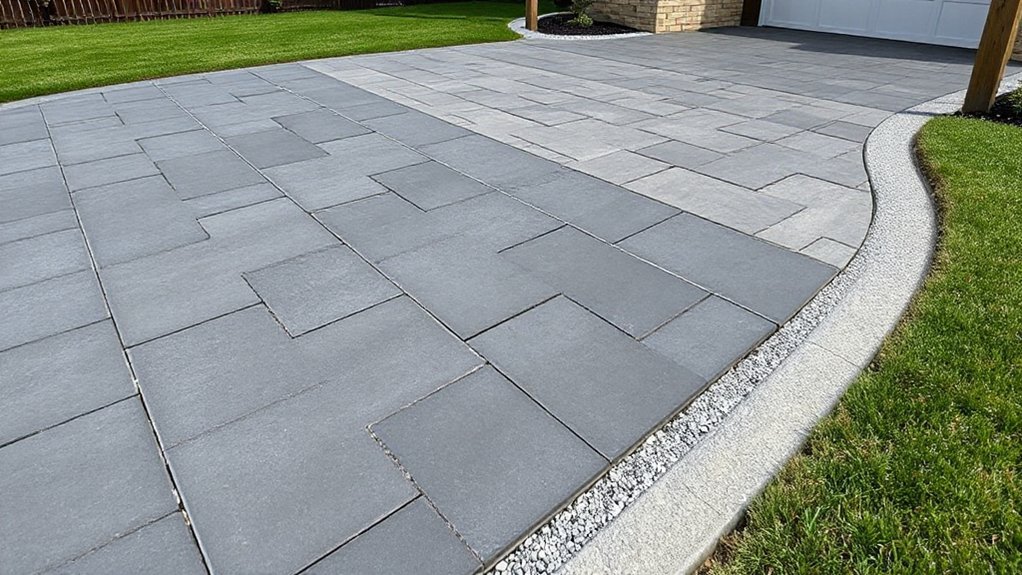
Choosing materials that harmonize with your home sets the tone, while crisp borders and durable edging frame the scene. Plan a layout that favors smooth entry and clear sightlines, then layer lighting from the ground up to reveal textures and deter hazards. Add greenery for year-round structure and seasonal color, and don’t overlook drainage and surface sealing. When these details align, your driveway becomes a quiet, powerful welcome—and the next step will reveal where to start.
Key Takeaways
- Map and benchmark curb appeal: assess maintenance, drainage, sightlines, and lighting to inform design decisions.
- Choose cohesive materials and textures that harmonize with the home, with restrained pattern variation and durable edging.
- Prioritize drainage and proper cross-slopes, plus a gentle incline and aligned driveway-to-street centerline for safety.
- Plan longevity through permeable surfaces, subgrade prep, edging, and proactive sealing and repairs.
- Enhance visual interest with layered lighting, year-round greenery, focal accents, and clean, well-maintained surfaces.
Assessing Baselines for Driveway Curb Appeal
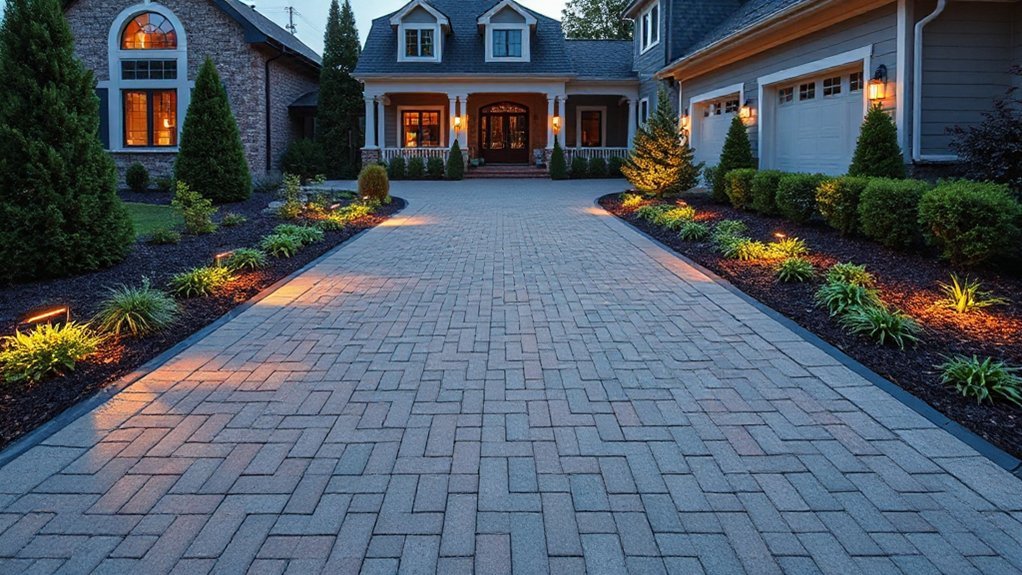
Evaluating baselines for driveway curb appeal starts with a clear picture of your current curbside impression. You’ll map what you see, noting maintenance gaps, plantings, and surface wear, then translate observations into measurable benchmarks.
Assess landscaping integration by how well greenery complements your driveway outline, entrances, and fencing, avoiding clutter or mismatched styles.
Document drainage solutions present—or missing—so you understand potential water-related risks that affect usability and longevity.
Measure access routes, sightlines, and lighting, ensuring visibility aligns with daily routines and safety.
Establish a baseline palette of textures, colors, and materials evident in adjacent hardscape and architecture.
This concrete snapshot guides targeted improvements, helping you prioritize fixes, testing refinements, and budgeting with realism before selecting new elements or professional assistance.
Choose Materials That Complement Your Home
Start by choosing materials that harmonize with your home’s tone, balancing color and finish for a cohesive look.
Consider how texture and pattern play with the overall style, pairing materials that enhance rather than compete with architectural details.
Always weigh durability against visual impact, aiming for a material that remains elegant yet practical across seasons.
Material-Tone Harmony
To achieve material-tone harmony, choose textures and colors that echo your home’s exterior while avoiding stark contrasts that feel abrupt. You’ll align driveway materials with your façade’s palette, selecting subtle variations rather than loud deviations.
Opt for finishes with complementary undertones—warm or cool—to reflect the house’s timing, era, and landscape. Consider color contrast deliberately: use lighter drive elements to brighten shade-drenched areas, or deeper tones to ground a pale exterior, but keep the shifts gradual to prevent jarring progressions.
Pattern variation matters, too: introduce a restrained mix of shapes and joint lines that add interest without competing with architectural features.
Aim for a cohesive, refined curb appeal where material choices reinforce unity between home and approach.
Texture-Complement Pairing
Prioritize material contrasts that enhance color contrast and subtle pattern variation, aligning elements with your roof, siding, and trim. Use a restrained palette; like-for-like sheen and grain create cohesion, while a matte ground plane can ground bolder accents without competing.
Consider scale compatibility: large slabs for a contemporary accent, finer aggregates for traditional detail. Test mockups at different times of day to confirm the relationship under changing light.
Finalize with purposeful spacing and joints that visually harmonize, not interrupt, the home’s rhythm.
Durability-Style Balance
Balancing durability with style means selecting materials that survive daily use without sacrificing curb appeal. You seek long-lasting surfaces that still look refined as your home ages. Choose materials that harmonize with existing architecture while resisting wear, staining, and weather.
Focus on consistent color, texture, and form to avoid visual clutter while the driveway endures seasonal pressure. Consider Eco friendly options and Innovative technology to enhance resilience without compromising tone.
1) Durability-first choices that mirror your home’s silhouette
2) Subtle textures and colors that mask wear
3) Low-maintenance, sustainable options that extend service life
Plan Driveway Layout for Smooth Entry Access
Plan your driveway layout to guarantee a smooth entry and easy exit, focusing on clear turning circles and straight, unobstructed paths.
Design with a defined entry corridor that guides drivers toward parking with minimal maneuvering, minimizing sharp angles and fatigue.
Keep sightlines open and shifts seamless so visitors and deliveries can access the property confidently.
Smooth Entry Pathways
- Establish a gentle, continuous incline to minimize stopping and starting stress.
- Align the driveway with the street centerline to reduce steering corrections and improve sightlines.
- Incorporate practical drainage solutions and proper cross-slopes to prevent surface ponding.
Key terms to take into account include driveway slope and drainage solutions, ensuring a durable, comfortable transition that enhances overall design and function.
Clear Turning Circles
When planning, map a practical turning radius that suits your site’s constraints, then verify clearances for both front and rear overhangs.
Align the path to minimize sharp changes in direction, reducing tire scrubbing and speeding up traffic flow across the driveway.
Position bumpers and mirrors within the circle without limiting access to sidewalks or adjacent landscaping.
Use generous radii at the curb line to prevent curb damage and to accommodate longer vehicles.
Document the geometry in a simple plan, noting vehicle types, turnaround space, and expected traffic flow, so installers reproduce accurate, durable turning circles during construction.
Edging, Lighting, and Greenery: Three Steps to Polish
Edging, lighting, and greenery transform a driveway from functional to welcoming, and each element should reinforce the others. You’ll create a cohesive look by pairing clean lines with soft illumination and textured plantings. Aim for a balanced rhythm where borders guide the eye without crowding the path. Garden sculptures and decorative borders act as focal anchors, signaling style while maintaining practicality.
- Define borders with durable edging that complements lighting and plant height.
- Layer lighting from ground to mid-canopy to highlight texture and sculpture without glare.
- Choose greenery for year-round structure and seasonal color, ensuring low maintenance and accessibility.
This three-step approach delivers polish, functions reliably, and elevates curb appeal with restrained sophistication.
Upgrades That Add Value and Longevity
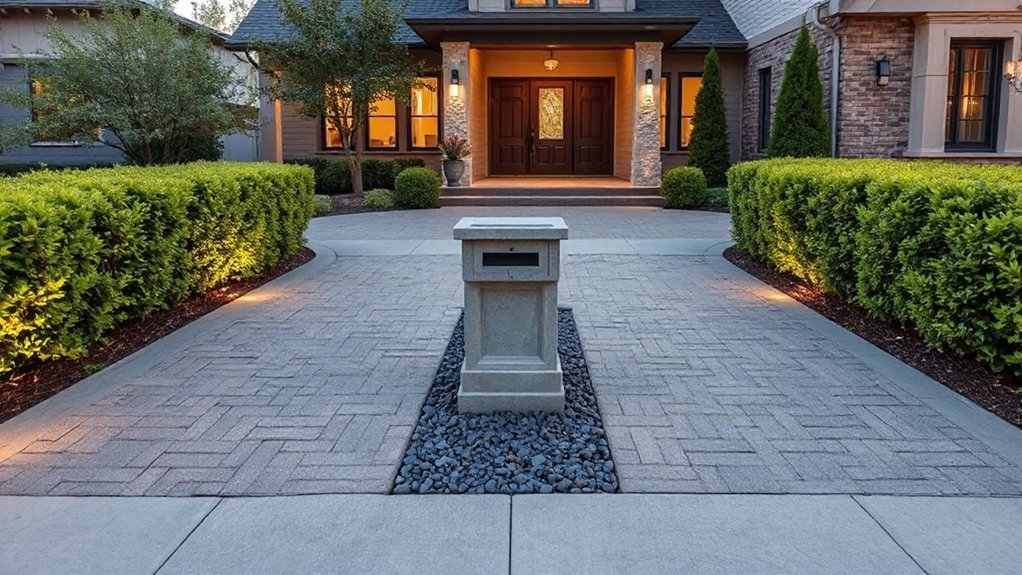
Upgrading your driveway system adds value and longevity by prioritizing durable materials, smart drainage, and low-maintenance upkeep.
To maximize return, choose permeable surfaces that manage runoff while reducing maintenance, such as stabilized gravel or porous pavers.
Opt for consistent coloring and texture to minimize visual noise and simplify repairs over time.
Integrate proper subgrade preparation, appropriate edging, and integrated drainage to prevent pooling and freeze-thaw damage.
Consider driveway landscaping that complements the hardscape without obstructing access, using native shrubs and groundcover for erosion control and year-round appeal.
Decorative accents, like clean lines, metal or stone borders, and planter pockets, should enhance the design yet stay understated.
Select materials with proven durability and warranty, and document installation details for future maintenance planning.
Maintenance Tips to Keep Your Driveway Looking Sharp
A well-built driveway deserves ongoing care to keep its performance and appearance sharp. With practical maintenance, you protect longevity and curb appeal, so you’ll enjoy a solid surface season after season. Focus on proactive steps that fit your schedule and climate, and tackle issues before they worsen.
- Seasonal sealing: schedule timely sealant reapplications to shield from water, UV, and wear, adjusting for temperature and moisture.
- Weed control: pull or treat encroaching vegetation at edges and cracks to prevent root intrusion and pavement uplift.
- Routine inspection: walk the surface monthly, address cracks promptly, clean debris, and reseal as needed to maintain a unified, sharp finish.
Frequently Asked Questions
How Can Drainage Affect Long-Term Curb Appeal Outcomes?
Drainage directly affects long-term curb appeal: poor drainage leads to puddling, erosion, and unsightly stains that undermine curb appearance. You’ll see cracks and shifting that complicate maintenance and diminish value.
Proper drainage prevents water pooling, reduces freeze-thaw damage, and preserves smooth surfaces. When you invest in graded slopes, underdrains, and pressure-sealed joints, you sustain a crisp, attractive look.
Address drainage issues now so curb appearance remains pristine and durable over time.
What Budget Range Yields the Best ROI for Driveways?
A cost analysis shows you’ll typically see the best ROI if you budget mid-range to premium materials, around 5–15% of home value.
You’ll maximize value by balancing upfront costs with durability and maintenance. Do a material comparison to weigh longevity, upkeep, and resale appeal.
In practice, allocate enough for solid drainage and base work, then choose a proven, low-maintenance option. You’ll save over time while preserving curb appeal.
Which Professional Services Most Boost Resale Value Quickly?
Professional landscaping, exterior lighting, and landscape integration boost resale value quickly. You’ll see the fastest impact from hiring a professional for outdoor lighting design, plus a skilled landscaper to guarantee cohesive plantings and seamless landscape integration with your driveway.
Avoid DIY missteps; precision matters. You’ll want certified irrigation and drainage experts if soggy zones exist.
In short, invest in smart exterior lighting, cohesive plant design, and proper grading to maximize value fast.
Are Eco-Friendly Materials as Durable as Traditional Options?
Yes, sustainable materials can be as durable as traditional options, and sometimes more so with proper selection. You’ll get eco friendly durability when you choose dense, high-grade composites, properly engineered pavers, or stabilized soils.
You’ll notice performance edges–less cracking, longer life, lower maintenance. You move with confidence, knowing these sustainable materials resist wear, weather, and heavy use.
It’s practical, precise, and stylish, delivering lasting curb appeal without sacrificing durability or responsibility.
How Often Should You Reseal Different Driveway Types?
You should reseal asphalt every 2–3 years, concrete every 3–5 years, and pavers every 3–5 years, adjusting for traffic and climate.
Sealant maintenance depends on exposure; hotter, sunnier zones demand more frequent care.
For smoother Driveway longevity, monitor for cracks and wear, then reseal promptly.
Use high-quality sealants, apply evenly, and avoid overcoating.
Regular inspections help you preserve surface integrity and maximize protection, keeping your investment looking refined and durable.
Conclusion
You’ll see curb appeal rise when you balance bold materials with quiet borders, yet you’ll notice it calm when the textures align with your home’s tone. Juxtapose durable, low-maintenance surfaces against lush greenery that seasons gracefully. You’ll gain safety from layered lighting, but you’ll savor the simplicity of clean drainage. You’ll invest in longevity, yet enjoy the instant polish of crisp edges. In short, function and beauty live side by side, elevating every approach to your door.
About the Author