To add the most value to UK terraced houses, start with energy efficiency: seal gaps, insulate, upgrade to efficient boilers or heat pumps, and consider solar panels to cut running costs. Improve layouts with flexible, space-saving storage and easy sightlines, plus light-colour schemes and mirrors to brighten small rooms. Boost curb appeal with tidy paths, period-appropriate lighting, and durable finishes. Plan in phases and prioritize durability, moisture control, and daylight. You’ll uncover practical steps that pay back over time.
Boost Energy Efficiency in Terraced Homes
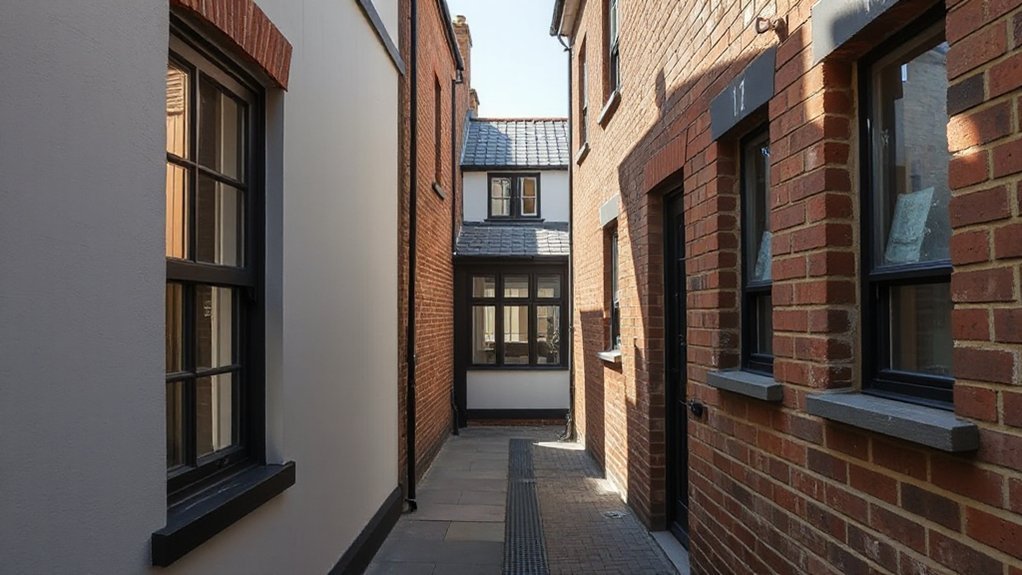
Improving energy efficiency in terraced homes starts with a focused, practical plan. You start by auditing your envelope: seal gaps, insulate loft spaces, and upgrade windows where cost-effective.
Next, target heating with a programmable thermostat and efficient boiler or heat pump, paired with zoned controls to reduce waste in unused rooms.
Consider solar panels to cut daytime electricity use and offset grid demand, evaluating space, orientation, and maintenance needs.
For water and energy synergy, install rainwater harvesting to lower mains water demand for gardens and utilities, freeing up supply for other household tasks.
Choose energy-saving appliances and LED lighting, and monitor your consumption with simple meters.
Prioritize measures with quick payback and clear maintenance requirements.
Make Small Plans Work: Practical Layout Tweaks
Small changes to layout can yield big gains in a terraced home. You can improve flow with clear zones: one compact kitchen, a dining nook, and a living area that doubles as a gallery for interior decor.
Consider door positions and swing direction, and remove non-structural walls to create a longer sightline, which visually enlarges rooms.
Use built-in storage along walls to keep floors uncluttered, aiding perceived space. Push furniture against walls and select slim-profile pieces to maintain movement corridors.
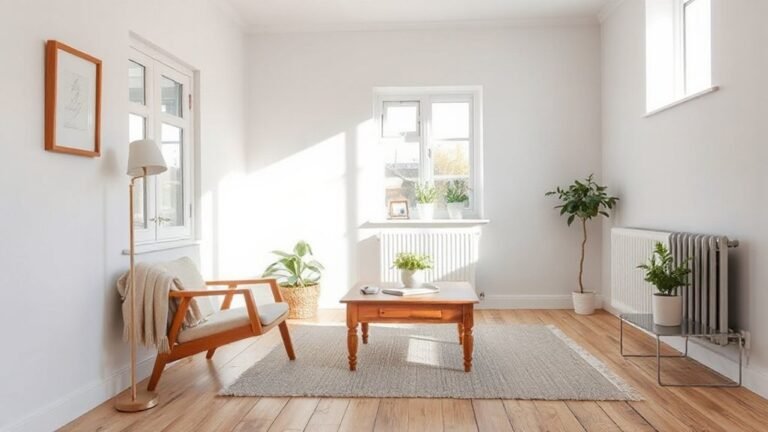
Light, neutral tones broaden space; add mirrors to reflect daylight.
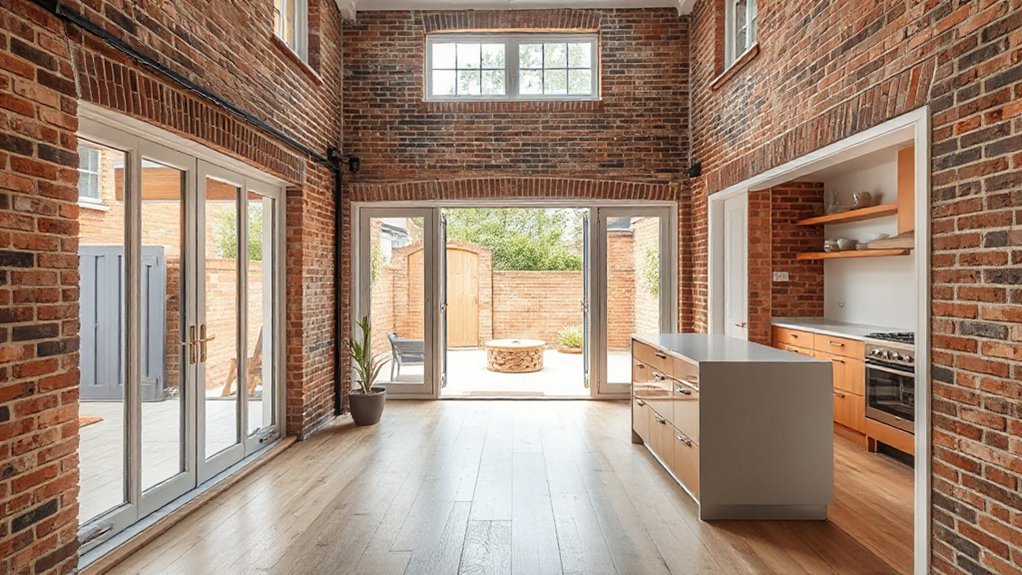
For outdoor access, guarantee a direct route from kitchen to garden landscaping without crossing traffic zones.
Plan in stages, prioritizing high-impact tweaks first, then refine with proportional furniture and purposeful decor choices.
Enhance Curb Appeal Without Losing Character
You can boost curb appeal while keeping its street character by balancing new and original details. Preserve key features of your terrace—like brickwork, doors, and window proportions—while adding clean, complementary accents.
Focus on cohesive design choices that feel intentional and authentic to the row’s history.
Curb Appeal Craft
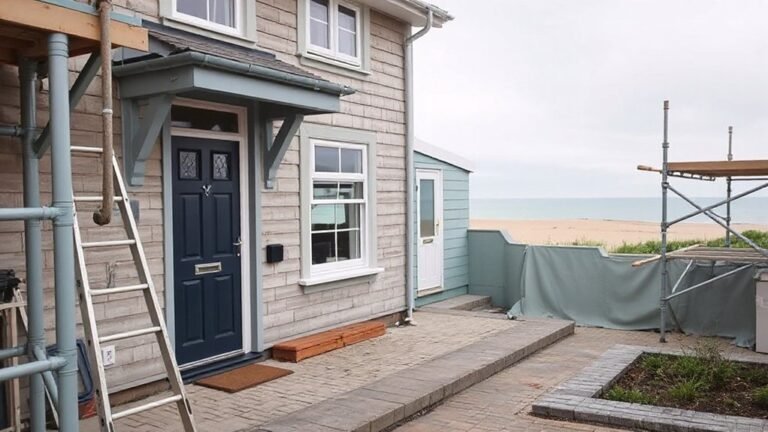
Curb appeal matters as much as interior updates, so start by preserving key character while making a bold first impression: keep the brick or render intact, but refresh worn patches with careful cleaning and patching rather than a full repaint. You’ll focus on clean lines and minimal interventions that read as intentional upkeep.
Tidy the front path and door surround, then add purposeful contrast with existing materials. Garden landscaping should be restrained but strong: edge beds, native perennials, and a compact evergreen anchor for year-round presence.
Exterior lighting matters too—install a single, warm lantern by the door and low-level path lights to guide entry without glare. Avoid overloading fixtures; select fixtures that complement the period while improving visibility and security.
Maintain symmetry, curbside storage out of sight, and preserve overall harmony.
Preserve Street Character
Preserving street character starts with subtle consistency: retain the home’s original silhouette, materials, and rhythm, then upgrade details to read as intentional maintenance. You’ll protect long-term value by prioritizing harmonious renovations that respect Historic preservation guidelines while modernizing function and efficiency.
Focus on scale, proportion, and consistent street presence, avoiding flashy deviations that erode character. Choose materials that aging gracefully—brick, timber, plaster—with durable finishes that patina well. Subtle improvements, like new doors and windows, should echo period details rather than imitate them.
Preserve boundary treatments and chimneys where possible. Maintain setback, rooflines, and cornices to preserve streetscape harmony. For curb appeal, highlight textures rather than color blitzes.
Street aesthetics guide authentic updates for lasting appeal and property value.
- Consistent silhouettes and materials
- Historic-preservation-aligned upgrades
- Subtle, durable façade details
- Respectful window and door choices
- Cohesive streetscape enhancements
Create Smart Storage for Tight Terraced Footprints
To make the most of limited space in terraced homes, build smart storage that fits the footprint without crowding rooms. Choose modular units that tuck into alcoves, under stairs, and along chimney breasts.
Prioritize verticality: tall, narrow wardrobes and wall-mounted cabinets free floor space while keeping everyday items accessible.
Use Smart shelving to create flexible, adjustable storage zones in living areas—adjust height, depth, and partitioning as needs shift.
Hidden compartments improve clutter control without expanding visible bulk; consider lift-out trays, hollow stair tarts, or bed bases with built-in drawers.
In kitchens and entryways, integrate pullout organizers and magnetic strips for utensils and keys.
Seal gaps with vibration-quiet joints to reduce noise transfer, and label boxes for swift retrieval.
Maintain airflow by avoiding overpacking and leaving open pathways.
Modern Heating and Insulation That Pay Back
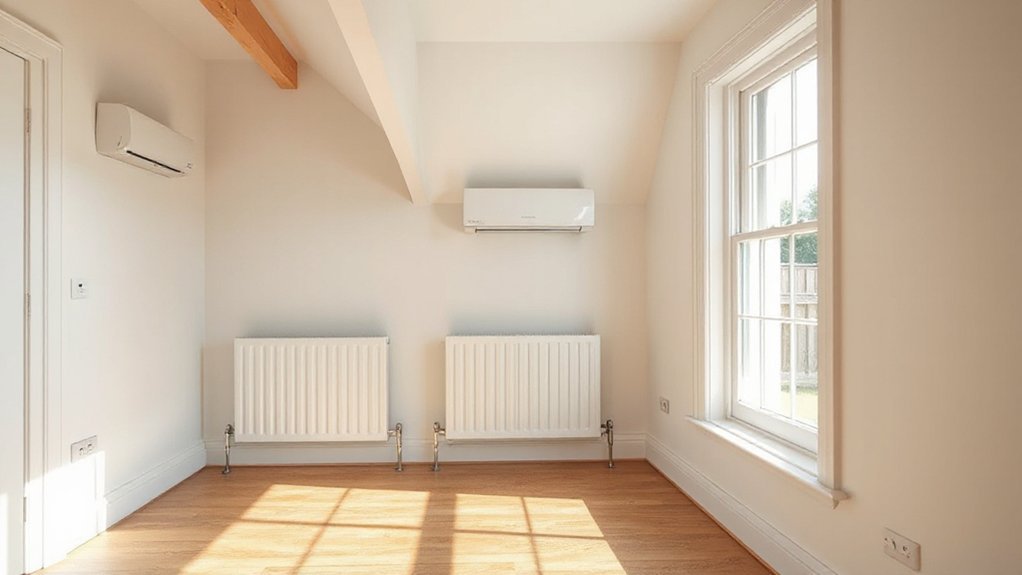
Upgrading your heating and insulation pays back when you choose efficient options that fit a terraced home.
We’ll compare efficient heating upgrades, insulation ROI strategies, and modern boiler solutions to pinpoint cost-saving paths.
Start by evaluating your current system, then map quick wins and longer-term payback.
Efficient Heating Upgrades
Could you cut heat loss with efficient heating upgrades that actually pay back? You’ll upgrade with practical emphasis on controls and integration, targeting both comfort and bills.
Start with smart thermostats to tailor usage by room and time, avoiding unnecessary heat. Add a heat pump where feasible, delivering warm air efficiently with low run costs. Consider solar panel integration to offset daytime electricity for pumps and controls.
Confirm zoning so you heat only occupied spaces. Optimize boiler efficiency if you’re not ready to switch to heat pumps, but pair with weather compensation for smarter cycling.
Address insulation groundwork first to maximize results. Track consumption to validate savings over seasons, then re-tune settings as you learn.
- Smart thermostats for zoned comfort
- Heat pumps where appropriate
- Solar panel integration for offset
- Zoned controls to avoid waste
- Regular performance checks and tweaks
Insulation ROI Strategies
When your heating upgrades start delivering real savings, the next smart move is insulating effectively to lock them in. You’ll maximize ROI by targeting where heat leaks most: treat thermal bridging points with precision, not guesswork.
Choose proven insulation materials that suit UK terraced homes, like dense mineral wool or high-performance foam boards, depending on wall construction and budget.
Prioritize continuous envelopes: uninterrupted cavings, careful corner and window junctions, and disciplined duct/sealant work. Don’t overpay for marginal gains; measure payback via reduced annual heat demand and lower energy bills.
Installation quality matters as much as material choice, so verify gaps are fully sealed and interfaces are flush.
Reassess after six months to confirm savings trajectory and refine where needed.
Modern Boiler Solutions
- Reduced standby losses with tighter insulation
- Real-time energy insight via smart thermostats
- Solar thermal cutbacks on sunny days
- Quick payback from right-sized boiler
- Simple, predictable maintenance plan
Improve Light and Ventilation in Small Terraces
Brighten a small terrace by prioritizing light and air: start with simple fixes that don’t require major upheaval. You can maximize daylight by keeping interior surfaces light and glossy, using mirrors to bounce light, and choosing sheer curtains.
For ventilation, install continuous trickle vents on existing windows or upgrade to top-hung casements that open fully without sacrificing security. Consider window louvers to control airflow while preserving privacy.
If possible, add a skylight installation in the ceiling of a kitchen or bathroom to flood the area with natural light without losing wall space.
Use cross-ventilation: pair opening windows on opposite walls to create a breeze path.
Keep stairwells and corridors bright with compact LED downlights and reflective paint.
Prioritize simple, reversible changes that improve daily comfort.
Create Flexible Living Areas for Breakout Rooms
Flexible living areas in a terraced home let you adapt to changing needs without full reconfigurations. You’ll create split zones that serve multiple tasks, from work to study to relaxation, while maintaining cohesion. Use movable screens, folding doors, and lightweight furniture to redefine space on demand.
Prioritize clear traffic flow and sound control so breakout rooms feel private yet connected. Integrate flexible layouts that you can reassign as life evolves, and guarantee adaptable spaces stay bright with shared-natural-light strategies.
- Moveable partitions for quick room shifts
- Foldaway desks that save space
- Retractable seating for guest rooms
- Multi-use storage that supports every function
- Lighting scenes that tailor mood and focus
Budget-Friendly Renovations That Drive Buyer Appeal
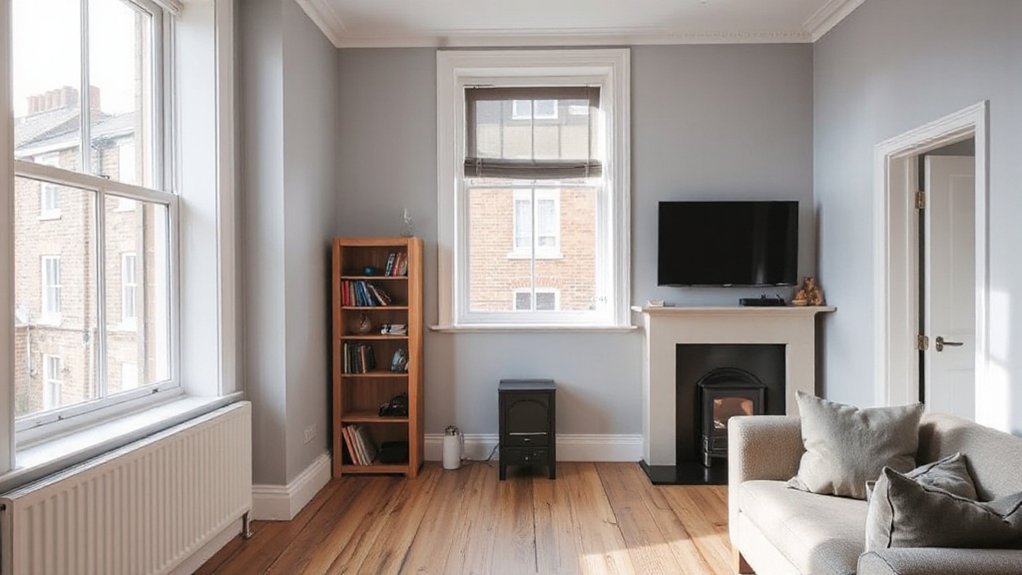
In budget-friendly renovations, small changes can deliver big buyer appeal without breaking the bank. You focus on high-impact upgrades that don’t require major disruption. Begin with curb appeal: tidy borders, fresh mulch, and a clean entrance uplift perceived value instantly.
Inside, update interior decor with neutral tones, efficient lighting, and modern hardware—these changes feel premium without a costly overhaul. Prioritize room flow: remove clutter, reconfigure furniture for brighter sightlines, and optimize storage with under-stair solutions.
Kitchen and bathroom updates pay back: swap taps, install a water-efficient toilet, and regrout tiles for a refreshed look. Garden landscaping matters too; simple planting, a small seating area, and low-maintenance greenery extend living space visually.
Choose durable finishes, minimize ongoing upkeep, and document energy tweaks for potential buyers.
Planning, Durability, and Long-Term Value for Terraces
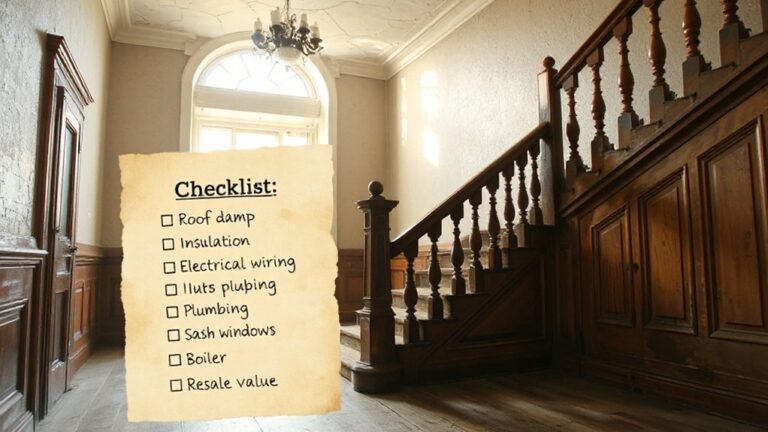
Planning a terrace renovation means prioritizing durability and long-term value from the start. You should align upgrades with architectural harmony and protect historical preservation where applicable.
Emphasize structural checks, moisture control, and high-quality, low-maintenance finishes to reduce future costs. Plan spaces that adapt to changing needs, with modular storage and daylight optimization.
Select durable materials suited to UK climate, and detail connections to minimize thermal bridging. Document choices for future buyers, highlighting energy efficiency and longevity.
Guarantee compliance with listed-building or conservation-area rules if relevant. Prioritize phased improvements to spread disruption.
Balance aesthetics with practicality, avoiding trendy overreach. Track performance post-renovation to verify value gains.
- Align with architectural harmony
- Respect historical preservation
- Insist on durable, low-maintenance materials
- Plan for adaptability and future repairs
- Document for buyers and auditors
Frequently Asked Questions
What Unseen Costs Commonly Arise in Terraced Renovations Across the UK?
Hidden structural issues and unexpected asbestos removal commonly arise in terraced renovations across the UK, you should budget for surveys, containment, licenses, and disposal costs, and expect delays when negotiating access, repairs, or compliance with evolving safety standards.
How Do You Obtain Listed-Building Permissions on Terraced Homes?
Opening with a splash: you must consult planners early. You obtain listed-building permissions by submitting a listed building consent application, addressing historical considerations and Preservation guidelines, detailing impacts, and demonstrating sympathetic, reversible changes.
Which Building Regulations Most Affect Small Terrace Extensions?
You’ll need Building permits and Planning permissions for small terrace extensions; check the Building Regulations requirements, fire safety, structural integrity, and party wall implications first, then apply promptly to avoid delays and guarantee compliant, safe upgrades.
Can Eco-Renovations Affect Property Resale Value Positively or Negatively?
Yes, eco-renovations can boost resale value if you focus on energy efficiency and eco friendly materials. They cut running costs, attract buyers, and differentiate your home—though excessive costs or questionable choices may offset gains. Think practicality first. Anachronism at start: “Beepers”
What Are Practical Timelines for Completing Terraced Home Projects?
You’ll typically plan terraced home projects over 4–12 weeks, depending on scope, permits, and trades. Schedule interior lighting installs and garden landscaping in sequence, with buffers for Drywall, plastering, and outdoor drainage, and expect steady weekly progress checks.
Conclusion
In short, focus on energy efficiency, clever storage, and flexible spaces to boost value in UK terraced homes. Target upgrades that pay back, like insulation, efficient heating, and improved lighting, while preserving character with smart curb appeal. Plan small layout tweaks that maximize usable space, not just square footage. Choose durable finishes and budget-friendly fixes that buyers notice. And yes, balance practicality with a touch of charm—think a retro kettle in a modern kitchen, an anachronism that sparks conversation.
About the Author