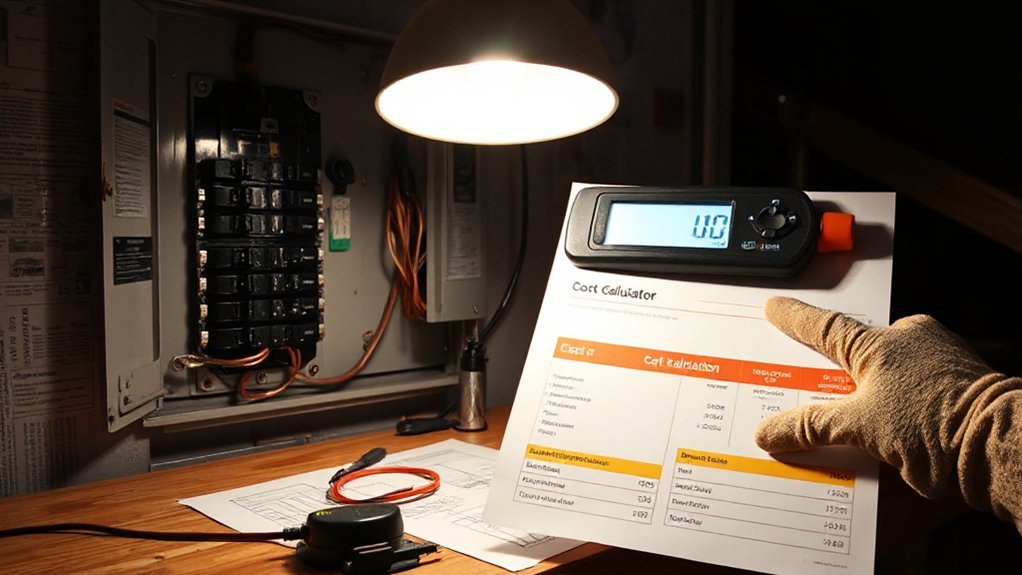
A cost calculator for upgrading a home’s electrical system breaks total price into materials, labor, permits, and inspections, with line items for scope, safety upgrades, and performance targets. It estimates wiring, panel replacement, and component costs, then applies regional prices and contingencies for risk. Include feeder sizing, conduit needs, and testing. Plan budgets for inspector fees and contingencies, plus potential rework. If you keep exploring, you’ll uncover how to prioritize timing, risk, and financing options to optimize the upgrade.
What Costs Are Included in an Electrical Upgrade (Materials, Labor, Permits, and Inspections)
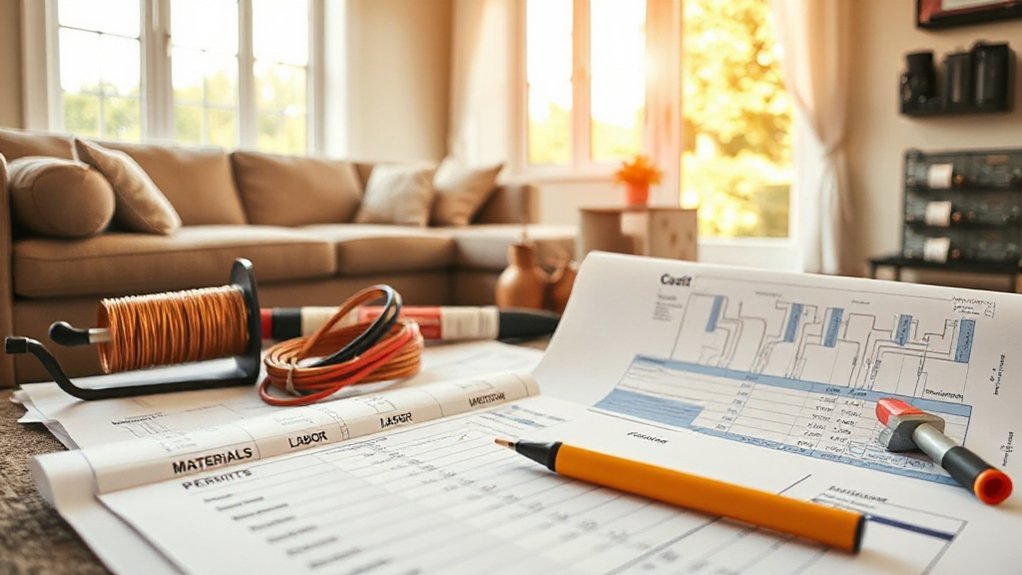
Upgrading an electrical system involves four main cost categories: materials, labor, permits, and inspections.
You quantify materials by types of conductors, devices, panels, and permanent accessories, ensuring compatibility with electrical safety standards and energy efficiency goals.
Labor costs reflect skilled trade time, crew size, and site complexity, with emphasis on correct task sequencing and test procedures.
Permits encompass jurisdictional fees, plan reviews, and code compliance milestones, reducing risk of future violations.
Inspections verify service reliability, GFCI and AFCI protection, and overall system integrity.
You should track contingencies for material substitutions or code updates, and document change orders promptly.
Electrical safety remains a priority across all categories, while energy efficiency considerations influence component selection, wiring practices, and system commissioning outcomes.
How to Price a Service Panel Replacement
To price a service panel replacement, you start by evaluating system needs—load calculations, existing panel condition, and future electrical demands.
Next, you estimate material and labor costs, including the panel, breakers, conduit, and any rewiring or upgrades.
Then, add permitting and inspection fees.
Finally, factor timeline considerations such as scheduling, potential repairs, and inspection lead times to arrive at a complete, defendable estimate.
Assessing System Needs
Evaluating system requirements begins with a precise load evaluation and a clear scope for the service panel replacement. You’ll quantify demand, identify peak loads, and map circuits to guarantee code compliance and reliability.
A defined scope reduces change orders and anchors cost estimates to measurable work. Consider feeder adequacy, conductor sizing, and main breaker rating to align with electrical load and future needs.
Document mismatches between existing panels and planned loads to improve accuracy. Prioritize safety margins to protect home safety and system stability.
Use standardized charts and test data to validate assumptions, avoiding guesswork. Prepare a pricing baseline that reflects corrective work, not just upgrades, and flag potential permitting or inspection fees.
- Load analysis scope and boundaries
- Peak demand versus continuous load
- Feeder and conductor sizing considerations
- Panel compatibility and expansion potential
- Safety and compliance indicators
Material and Labor Costs
Include auxiliary hardware, surge protection, and any necessary grounding upgrades. Obtain multiple supplier quotes to capture price variance for breakers and panels, considering compatibility with your electrical service size and future load growth.
Labor costs reflect dispatch time, permit requirements (note: avoid permit discussion here), and complexity of conduit routing. Factor in electrical safety controls, like proper torque values and testing procedures, to minimize rework.
Prioritize energy efficiency upgrades where feasible, such as high-efficiency breakers and properly sized conductors.
Permit and Timeline Factors
Permits and timeline factors influence pricing by defining required approvals, inspection schedules, and permitting fees before work begins. You’ll align state and local codes, verify electrical panel changes meet safety standards, and schedule inspections to avoid delays.
Timeline considerations hinge on permit processing times, contractor availability, and coordination with utility interties for backup power and service disconnects. Anticipate potential workarounds or staging to minimize outages while upgrading to support home automation and energy efficiency improvements.
Documentation, permit fees, and inspection rechecks add to the base cost, yet they reduce risk of noncompliance and invalidated work. Clear communication with authorities and electricians keeps your project on track, protecting warranties and shaping an accurate price range.
- Permit timing and fees impact the total
- Code compliance drives required inspections
- Coordination with utilities influences schedules
- Documentation costs and approvals matter
- Impacts on home automation and energy efficiency outcomes
Estimating Wiring and Circuit Costs
For wiring compatibility, verify material type (copper or aluminum), gauge recommendations, and insulation ratings to prevent overheating and voltage drop. Assess conduit or raceway requirements, pull boxes, and termination methods to minimize labor.
Circuit breaker costs hinge on amperage, panel compatibility, and synchronized trip features; anticipate main disconnect needs and any subpanels. Include labor, containment, and access constraints, plus contingency for rewiring or downsizing.
Document unit costs, apply regional price indices, and add a spare capacity buffer to refine your total.
Permits, Inspections, and Code Compliance: What to Expect

Managing permits, inspections, and code compliance starts with understanding the permit application process and the required documentation.
You’ll then schedule inspections at logical milestones and track timing, fees, and any resubmission steps.
Finally, grasp the code compliance essentials to guarantee your upgrades meet current standards and avoid costly rework.
Permit Application Process
Before you begin upgrading your home’s electrical system, you’ll need to understand the permit application process, including required permits, inspections, and how code compliance is verified.
You’ll submit project plans, electrical diagrams, and load calculations to the jurisdiction’s building department. Intake confirms scope, cost, and applicable code edition.
Reviews determine permit type, required inspections, and whether a plan check, electrical permit, or combination applies. When approved, you’ll receive permit numbers and inspection timelines.
Violations incur fines or stop-work orders, so comply promptly. Documentation for insurance and resale value may be requested at closing.
Schedule mandatory inspections, address any deficiencies, and finalize with a two-party code compliance certificate.
- Identify required permits and project scope
- Confirm plan review requirements and timelines
- Track permit numbers and inspection windows
- Prepare documentation for Home insurance and resale value
- Plan for potential re-inspection and corrections
Inspection Scheduling Steps
After you’ve submitted the permit package and arranged the plan checks, the next step is to schedule inspections and guarantee ongoing code compliance. You’ll coordinate with the authority having jurisdiction to determine required inspection types, timing, and sequence.
Prepare a concise inspection checklist for each stage—rough-in, energized work, and final—ensuring all installed materials meet applicable codes. Submit accurate project details, including permit numbers, job address, and system scope, to avoid delays.
When booking, you’ll receive an appointment confirmation outlining date, time, inspector contact, and access notes; verify these details immediately.
On inspection day, provide organized documentation, test equipment, and clear access paths. Track any deficiencies, schedule re-inspections promptly, and update the project record to reflect corrective actions, maintaining documented compliance throughout the upgrade.
Code Compliance Essentials
Code compliance begins with obtaining the correct permits, scheduling the required inspections, and guaranteeing every element of the upgrade meets applicable codes. You’ll verify that wiring methods, panel ratings, overcurrent protection, and grounding comply with current standards, reducing rework and penalties.
You’ll also assess lighting design compatibility and load calculations to avoid nuisance tripping and illegal circuits. Surge protection requirements must be integrated where mandated, and coordination with other trades ensured to prevent gaps.
Inspectors review documentation, test results, and equipment labeling, so you should prepare a complete package before each visit. Adhering to these steps minimizes delays and aligns installation with safety benchmarks and energy codes.
- Permits and inspection timing
- Documentation and labeling expectations
- Lighting design considerations
- Surge protection requirements
- Compliance verification outcomes
Labor Costs, Electricians, Timelines, and Productivity
Labor costs for upgrading a home’s electrical system hinge on labor hours, crew size, and local wage standards. Electricians typically charge by the hour for on-site work and by the project phase for larger upgrades.
You evaluate hourly rates, crew productivity, and scheduling windows to forecast total labor spend.
Timelines hinge on permit processing, component availability, and site access. Milestones are tied to inspection approvals and phased activations.
Productivity depends on plan clarity, crew coordination, and contingency buffers for unforeseen issues.
You should prioritize tasks that enhance Electrical safety during rough-in and connections, ensuring clean, compliant terminations and test procedures.
Energy efficiency gains arise from meticulous, high-quality installations, accurate load calculations, and disciplined sequencing that minimize rework and downtime.
Common Hidden Costs in Electrical Upgrades
Hidden wiring complications and permit and inspection fees often surprise homeowners during upgrades. You should expect hidden runs, mismatched breakers, or outdated conduits to require assessment, potential rework, and added time.
Administrative costs from permits and inspections can also raise the total beyond initial estimates, so plan for these as non‑negotiable components of the project.
Hidden Wiring Complications
While upgrading wiring, hidden complications often emerge once walls are open, signaling costs that aren’t evident from the initial plan. You’ll encounter issues that escalate labor time, material reuse, and risk management, particularly around hidden wiring and concealed hazards.
Accurate estimation hinges on uncovering nonvisible conditions early, not after a retrofit is underway. You should expect adjustments to scope, additional corrective wiring, and potential rerouting to meet code and safety standards.
Precision in documentation matters to prevent budget drift and timeline slips.
- Unseen conduit routes requiring relocation
- Damaged insulation necessitating replacement
- Unexpected junctions increasing splice counts
- Obsolete or mismatched wiring types discovered
- Compromised panel clearances and access constraints
Permit and Inspection Fees
Permit review confirms compliance with electrical codes, while inspections verify ongoing safety and correct execution. Expect potential fees for plan checks, permit renewals, and final occupancy validation, which may vary by project scope and device quantities.
You should verify applicable schedules, eligibility for partial exemptions, and whether combined inspections apply. Planning for electrical safety, circuit capacity assessments, and conductor sizing helps minimize rework fees.
Thoroughly document changes to avoid delay-driven costs and guarantee timely permit approval.
Safety and Efficiency Improvements to Prioritize
Upgrading a home’s electrical system should prioritize safety and efficiency from the start; doing so reduces risk, improves reliability, and lowers long-term operating costs. You’ll focus on robust safety protocols and targeted efficiency upgrades to form a solid foundation for any upgrade plan.
Implement arc-fault and ground-fault protection, proper grounding, and overcurrent protection at every branch circuit.
Upgrade lighting and receptacle efficiency with LED, modern dimmers, and smart controls to reduce load while maintaining performance.
Guarantee panel capacity matches load calculations, and install balanced circuits to minimize voltage drop.
Address heat management in enclosures and conductors to prevent insulation degradation.
Plan for future expansion with conduit and slack.
Safety protocols, efficiency upgrades, and documentation should guide every decision.
- Arc-fault, ground-fault protections
- Panel capacity alignment and load calculations
- Efficient lighting and smart controls
- Proper grounding and overcurrent protection
- Conduit, voltage management, and documentation
Budgeting a Full Upgrade: Typical Ranges and Math

Budgeting a full upgrade requires a disciplined cost estimate that ties directly to scope, code-compliant safety upgrades, and desired performance. You’ll translate each system target into line-item costs, then apply a risk-adjusted contingency based on project complexity and local permitting.
Typical ranges hinge on service upgrade needs, panel replacement, wiring rewiring, receptacle density, and grounding improvements, plus AFCI/GFCI requirements. Expect separate budgets for labor, materials, inspector fees, and permit costs, with allowances for specialty components like surge protection and smart-load management.
Consider how home decor interacts with wiring runs and concealment, ensuring aesthetic objectives don’t inflate scope. Energy conservation measures, such as efficient breakers and optimized motor circuits, can reduce demand charges and drive value.
Finalize scope, unit costs, and contingency before approval to prevent budget creep.
Should You Upgrade Now or Later? a Prioritization Framework
Deciding whether to upgrade now or defer hinges on urgency, risk, and long-term value; align the choice with your expected utility, code compliance timelines, and financing options. You weigh Budget planning and timeline considerations to determine when the upgrade delivers net benefit relative to cost and risk.
Prioritize tasks by safety impact, load growth, and device compatibility, then map the sequence against utility milestones, such as code triggers or insurance requirements. Consider whether a phased approach reduces peak disruption or total cost.
Evaluate financing terms, interest rates, and depreciation benefits to refine timing. Use a decision framework that documents criteria, expected cash flow, and risk tolerance for transparency and repeatability. A disciplined framework improves predictability and avoids premature expenditure.
- Urgency, risk, and long-term value drive timing decisions
- Tie upgrades to code triggers and financing terms
- Phase tasks to balance cost and disruption
- Map utility milestones to budget planning and timelines
- Document criteria for repeatable, transparent choices
How to Compare Quotes and Choose a Contractor
When comparing quotes and selecting a contractor, start by verifying qualifications, licenses, and insurance coverage to establish baseline credibility.
Then assess each proposal for scope, materials, labor, and warranty terms to guarantee apples-to-apples comparisons. You’ll want clear, itemized line items that delineate electrical safety features, device counts, panel upgrades, and permit handling.
Evaluate crew experience with similar upgrades and confirm project timelines, milestones, and contingency plans.
Compare total costs, then scrutinize unit pricing for labor and material efficiency, ensuring energy-saving components align with energy efficiency goals.
Request references and past project outcomes focused on reliability and safety records.
Verify compliance with local codes, adherence to safety protocols, and post-install support.
Choose the bid offering transparent terms, detailed warranties, and a demonstrated commitment to long-term system performance.
Frequently Asked Questions
How Long Does an Electrical Upgrade Typically Take to Complete?
Typically, it takes several days to a couple of weeks, depending on scope, inspections, and permit requirements, you must plan for Electrical safety protocols and required approvals, ensuring your upgrade proceeds smoothly while trades coordinate efficiently.
What Financing Options Exist for Large Electrical Upgrades?
Like a road map, financing options guide you forward. You can access Financial assistance and various Loan options, including government programs and private lenders, with terms tailored to your project. You’ll compare rates, repayment schedules, and eligibility criteria precisely.
Will a Service Panel Upgrade Require a Full Home Rewire?
A service panel upgrade does not automatically require a full home rewire; you’ll likely need targeted rewiring only where current wiring is unsafe or incompatible, while maintaining the existing circuits. Assess whether Home rewire is necessary based on code.
Can Cascading Power Outages Affect Upgrade Scheduling?
Cascading power outages can affect upgrade scheduling by forcing outage management decisions on the power grid, potentially delaying or reshuffling work windows you rely on. Coordinate with your installer and utility to confirm planned outage tolerances and backups.
How Do I Estimate Temporary Power Needs During Work?
You estimate temporary power by pairing demand with duration, tallying continuous loads and peak surges. Assess work duration, use generator or temporary service, size to meet Temporary power needs, include contingencies, account for startup inrush, and document monitoring.
Conclusion
Upgrading your home’s electrical system is a measurable investment, not a guess. By itemizing materials, labor, permits, and inspections, you can forecast costs with precision and avoid hidden overruns. Prioritize safety and code compliance, pace wiring and panel work logically, and compare quotes with a clear rubric. Think of the project as a carefully engineered bridge: each component supports the next, and poor integration undermines the whole. Plan, price, and execute with disciplined rigor.
About the Author