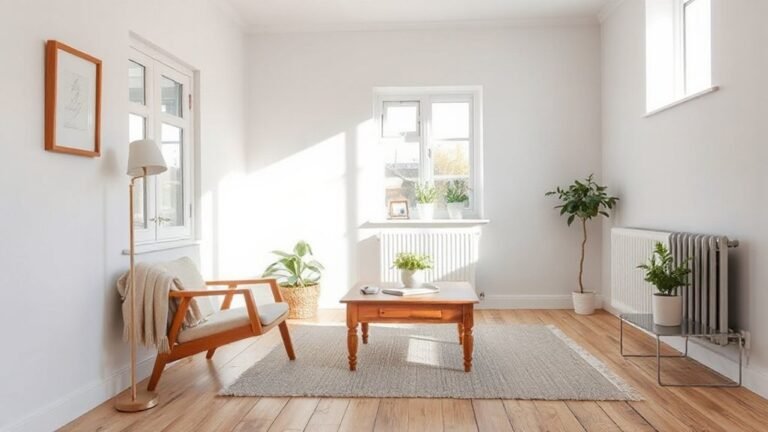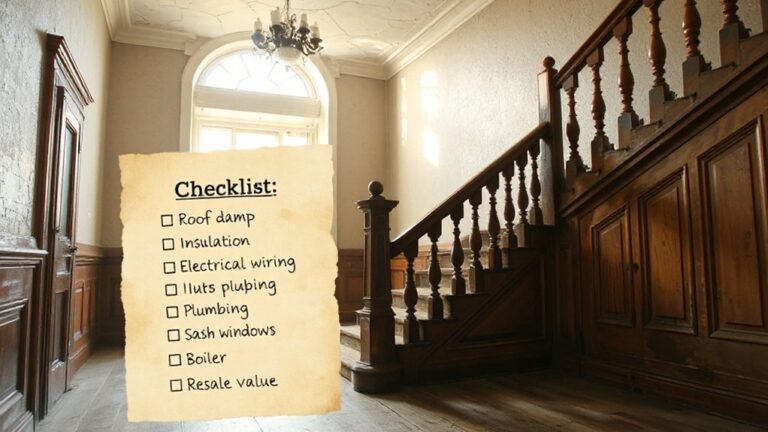
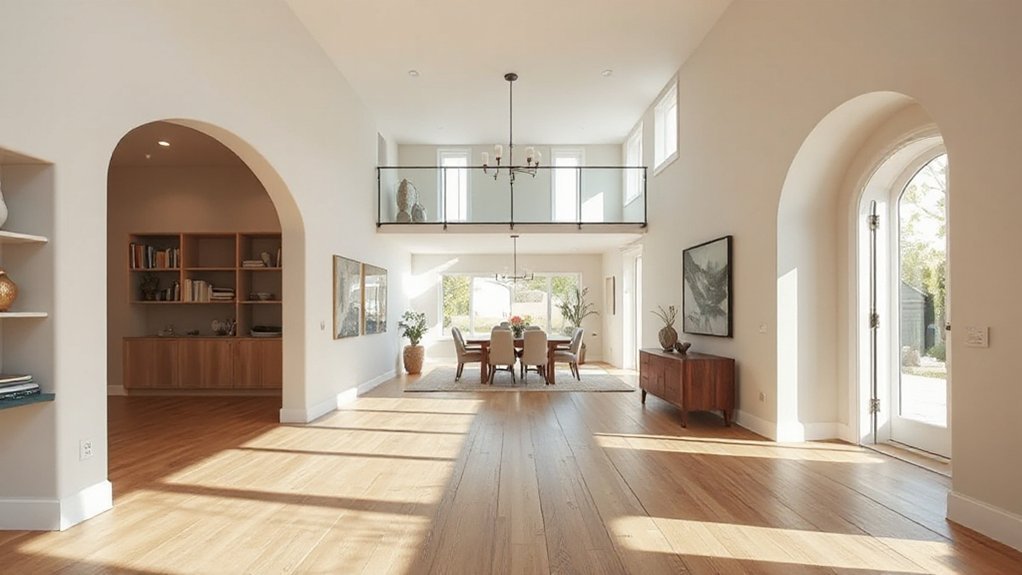
To improve flow in your family home, start by identifying bottlenecks in daily movement and widen key thresholds, prioritizing doorways to at least 32 inches (ideally 36) with smooth hardware. Create clear zones—Entry, Prep, and Relaxation—and align sightlines from gathering areas to appliances. Use open-concept layouts to invite natural light, minimize clutter with integrated storage, and arrange paths to reduce crossing routes. Consistent color cues and low-profile passages reinforce movement; more details await.
Identify Your Current Bottlenecks in Daily Movement
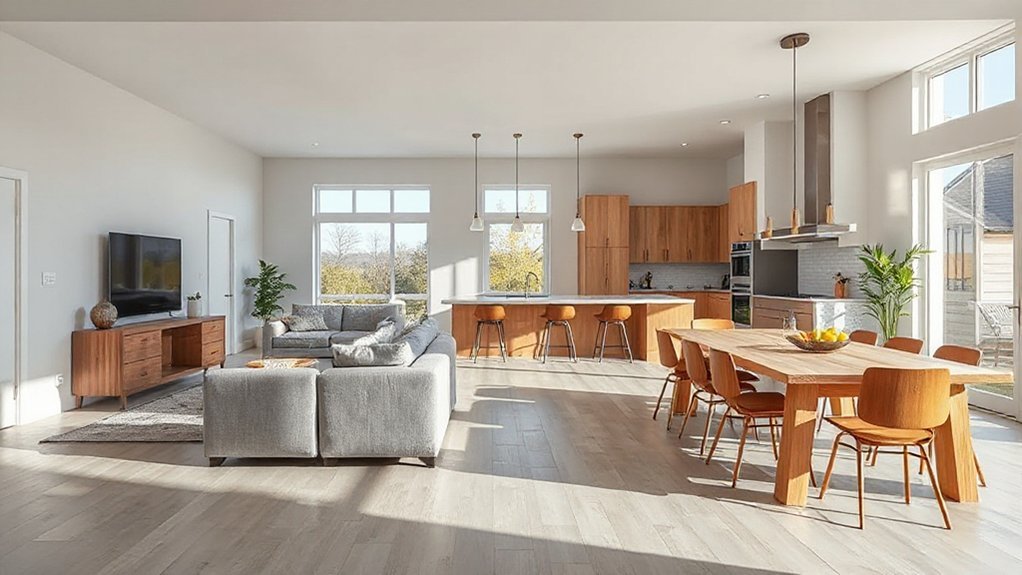
Focus on habitual paths, surface clutter, and furniture incursions that force detours. Catalog tasks by sequence, time, and effort, noting where reach, bend, or twist repeats.
Use these findings to guide two concrete levers: furniture placement and color coordination. Strategically reposition bulky pieces away from main routes to create clear lines of travel and sight.
Align color cues to distinguish zones and improve spatial cues, reducing hesitation. The goal is a streamlined flow that minimizes redundant movements, enabling faster, safer navigation without compromising function or comfort.
Widen Doorways for Smoother Transitions
Widening doorways improves access and circulation, supporting smoother interior traffic and reducing congestion at passages. This change opens universal access potential by accommodating varied mobility devices and user sizes without sacrificing structural integrity.
Consider how wider openings enhance safety, wayfinding, and long-term adaptability as part of your layout optimization.
Wider Doorway Benefits
Wider doorways reduce navigation friction and improve overall accessibility by allowing smooth, uninterrupted movement between rooms. You’ll notice fewer bottlenecks when passing through main circulation zones, enhancing daily tasks and passages without abrupt pauses.
From a functional standpoint, broadened openings distribute traffic more evenly, reducing strain on doors and surrounding framing while accommodating assistive devices.
Structurally, you should verify clearance, hinge placement, and dry-wall details to maintain door integrity and cosmetic finish.
In practice, wider openings support flexible room use, facilitate furniture repositioning, and improve supervision in mixed-use areas.
Consider doorway aesthetics and architectural accents during installation to preserve character while signaling openness.
Plan systematically to balance load paths with stylistic coherence and unobtrusive hardware that complements overall design.
Smoother Interior Traffic
Even with careful planning, smoother interior traffic hinges on deliberate doorway width decisions that reduce friction and streamline movement between spaces. You optimize flow by prioritizing clear sightlines and generous clearance—prefer at least 32 inches for typical interior doors, and consider 36 inches where possible to accommodate furniture moves.
Keep door swings inward or utilize pocket doors to minimize encroachment into passageways. Align adjacent rooms with straightforward paths, reducing sharp turns that slow occupants.
When selecting furniture, focus on a considered Furniture arrangement that preserves open corridors and minimizes obstructions at entry thresholds. Integrate cohesive Color schemes that favor lighter tones to visually expand passing areas and reinforce continuity.
These measures yield efficient progressions, improving daily navigation without sacrificing privacy or function.
Universal Access Potential
Expanding doorway widths enhances universal access by enabling smoother passages for people using mobility aids, strollers, or carrying loads. Widened thresholds reduce pinch points and allow single-file and side-by-side movement, improving safety and transition ease between rooms.
In practice, aim for a minimum clear width of 32 inches (preferably 34–36 inches) for main doors and 36 inches for interior doorways in new builds; adjust for wall thickness and swing clear. This aligns with universal access goals and supports adaptive design, enabling flexible use across users and scenarios.
Consider pocket or pivot options to conserve space while maintaining accessibility. Integrate lever handles, low-profile thresholds, and consistent floor finishes to minimize tripping.
Document compliance measures and anticipate future needs without sacrificing aesthetic coherence or structural integrity.
Create Clear Zones: Entry, Prep, and Relaxation
To optimize flow and function, define distinct zones—Entry, Prep, and Relaxation—within the interior layout. You map traffic paths first, then align functions to minimize crossing routes and interruptions.
Entry should establish a clear passage, with a logical focal point visible from the threshold to orient visitors.
Prep zones require ergonomic work zones, accessible storage, and a cohesive Color scheme that supports quick task switching. Use distinct but harmonious materials to cue purpose without clutter, such as durable surfaces at the threshold and quieter textures in living areas.
Maintain sightlines from Entry toward the central activity hubs, ensuring privacy where needed.
Consistency in scale, lighting, and color reinforces zone boundaries, reducing confusion and improving overall usability.
Open-Conce Pt Living Rooms That Invite Natural Light
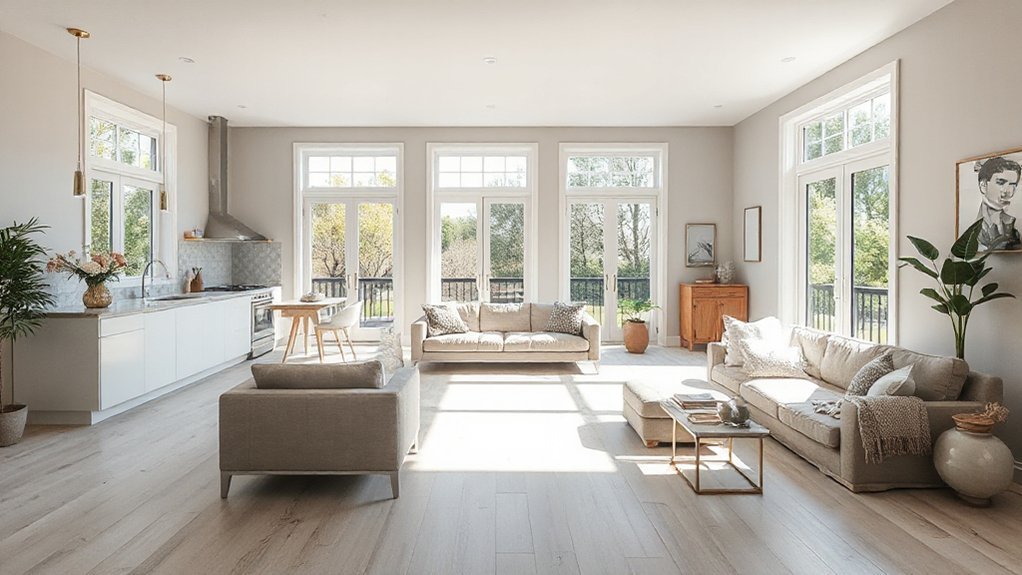
Open-concept living rooms maximize natural light by establishing clear Natural Light Pathways that guide daylight from exterior openings inward.
You’ll note how Open Sightlines Granted connect primary zones, reducing visual barriers and enhancing perceived brightness.
Facilitate Seamless Space Shifts so light flows freely with minimal interruptions across the layout.
Natural Light Pathways
What enables natural light to travel through open-concept living spaces, and how do you design layout pathways to maximize it? You align sources of daylight with primary circulation, reducing barriers and leveraging reflective surfaces.
Position main living areas to receive direct or near-direct exposure from windows, skylights, or light wells, then route circulation to minimize obstructions. Use linear sightlines that guide the eye toward daylight while preserving functional zones.
Materials matter: matte, light-toned finishes reduce glare; glazing with low-iron glass enhances color fidelity. Incorporate indoor plants to soften passages without breaking light paths, and consider acoustic privacy when placing partitions to maintain quiet zones.
Keep furniture minimal at key junctions, avoiding depth clutter that interrupts illumination and spatial cadence. Regularly assess daylight quality across seasons for ongoing optimization.
Open Sightlines Granted
Open sightlines are the backbone of open-concept living rooms that invite natural light. You implement deliberate sightlines by removing nonstructural barriers and aligning focal points between kitchen, dining, and family zones. This enhances daylight penetration, reduces visual clutter, and supports quick orientation as you move through spaces.
Prioritize perpendicular sightlines to minimize corner shadows and distribute brightness evenly across seating areas. Consider architectural alterations that maintain privacy while preserving openness; for example, strategically placed partial walls or low cabinets define zones without blocking light.
Address garden privacy by selecting window placements and glazing that limit exterior exposure while maximizing interior brightness. Align color schemes with luminance goals, using light neutrals punctuated by restrained accents to sustain clarity and depth.
Seamless Space Transitions
Seamless Space Shifts enable fluid movement between kitchen, dining, and living areas without abrupt breaks or visual disruption. You’ll design open-concept lounges with intentional sightlines, maximizing natural light through strategic window placement and transparent partitions.
Prioritize outdoor connections and furniture placement to extend living zones outward while preserving function.
- Align traffic paths with doorways and thresholds to minimize detours.
- Use consistent material palettes and color schemes across zones.
- Position seating to frame light sources and outdoor views.
- Integrate low-profile partitions or none at all to preserve sightlines.
This approach reduces clutter, enhances acoustic performance, and supports flexible use. You gain a cohesive flow that supports daily routines, social gatherings, and daylight appreciation without barriers or dead zones.
Reconfigure Kitchens for Better Sightlines and Movement
Reconfiguring kitchens to improve sightlines and movement involves aligning workflow zones, sightlines, and clearance to reduce backtracking. You should map primary tasks—food prep, cooking, cleaning, and storage—into a functional work triangle that minimizes travel distance.
Prioritize open sightlines from high-use gathering zones to appliances, guaranteeing you can monitor activity without interruption.
Evaluate cabinet layout to maximize access while preserving drawer and door clearance; shallow depth bases near primary prep reduce bending and obstruction.
Integrate a kitchen island only if it enhances interaction and circulation, not merely aesthetics; assure seating doesn’t interrupt flow.
Maintain consistent cabinet heights and sufficient toe-kick space for comfort.
Verify that overhead storage clears doors and windows, preserving natural light and sightlines throughout the room.
Plan Traffic With Anchors and Calm Corridors
You identify traffic types and map how people move through spaces using anchors to orient movement.
Plan calm corridor routes that minimize conflicts and guide flow toward key destinations. This approach creates predictable patterns, reduces congestion, and supports efficient navigation.
Plan Traffic Types
1) Anchors: place high-clarity focal points at decision nodes to cue preferred paths.
2) Corridor rhythm: guarantee consistent width, sightlines, and lighting to sustain flow.
3) Color schemes: use cumulative cues that differentiate zones without overwhelming shifts.
4) Furniture placement: orient sofas, tables, and storage to reinforce movement without congestion.
Calm Corridor Routes
Anchors, such as door foyers, built-ins, or seating nooks, establish wayfinding without interrupting flow. Use subtle floor cues and uniform lighting to reinforce rhythm, guiding occupants naturally toward main living zones.
Quiet, uninterrupted stretches reduce hesitation and competing stimuli, supporting safe, predictable traversal for children and adults alike. Incorporate decorative accents sparingly to avoid distraction; choose finishes with low glare and even color shifts to preserve calm perception.
Silent hallways emerge when surface textures and lighting cooperate, rather than compete, with movement. Maintain balanced proportion between corridors and rooms to sustain efficient, comfortable circulation throughout the home.
Seamless Storage to Reduce Clutter in High-Traffic Areas
Seamless storage solutions minimize visible clutter in high-traffic areas by integrating built-in cabinets, drawer organizers, and hidden compartments that align with architectural lines. You’ll gain quick access to essentials without visual disruption, while maintaining architectural integrity.
Hidden compartments and modular furniture collaborate to conceal everyday items behind clean, strategic panels. This approach supports durable flow, minimizes distractions, and reduces routing friction in busy zones.
- Install lockable or push-to-open drawers for small items, tools, and keys.
- Integrate modular units that reconfigure with family needs over time.
- Use concealed shelving to keep seasonal gear out of sight yet reachable.
- Align cabinet fronts with walls to preserve sightlines and balance.
The result is controlled clutter, improved navigation, and a cohesive, high-functioning space.
Soft Thresholds and Door Swings for Fluid Navigation
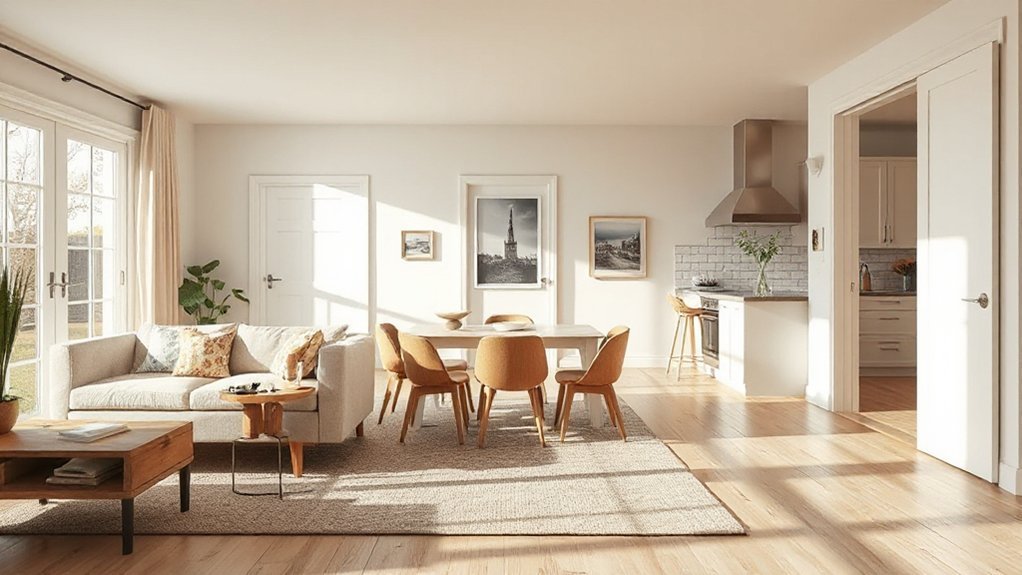
Soft thresholds and door swings are critical for fluid navigation in high-traffic interiors. You’ll optimize circulation by pairing door swing direction with traffic flow, minimizing interruptions at entry points.
Choose generous clearances to accommodate furniture placement without creating pinch points, especially in corridors and transitional zones.
Favor single- and double-acting doors with concealed hinges to reduce snag hazards and visual clutter, while maintaining accessibility.
Thresholds should be low-profile or seamless where possible, reducing missteps and enhancing perceived openness.
Coordinate colors and finishes to reinforce sightlines, aiding orientation as you move through rooms.
Maintain consistent door swings across adjacent spaces to sustain predictable pathways.
In practice, document swing plans, ensure hardware compatibility, and verify clearance margins during layout revisions for reliable, uninterrupted movement.
Make Multi-Use Spaces Adapt to Changing Rhythms
Design multi-use spaces to accommodate shifting rhythms by embedding flexible zones, modular furniture, and scalable acoustics that respond to varying occupancy. You’ll set up environments that reconfigure quickly for work, play, and rest, without disrupting flow or sightlines.
1) Flexible furniture enables instant resegmentation of zones.
2) Modular design allows rapid reassembly into new layouts.
3) Scalable acoustics preserve intelligibility across activities and time of day.
4) Clear sight and circulation paths maintain orientation during shifts.
Safe, Intuitive Stairs and Level Changes
Standardized riser heights, uniform run lengths, and landings prevent sudden changes in momentum and support predictable movement. Wall placement influences clearance and enclosure, allowing safe approach zones at each shift.
Balcony design considerations maintain visual continuity while differentiating vertical movement from adjacent spaces, reinforcing safe egress and supervision in family zones.
Material selection favors slip resistance and low-noise operation, with edge protection to deter side impacts. You document compliance, verify dimensioned drawings, and coordinate with rail systems, doors, and floor finishes to sustain consistent flow across levels.
Lighting That Guides Movement and Sets Mood
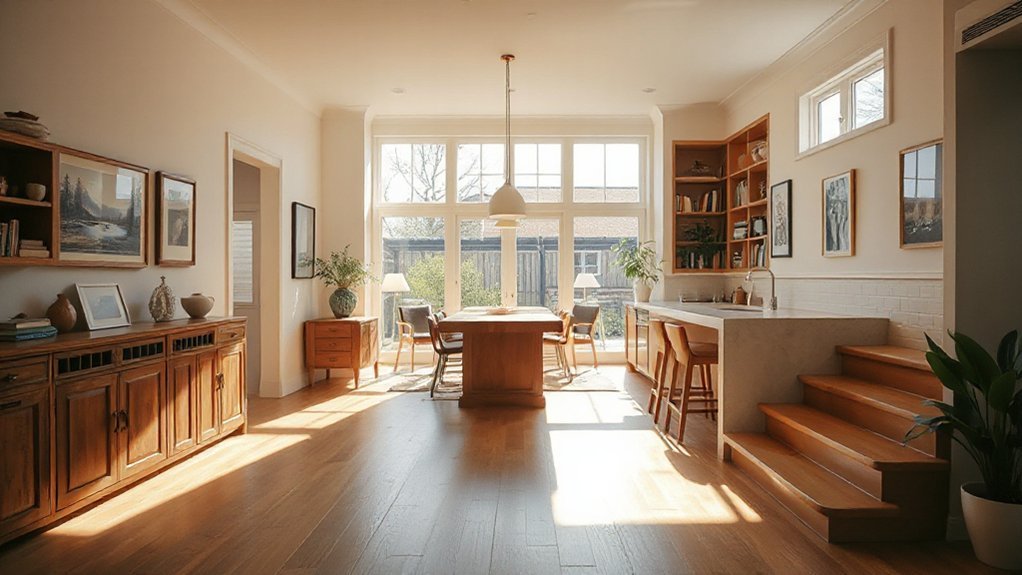
Effective lighting guides movement and sets mood by signaling pathways, defining zones, and supporting situational awareness throughout the space. You’ll shape flow through measured luminance, color schemes, and task-specific placements, aligning brightness with use.
Accent lighting highlights focal points without overpowering ambient light, improving charted routes and safety.
- Define key circulation zones with dimmable layers that adjust tone from room to room.
- Use color schemes to cue function, increasing recognition of progressions and thresholds.
- Employ accent lighting to emphasize stairs, thresholds, and artwork without glare.
- Integrate controls that synchronize with natural light, supporting consistent mood and readability.
Step-by-Step Plan to Evaluate, Test, and Refine Home Flow
To optimize home flow, you’ll implement a structured, repeatable evaluation plan that builds on the lighting-grounded insights from the previous topic.
You begin by mapping current furniture arrangements and traffic patterns, then quantify movement hotspots with simple measurements (footpath width, travel time, wait points).
Next, test adjustments in small, reversible steps: swap seating, reorient anchors, and vary focal points while maintaining clear sightlines.
Use color coordination to delineate zones without overwhelming contrast; track perceived warmth and accessibility after each change.
Document results with objective notes and brief photos.
Validate changes by re-measuring flow metrics and confirming incident-free circulation.
Final refinements should prioritize consistent sequences, minimal friction, and ergonomic access, yielding a repeatable process for ongoing improvement in family spaces.
Frequently Asked Questions
How Do I Measure Current Traffic Flow Accurately?
You measure current traffic flow by tracking movement with a timer, observing through floors plans, and counting occupants per zone. Use furniture arrangement and lighting placement adjustments, then compare before-and-after metrics for accuracy and actionable insights.
What Budget Range Suits Most Flow Upgrades?
A budget of $5,000–$15,000 typically suits most flow upgrades well. Allocate for color schemes, furniture placement tweaks, and minor structural adjustments; invest in layout software, fast-install accessories, and skilled decor calibration to optimize paths and sightlines.
Which Materials Optimize Movement and Safety?
You should choose durable, slip‑resistant surfaces and rounded edges to optimize movement and safety. Prioritize surface durability and consider material aesthetics to maintain visual appeal while meeting high-traffic demands, ensuring consistency across floors and shifts.
How Often Should I Reassess Layout Changes?
You should reassess every 6–12 months, adjusting for changes in family routines, safety, and aging. Evaluate Furniture placement and Lighting arrangements after major events. Continuous observation ensures flow remains ideal and alignment with new activities and spaces.
Can Pets Influence Interior Flow Decisions?
Yes, pets influence interior flow decisions. You must prioritize pet safety and optimize furniture placement to reduce hazards, minimize cross-traffic, and maintain clear sightlines for supervision. This guarantees safety, efficiency, and functional movement throughout your space.
Conclusion
You’ve identified bottlenecks, widened paths, and clearly defined zones, setting the stage for seamless routines. With open sightlines and reconfigured kitchens, you’ll move more efficiently and feel calmer at day’s end. Multi-use spaces flex to your rhythms, while safe stairs and intuitive lighting guide every step. Now, test, observe, and refine until flow becomes second nature. Ready to design a home that moves with you, not against you, every single day?
About the Author