You may not realize how small, well-placed edging and trimming can quietly boost your home’s value without a full makeover. You’ll see impact from careful focal points, subtle lighting, and durable textures that invite longer curb-appeal moments. This approach stays budget-smart and low-maintenance, yet it signals ongoing care to buyers. Stay with me as we explore practical steps that layer plant life, materials, and drainage into a cohesive, value-driven landscape.
Key Takeaways
- Tighten edges and trim overgrowth to create a clean, manicured look that boosts curb appeal without a full redesign.
- Integrate energy-efficient garden lighting to extend usability and highlight architectural features safely.
- Use native, drought-tolerant plants for low maintenance, year-round interest, and better resilience.
- Implement gentle grading and drainage to protect structures and reduce post-storm landscaping costs.
- Add subtle hardscaping and tasteful outdoor art to create focal points and defined walkways.
How Subtle Landscaping Boosts Property Value Without a Makeover
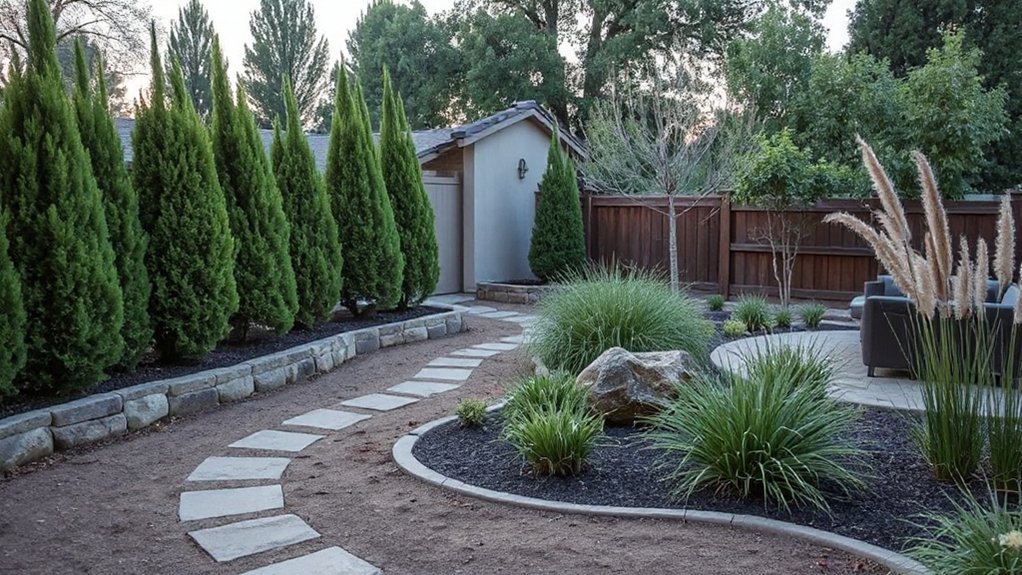
Subtle landscaping can lift curb appeal and value without a full makeover. You’ll focus on targeted tweaks that maximize impact with minimal disruption. Start by evaluating sight lines from the street and entry, then tighten edges, trim overgrowth, and define focal points.
Integrate garden lighting to extend usability and highlight architectural features after dusk, boosting perceived value and safety. Choose low-impact, energy-efficient fixtures aligned with your home’s style, ensuring even illumination without glare.
Add outdoor art as tasteful accents—sculptures, planters, or wall-mounted pieces—that complement existing materials and color palettes. Maintainers benefit from durable finishes and simple cleaning routines.
Document upgrades with receipts and photos for future buyers, demonstrating thoughtful, budget-conscious enhancements that deliver value without a full landscape renovation.
Native Plantings for Low Maintenance Year-Round Interest
Native plantings offer a low-maintenance path to year-round interest while boosting curb appeal and site resilience. You select native species adapted to your climate, soils, and micro-sites, reducing irrigation and fertilizer needs while increasing garden reliability.
Begin with a targeted plant palette: flowering perennials, grasses, and shrubs that provide structure in winter and color in shoulder seasons. You’ll design for layered textures, ensuring pollinator access and wildlife habitat opportunities without sacrificing neatness or accessibility.
Choose species with proven drought tolerance and disease resistance to minimize interventions. Integrate soil-building natives, such as deep-rooted grasses, to enhance soil structure and infiltration.
Over time, expect improved soil quality and natural pest checks, while enjoying year-round interest and reduced maintenance.
Gentle Grading and Drainage: Protecting Your Investment
Gentle grading and proper drainage protect your investment by preventing erosion, sedimentation, and standing water that can damage foundations and encourage pests. You implement a graded landscape that directs runoff away from structures and into permeable areas, reducing saturation near footings.
Prioritize soil stability through strategic compaction, swales, and continuous slopes that minimize pressure points and mudding during storms. Employ timely drainage solutions, like French drains or perforated peripherals, to capture subsurface water before it reaches vulnerable zones.
Regular inspection guards against clogging and erosion channels, preserving landscape integrity through seasons. This approach strengthens soil stability, lowers maintenance costs, and preserves curb appeal.
Effective erosion control preserves property value by maintaining site structure, protecting masonry, and reducing landscaping repair needs after heavy rains.
Texture, Color, and Structure: Layering With Plants and Materials
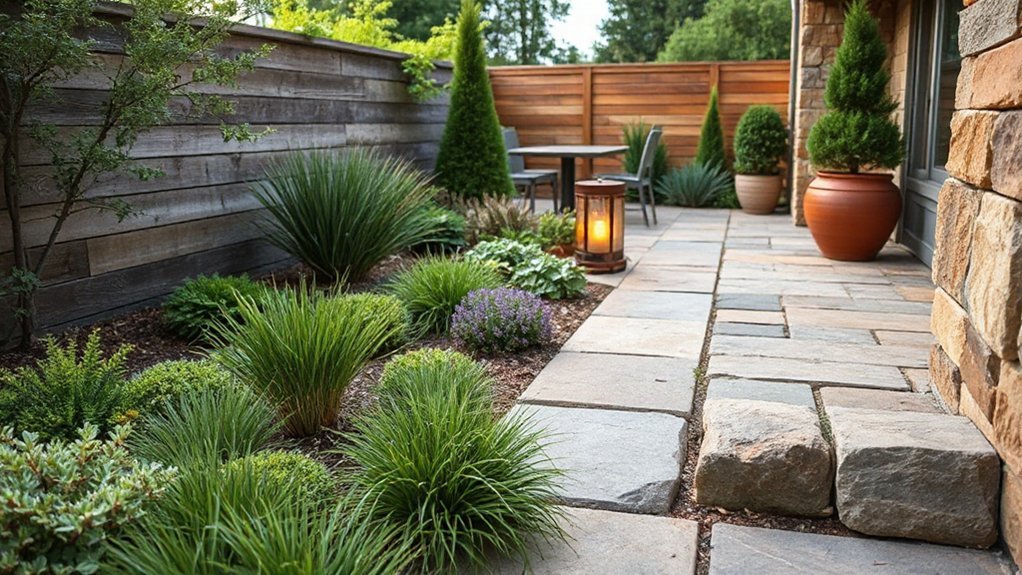
Texture, color, and structure come together when you layer plants and materials to shape visual depth and function. You map contrast of leaf form, bloom timing, and bark texture to create focal points and progression zones.
Use a deliberate sequence: groundcovers, mid-height shrubs, and specimen trees to establish scale and rhythm. Then introduce architectural elements like timber edging or metal screens for linear definition.
Garden art accents punctuate color echoes without clutter, while outdoor lighting highlights texture at night, guiding pathways and drawing attention to key plant masses.
Deploy color thoughtfully: cool greens and grays for calm backdrops, warmer foliage for seasonal interest.
Always align plant choices and materials with site conditions, maintenance expectations, and your property’s value goals.
Smart Hardscaping: Seating, Pathways, and a Small Water Feature
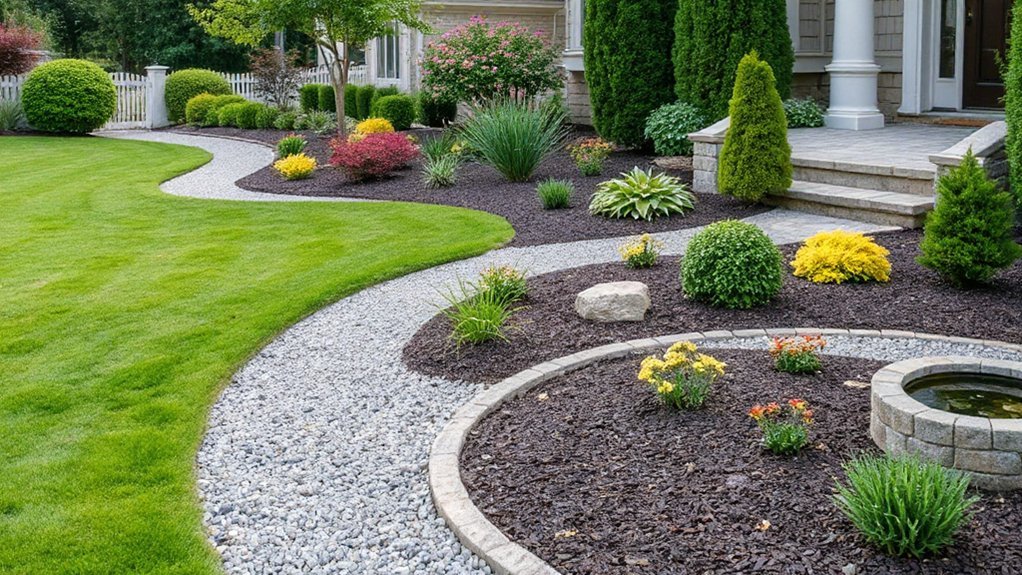
Smart hardscaping builds on layered planting by adding functional, value-boosting elements that invite everyday use. You design seating, pathways, and a small water feature to create destinations within your yard, not just decoration.
Prioritize durable materials and proper drainage to sustain heavy use and seasonal changes. Integrate garden lighting along paths and features, extending usability after sunset while enhancing safety and ambiance.
Choose outdoor furniture with weather resistance and timeless profiles that pair with existing textures, avoiding clutter while supporting flexible gatherings.
Plan narrow, meandering paths to encourage exploration and visually connect planting zones. A compact water feature provides soothing soundscapes without overpowering the space or demanding excessive maintenance.
Balance scale, circulation, and maintenance to maximize value and curb appeal.
Quick Upgrades and Budget Tips for Maximum ROI
You can start with quick, high-impact upgrades that fit tight budgets and show immediate ROI. Focus on low-cost landscaping tweaks that boost curb appeal, like targeted plantings, refreshed mulch, and crisp edging.
Plus, consider smart, durable improvements in hardscape and lighting. By prioritizing value-driven choices and measurable results, you’ll maximize appeal and property value without overspending.
Quick Budget Upgrades
In under a weekend, you can dramatically boost curb appeal and value with a few strategic, budget-friendly upgrades. Start with a crisp, high-impact entry: a fresh mailbox, clean pathway, and defined borders using affordable edging.
Prioritize garden lighting to extend usability and highlight focal points without a full remodel, choosing low-voltage options for energy efficiency.
Add privacy screens or trellises where sightlines intrude, using lattice panels with climbers to soften lines and create intimate outdoor rooms.
Refresh mulch, prune aggressively, and replace faded mulch with dark, uniform tones to sharpen contrast.
Swap worn hardware on gates and fences, keeping finishes consistent.
Integrate perennial plantings for seasonal continuity, ensuring color and structure year-round.
These steps maximize ROI while preserving flexibility for future upgrades.
ROI Boosting Landscaping
Strategic, budget-friendly landscaping tweaks can deliver meaningful ROI in a short window, focusing on high-impact enhancements that buyers notice first. You’ll maximize value with targeted, low-cost moves that earn trust at first impression and sustain curb appeal.
3 ROI-boosting ideas:
- Garden art placement: install focal sculptures or weather-proof planters to create memorable accents without overwhelming existing beds.
- Efficient lawn care: upgrade with sharp mowers, seasonal edging, and consistent fertilization to present a healthy, manicured look that signals maintenance discipline.
- Plant density with purpose: group evergreen and flowering perennials for year-round color and reduced replacement costs.
Aim for cohesive color palettes, durable materials, and minimal upkeep. These steps reinforce value, reduce buyer questions, and support a faster, confident sale.
Frequently Asked Questions
How Do Subtle Features Affect Resale Value Differently by Neighborhood?
Neighborhood aesthetics and landscaping standards influence resale value differently by neighborhood, you’ll find. In high-demand areas, subtle features raise perceived quality and curb appeal, boosting offers and quicker closings.
In lower-cost zones, buyers prioritize maintenance and reliability, so durable, low-cost improvements matter more. You’ll align features with local preferences, ensuring consistent upkeep.
Track neighborhood norms, compare comps, and tailor your improvements to meet prevailing landscaping standards while preserving aesthetic coherence for maximum ROI.
What Maintenance Trade-Offs Come With Low-Profile Landscaping?
Low-profile landscaping reduces maintenance if you plan smartly, but you trade some automated ease for consistency. You’ll rely on durable mulch, native groundcovers, and drip irrigation to minimize upkeep.
You’ll also need regular pruning and seasonal checks on garden lighting and irrigation systems to avoid waste.
Can Tiny Changes Influence Property Value More Than Large Ones?
Yes, tiny changes can outrun big ones in impact. You’ll see sharper curb appeal from thoughtful landscaping aesthetics paired with effective privacy enhancements, creating a near-instant perception of value.
While grand projects matter, selective tweaks—soil quality, plant spacing, and subtle borders—deliver steady returns. You don’t need luxury to win buyers; you need precision.
You’ll measure outcomes in photos, foot traffic, and perceived safety, with practical costs and clear, results-driven timelines.
Do Native Plantings Impact Property Taxes or Incentives?
Yes, native plantings can impact your property taxes or incentives. You’ll often qualify for tax incentives or rebates when you install native plantings that support local biodiversity and reduce maintenance.
You may also see lower ongoing costs and potential reassessment benefits, depending on your jurisdiction.
To maximize results, document plant provenance and local approvals, then consult a tax professional about eligible programs and deadlines tied to Native plantings and tax incentives.
How Quickly Do Subtle Upgrades Recoup Costs at Sale Time?
Subtle upgrades recoup costs quickly, often within 5 to 10 years, depending on market, upkeep, and home type.
You’ll boost landscaping aesthetics and curb appeal enhancements, attracting buyers who value first impressions. If you invest in thoughtful plantings, clean lines, and durable materials, you can accelerate return by reducing concessions.
You’ll see stronger offers and shorter time on market as your property stands out in competitive neighborhoods. Be consistent with maintenance to protect your gains.
Conclusion
Subtle landscaping is your quiet ROI engine. With careful edging, native plantings, and smart lighting, you’ll boost curb appeal without a full remodel. I once watched a client add a low stone border and timed lighting along a path; within weeks, buyers noticed the approach and offered asking price. A 10–20% improvement in perceived value isn’t rare when details align with your home’s style. Document upgrades with receipts and photos to prove ongoing maintenance and value.
About the Author