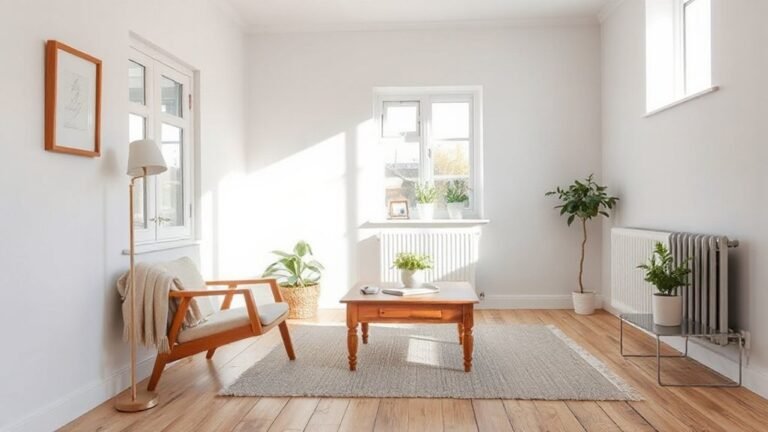
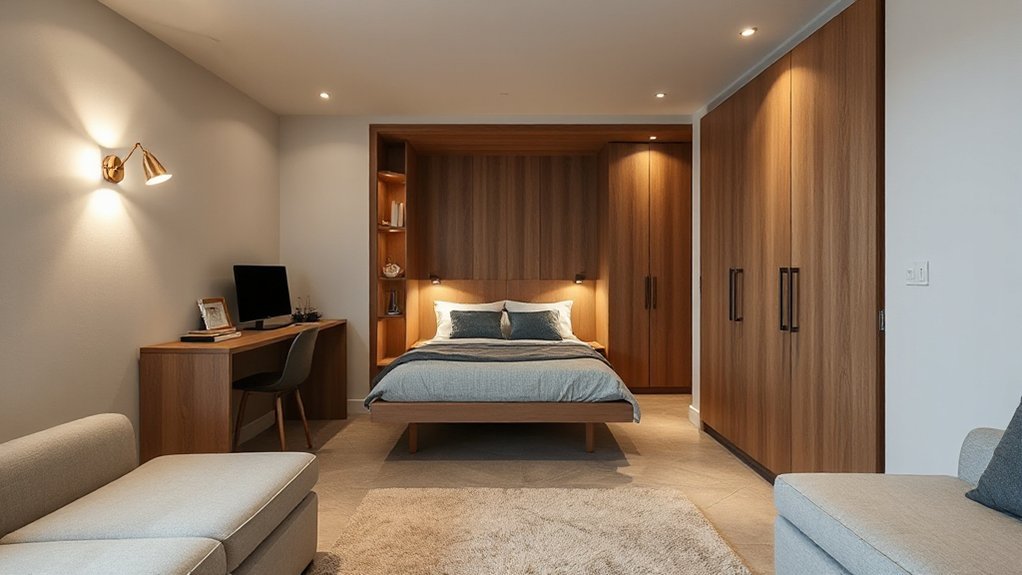
Start by clarifying your spare room’s top value—whether it’s a productive work zone, a relaxing retreat, or a guest-ready suite. Map clear zones for work, leisure, and storage, so flow stays smooth and clutter stays off the radar. Target budget wins first—better lighting, durable finishes, and smart organization pay off fast. As you plan, think about flexibility: a space that adapts to you tomorrow keeps paying dividends. Now consider how to implement each element efficiently.
Key Takeaways
- Define the room’s high-value purpose (productivity, income, or wellbeing) and align layout, lighting, and zones to support it.
- Map flow, create distinct work, relaxation, and storage zones, and ensure 36 inches of clearance around furniture.
- Prioritize high-ROI upgrades (durable flooring, efficient lighting, smart storage) with stage-wise implementation and ROI framing.
- Implement smart storage with modular, wall-mounted units, labeled bins, and quiet closures to maintain calm sightlines.
- Layer lighting with dimmers, choose durable premium finishes, and tune color temperature for daytime focus and nighttime coziness.
Define Your Spare Room’s High‑Value Use
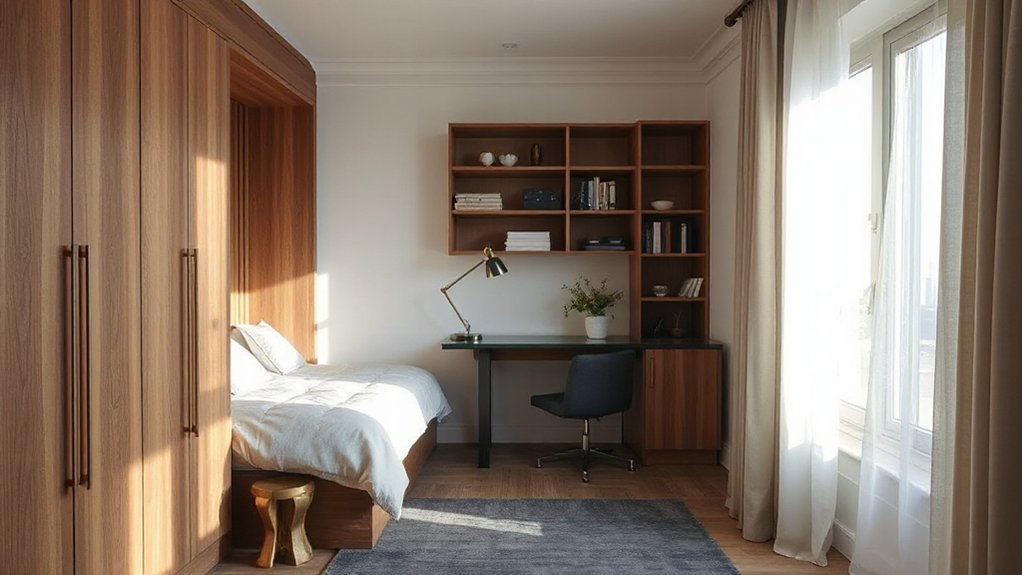
Start by clarifying what counts as “high value” for you: a space that boosts your productivity, income, or wellbeing. You’ll define the room’s primary role, then align layout, lighting, and furnishings to support that aim.
If you want focused work, designate a dedicated desk area with ergonomic gear and task lighting. For a guest-ready guest area, create a comfortable sleeping nook with practical storage and privacy solutions.
Decide on how you’ll measure impact—hours saved, revenue generated, or stress reduction. Use decorative accents to establish tone without clutter, and test color schemes that support focus or relaxation.
Document tradeoffs, then iterate: small changes yield insight, guiding you toward the highest-leverage use for your spare room.
Assess Flow and Zoning to Maximize Space
Start by mapping foot traffic through the room to spot bottlenecks and clear paths.
Define clear zones for work, relaxation, and storage so each area has a purpose without crowding others.
Use simple boundaries—color, rug, or furniture placement—to keep flow intuitive and maximize usable space.
Assess Traffic Flow
To maximize usable space, assess traffic flow by mapping how people will move through the room and where doors, windows, and furniture create pinch points. You’ll identify main paths and secondary routes, then test them with a simple walk-through to reveal friction, delays, and clutter potential.
Focus on traffic patterns: where you enter, how you exit, and which zones will compete for space during peak use. Mark clear corridors and guarantee at least 36 inches of clearance around furniture for room circulation.
Consider door swings, vent placements, and natural light that can influence pacing. Use these findings to guide furniture placement, storage access, and task zones, keeping circulation uninterrupted and visually coherent for a high-value space.
Define Zone Boundaries
With traffic patterns in mind, you’ll define clear zone boundaries that align with how the room will be used. You map each area to its function—work, rest, storage—so pathways stay open and interruptions drop.
Use visual cues instead of rigid walls: rugs, lighting, and furniture placement create natural flow and define each zone without clutter. Prioritize proportion, so larger pieces anchor seating or a workstation while smaller accents delineate perimeters.
Introduce decorative accents in strategic spots to reinforce function without signaling chaos. Choose color schemes that support shifts; cooler tones can calm work zones, warmer shades invite relaxation elsewhere.
Keep sightlines clear, avoid overlaps, and verify accessibility from every entry. Reassess periodically as needs shift, adjusting boundaries to preserve efficiency.
Prioritize Budget Upgrades With the Biggest ROI
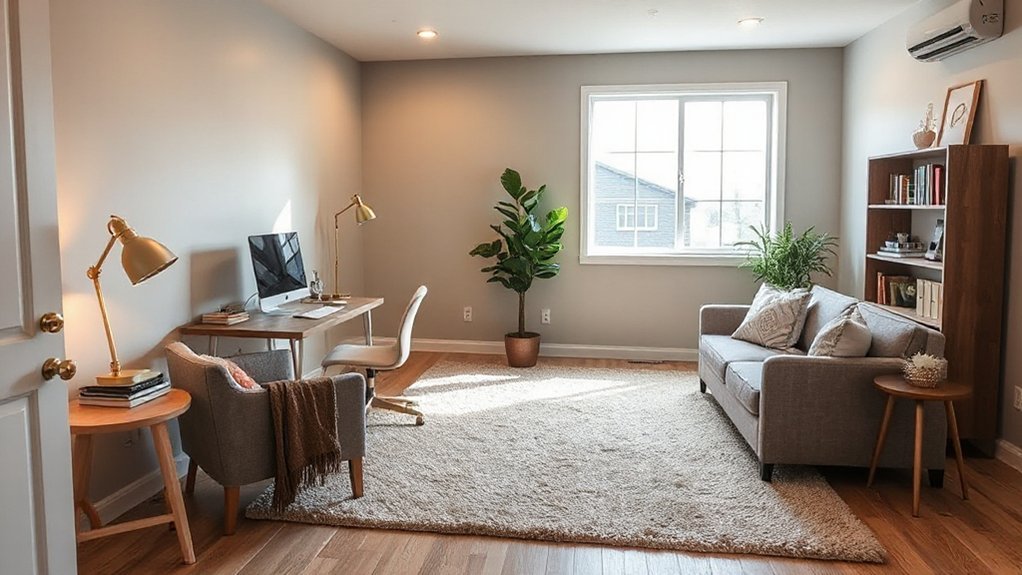
Start with the upgrades that deliver the most value for resale or daily use, not the flashiest features. Focus your budget on high-ROI fixes like durable flooring, efficient lighting, and smart storage that people notice and use.
Make smart, data-backed choices early so you maximize impact without waste.
Prioritize High-ROI Upgrades
Considering ROI first can drastically boost your project’s value: focus on upgrades that deliver the biggest financial returns relative to cost. You should target high-ROI moves that enhance utility, durability, and appeal without breaking the bank.
Prioritize features you’ll recoup in resale or rental value, like versatile lighting, durable flooring, and space-efficient storage solutions. Choose upgrades that lower ongoing costs too, such as energy-efficient windows or insulation improvements.
When selecting finishes, lean toward timeless options that resist quick price drops. Use Decorative accents and Color schemes strategically to elevate perceived value without a full remodel.
Document costs and projected payback, then compare against your budget. Implement in stages if needed, ensuring each step clearly boosts usefulness, comfort, and market appeal before you move on.
Budget-Smart Renovation Choices
If you want real value without breaking the bank, focus on budget-smart upgrades that deliver the biggest ROI right away. Start with paint and lighting tweaks that refresh the space without major expense, choosing color schemes that brighten and unify the room.
Prioritize durable, versatile finishes and energy-efficient bulbs to cut ongoing costs. Make smart furniture selections: pick modular pieces that adapt to different uses and scale with the room, avoiding oversized buys.
Refinish existing furniture to save, rather than replace. Invest in smart storage solutions to reduce clutter and improve perceived value.
Update hardware, trim, and doors for subtle, high-impact updates. Finally, use inexpensive textiles and curtains to tailor mood without hefty remodels.
These choices maximize appeal, resale value, and utility.
Smart Storage Solutions That Stay Tidy
Smart storage should be invisible until you need it, so plan spaces that hide clutter behind doors, drawers, and labeled bins. You’ll maximize a spare room by choosing modular units that fit flush against walls and stay accessible without crowding the floor.
Install wall-mounted shelves at eye level for frequently used items, and use matching containers to create a cohesive look. Label every bin and drawer, then commit to routine tidying—15 minutes weekly keeps the system sharp.
Choose closures that feel quiet and secure to reduce visual noise. Incorporate decorative accents sparingly for personality, not distraction, and coordinate color schemes so storage components recede.
Prioritize air, light, and clear sightlines, so the space remains calm while storage remains practical.
Lighting and Finishes That Elevate Your Spare Room
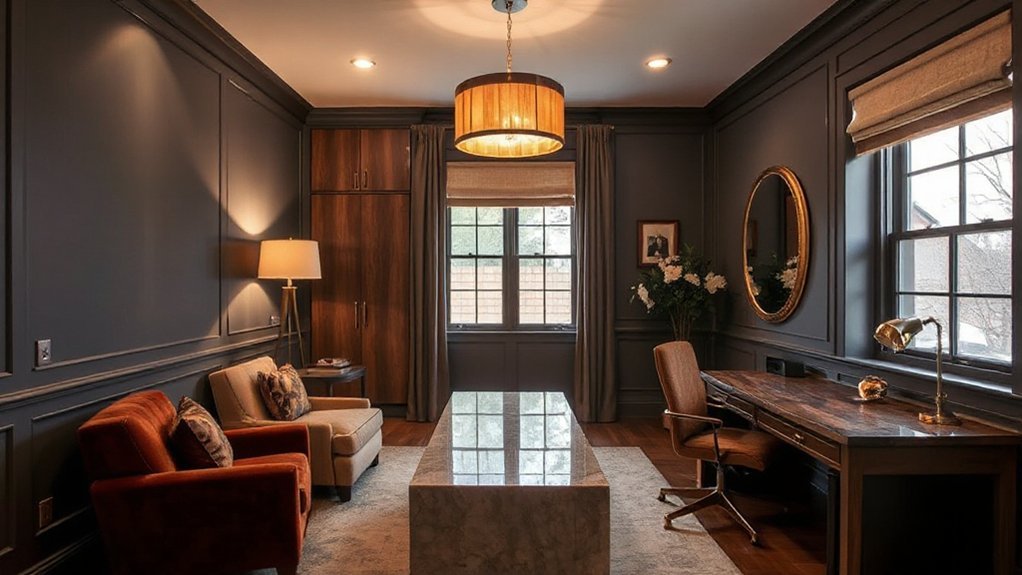
Lighting and finishes set the tone fast, so choose a plan that balances function and mood from the start. You’ll elevate the space with thoughtful ambients and durable surfaces that read high-end without breaking the bank.
1) Prioritize ambient lighting that layers warmth with task needs, using dimmers to flex from work to unwind.
2) Select luxurious finishes—matte paints, real wood or high-quality laminates—as anchors that elevate perception and durability.
3) Use reflective tones sparingly to brighten without glare, pairing them with soft textures for depth.
4) Calibrate color temperature to sustain focus by day and coziness by night, aligning with your room’s purpose and atmosphere.
Create Flexible, Monetizable Space for Daily Use
Transform the spare room into a daily-use space that adapts to your needs and earns its keep. You’ll design for versatility: a corner desk that folds away, a pullout sofa for guests, and flexible storage that stays tidy. Prioritize quick conversions over complex setups, so you actually use the room every day.
Map daily routines and assign zones: workspace, guest nook, exercise corner, and a memo station. Invest in modular furniture and durable, easy-clean finishes that handle frequent reconfigurations.
Personalization ideas should reflect your habits without clutter—neutral bases with targeted pops of color. Try simple decor themes that scale: a calm modern base with a single accent, or a warm rustic vibe with understated textures.
Keep cords hidden, surfaces clear, and lighting adaptable for any activity.
Frequently Asked Questions
How Can I Measure Potential Rental or Resale Value Improvements?
You can estimate value by comparing before-and-after rents or resale prices in your area, then adjust for improvements. Start with interior aesthetics that buyers notice first, and quantify how storage solutions reduce clutter and boost usability.
Track costs vs. staged value bumps from comparable listings, and factor hold period into your ROI. Use online analytics, appraisals, and local comps, updating figures as market shifts.
Plan incremental improvements and document tangible benefits for precise projections.
What Tax Implications Come With Monetizing a Spare Room?
Tax implications can be dramatic, but they’re manageable. When you monetize a spare room, you must report rental income on your tax return and track deductible expenses.
You’ll likely handle Tax deductions for allowable costs like mortgage interest, utilities, and depreciation, which can reduce taxable profit.
Be sure to separate personal use from rental activity and keep receipts.
Consult a tax professional to optimize Income reporting and avoid audits.
Which Permits or HOA Rules Affect Transformations?
Permits and HOA rules vary, so you’ll need to check local ordinances and your homeowners associations guidance first.
You should confirm any required building permits, fixture standards, and occupancy limits before transforming the room.
Review HOA covenants for noise, parking, or rental restrictions that could affect your plan.
If unsure, consult a permitting office or HOA representative, document approvals, and follow timelines to avoid fines or delays.
Stay proactive and compliant throughout the process.
How Do I Avoid Overdesigning for One Use?
Can you avoid overdesigning for one use by staying flexible from the start? You should keep decor understated and choose furniture placement that supports multiple activities.
Use decorative accents sparingly, swap them seasonally, and keep surfaces clean for adaptability. Reserve walls for modular art or mirrors rather than heavy focal pieces.
Plan lighting and storage that serve various tasks, not just one function. Maintain a simple palette to preserve future versatility and value.
What Is the Fastest ROI for a Multifunction Space?
You want the fastest ROI for a multifunction space, so prioritize flexible layout and high-impact upgrades.
Start with luxury upgrades that don’t break the bank—neat storage, quality lighting, a compact sofa bed, and a durable workstation.
Add aesthetic enhancements like cohesive color and tasteful textures.
You’ll attract more use, boost resale appeal, and preserve space.
Keep modular furniture reachable, and rotate uses seasonally to maximize utility and value over time.
Conclusion
Your spare room isn’t just a spare room—it’s a quiet, high‑value hub waiting to unfold. With smart zoning, you’ll glide through tasks, relax with ease, and store away clutter you barely notice. Prioritize quick wins that pay you back in time and calm, not money lost to mistake‑prone upgrades. A flexible, monetizable setup keeps options open, while lighting and finishes quietly elevate every moment. Reassess often, and let efficiency gently guide the next smart improvement.
About the Author