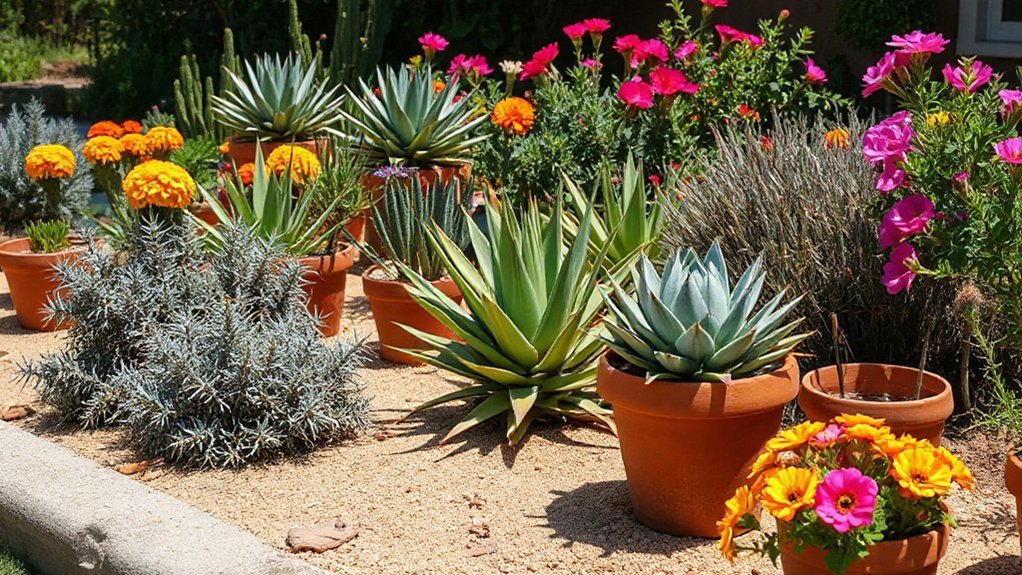
Sunny climates demand plants that endure heat with minimal care, so you’ll want drought-tolerant options, gravelly groundcovers, and hardy perennials that thrive in full sun. Think succulents, grasses, lavender, yarrow, and Russian sage that resist daily watering while delivering color and texture. Start with solid soil prep and smart irrigation to keep maintenance low. The challenge isn’t finding tough plants, but pairing them for bloom, structure, and resilience as you map your sunny space.
Key Takeaways
- Choose drought-tolerant, deep-rooted, sun-loving perennials and shrubs with waxy or hairy leaves to reduce water loss.
- Group sun-loving plants by similar water needs and use drip irrigation for targeted, efficient watering.
- Improve drainage with sandy loam or added grit; avoid heavy clay substrates to prevent root rot.
- Use mulch (2–3 inches) to conserve moisture, regulate soil temperature, and suppress weeds.
- Select hardy, fast-establishing species with continuous bloom and minimal maintenance for sunny sites.
How to Design a Sunny Garden That’s Low-Maintenance
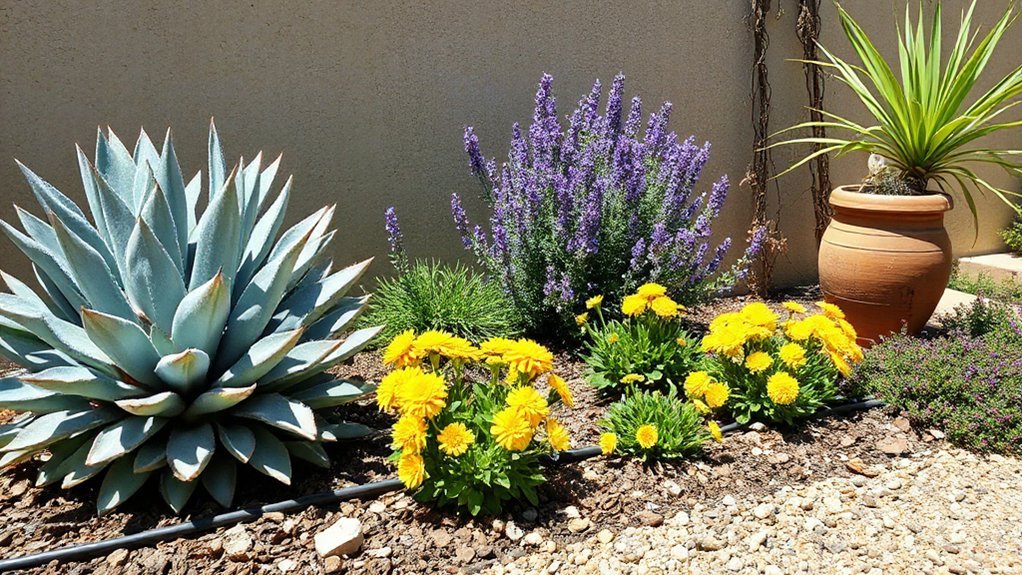
Choosing the right plants is only part of the equation; the rest is planning for low maintenance from day one.
You design a sunny garden by focusing on structure, perennials, and materials that resist heat and drought. Group sun-loving elements in cohesive blocks to reduce weeding and irrigation needs. Use sun-loving succulents in hot, reflective spots to minimize water use and maintenance.
Choose durable containers with thick walls and light colors to reduce temperature swings and soil evaporation. Schedule irrigation to deliver deep, infrequent watering rather than frequent misting.
Opt for hardscape features—gravel paths, mulch beds, and shaded seating—that lower upkeep and improve cleanliness. Include Bright garden furniture to create inviting, low-work zones that are easy to maintain.
Criteria for Choosing Sun-Loving Plants (Sun, Drought Tolerance, Soil)
To choose sun-loving plants, you’ll start with sun exposure: assess how much light your site gets throughout the day and season.
Then match drought tolerance to your climate by selecting species that survive on limited water and hot soils.
Finally, evaluate soil needs—texture, drainage, and fertility—to pick plants that thrive where you plant them.
Sun Exposure Basics
Sun exposure isn’t one-size-fits-all: you need to match sun, drought tolerance, and soil to each plant’s needs. In practice, you’ll compare sunlight duration for candidates and weigh shade versus full sun against their tolerance. Full-sun varieties want long, uninterrupted light, typically 6+ hours daily, while partial-sun plants perform well with broken or shorter durations.
Consider the plant’s drought tolerance: tougher species cope with longer dry spells under direct sun, whereas moisture-loving types sulk if soil dries quickly. Soil quality matters, too: well-draining media prevent root burn in bright conditions, whereas some plants tolerate heavier, fertile mixes.
Use this framework to forecast performance, not just initial bloom. Ground rules: prioritize consistent, appropriate exposure over extreme spots.
Drought-Resistant Soil Needs
Drought tolerance isn’t just about the plant’s leafiness; it hinges on soil that drains quickly and doesn’t trap moisture. You should prioritize well‑draining mixes or sandy loam, with grit added for porosity. Avoid heavy clays and consistently damp substrates, which invite root rot and stressed growth.
For sun lovers, guarantee a planting bed or pot has a soil profile that dries between waterings, yet sustains brief moisture for establishment. Indoor succulents demonstrate the principle: they thrive when soil drains rapidly and dries between visits.
For shade-loving plants, use similarly open textures that still allow occasional drying periods. Choose amendments that improve drainage without sacrificing structure, and regularly assess soil moisture to prevent overwatering and encourage hardy, drought‑resistant performance.
Drought-Tolerant Ornamentals That Thrive in Bright Heat
In bright heat, you’ll want plants that tolerate intense sun and minimal water, so start with proven drought-tolerant ornamentals.
Focus on Bright-Heat Tolerance Tips, selecting Drought-Deterrent Plant Selections, and integrating a Low-Water Garden Design that supports steady performance.
This discussion sets the framework for reliable, low-effort color and structure in sunny landscapes.
Bright-Heat Tolerance Tips
When heat is intense, choose drought-tolerant ornamentals that thrive in bright, dry conditions. You’ll want plants that minimize water use without sacrificing color or structure.
Ground cover and perennials with waxy or hairy leaves reflect heat and reduce evaporation, while compact forms resist wind stress.
Water deeply but infrequently, letting soil dry between soakings to strengthen roots. Mulch 2 to 3 inches to conserve moisture and regulate soil temperature.
Sun protection matters: select varieties with seasonal foliage that guards against scorching, and consider temporary shade during peak afternoon hours for new transplants.
Pest management remains proactive but targeted: monitor for common scorch- and sun-loving pests, remove infested foliage, and avoid broad-spectrum sprays that disrupt beneficial insects.
Maintain soil health with light fertilization only when needed.
Drought-Deterrent Plant Selections
Bright heat demands plants that endure drought without fading, so choose ornamentals that thrive on minimal irrigation and intense sun. You’ll favor drought-deterrent selections that survive long dry spells with shallow roots and efficient water use.
Prioritize robust, sun-loving ornamentals that resist wilting under bright heat, and select varieties with low water needs, deep root structures, or waxy foliage. Indoor succulents can serve as reliable accent pieces in hotter interiors, while outdoor contexts benefit from species proven in arid climates.
Include drought-tolerant shrubs, perennials, and grasses that maintain color with limited irrigation. If you’re short on shade, pair with shade-loving plants in protected microclimates and monitor soil moisture to avoid overwatering.
Maintain consistent, targeted irrigation for best performance.
Low-Water Garden Design
Ever wonder which ornamentals endure bright heat with minimal watering? Choose drought-tolerant ornamentals that thrive in full sun and lean soils. Opt for compact, low-growth forms to reduce irrigation needs and maintenance. Group plants by water needs, and mulch to conserve moisture and suppress weeds.
Incorporate permeable beds and efficient irrigation, like drip lines, to deliver water directly to roots with minimal loss. Favor species with deep roots and waxy or hairy leaves that reflect sunlight and reduce evaporation.
Use a breathable mix for container plantings, and select automatic timers to avoid overwatering. For indoor décor shifts, place resilient exteriors near entryways and patios to minimize indoor irrigation demands.
Emphasize water conservation in design choices, ensuring a cohesive, resilient landscape that remains vibrant in heat.
Hardy Perennials for Long-Lasting Color With Little Care
For gardeners seeking durable color with minimal effort, hardy perennials deliver lasting impact year after year. Choose drought-tolerant options with deep roots and proven performance in sunny climates.
Establish with good soil prep, then mulch to conserve moisture and suppress weeds. You’ll find that many hardy perennials self-seed modestly, but you still get dependable bloom, year after year, with minimal input.
Prioritize varieties known for disease resistance and strong vigor to reduce replacement needs. Plant propagation should be planned, using division or cuttings during the right season to maintain plant health and bloom integrity.
Integrate pest management by monitoring for common issues, using culturally based controls first, reserving targeted treatments when necessary. With thoughtful selection and timing, you’ll enjoy lasting color and low maintenance.
Groundcovers That Conquer Intense Sun and Dry Soils
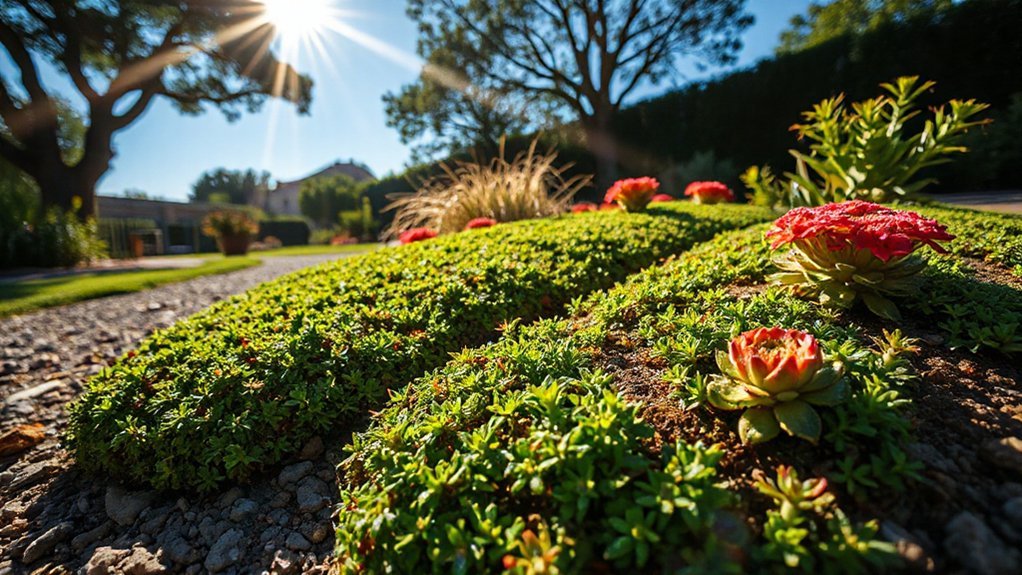
When you’re selecting groundcovers for spaces baked by sun and stripped of moisture, choose vigorous, drought-tolerant species that establish quickly and tolerate heat. Groundcovers tolerant of extreme sun and dry soils reduce irrigation needs and soil erosion, while maintaining visual appeal.
Look for low-growing, dense varieties that form rapid mats and suppress weeds without ongoing care. In hot, sandy, or clayey soils, select species with deep roots and thick, waxy leaves that minimize water loss.
For indoor succulents enthusiasts, these groundcovers can pair with container plantings to extend the same aesthetic outdoors. Consider shady garden options for transitional areas and guarantee good drainage.
Use mulch to conserve moisture and avoid overwatering, especially during establishment.
Low-Water Trees and Large Shrubs for Sunny Landscapes
Looking for low-water trees and large shrubs that thrive in sun? You’ll want sun-loving selections that form strong silhouettes with minimal maintenance. Favor drought-tolerant, deep-rooted varieties that resist heat and wind while conserving moisture.
For trees, choose resilient options like fast-growing, umbrella-like shades or upright silhouettes with low litter; these reduce irrigation without sacrificing impact.
For large shrub varieties, prioritize compact habit and dense, evergreen foliage that blocks glare and reduces soil evaporation. Prioritize established proven performers over novelty, and pair with sturdy root systems to prevent toppling in dry spells.
Guarantee good drainage and sun exposure to maximize efficiency. With careful plant choice, you achieve reliable structure, seasonal interest, and lower water demands.
Sun-loving trees and large shrub varieties deliver enduring appeal.
Smart Soil and Watering Tweaks to Reduce Irrigation
Smart soil and watering practices can dramatically cut irrigation without sacrificing plant health. You’ll boost efficiency by amending beds with compost and mulch, which stabilize moisture and warm soils.
Use drip irrigation or soaker hoses to deliver water directly to roots, reducing evaporation and runoff. Schedule watering early in the day and adjust for rainfall, heat, and plant type; deeper, less frequent soakings encourage root depth.
Build soil structure with organic matter to improve porosity and drought resilience, then mulch to minimize surface evaporation.
Pair smart irrigation with pest control by maintaining healthy soil that supports beneficial organisms and reduces stress.
Integrate garden decor thoughtfully to prevent trampling of moisture-retentive beds while preserving irrigation efficiency.
Focus on precision, results, and consistently lower water use.
Design Tricks to Boost Color While Trimming Water Use
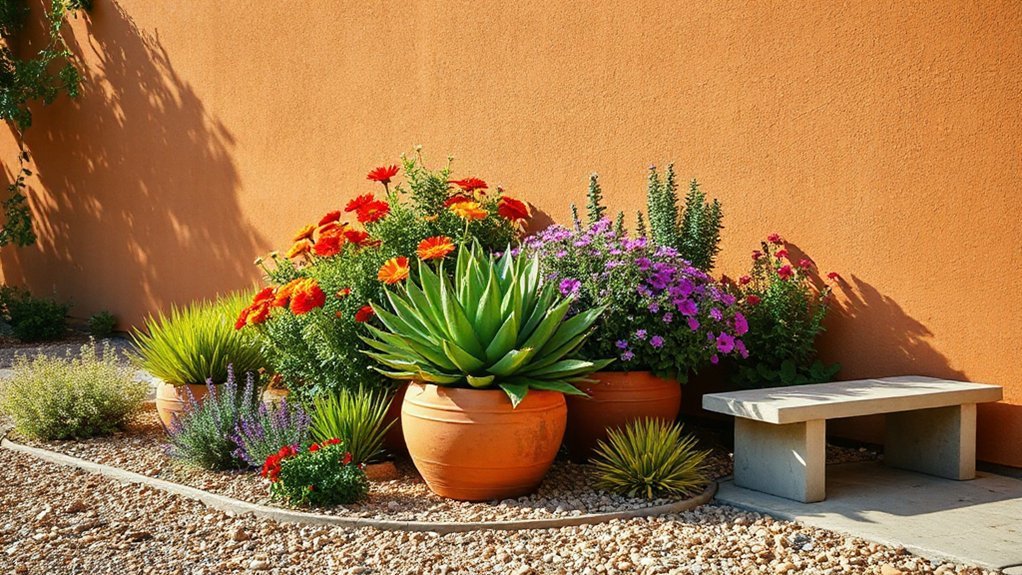
Colorful outdoor displays don’t have to mean more water. By pairing bold palettes with efficient plants, you boost color without increasing demand.
Start with drought-tolerant varieties that bloom in succession, so color persists from spring through fall. Group specimens by similar water needs, which simplifies irrigation scheduling and minimizes waste.
Use mulches to shade roots and reduce evaporation, then deploy drip lines close to plant bases for targeted delivery. Incorporate rainwater harvesting to supply irrigation during dry spells, and design a layout that uses vertical interest—trellises, cascading containers, and compact shrubs—to maximize hue per square foot.
Enhance soil quality with composting techniques, improving nutrient retention and reducing fertilizer needs. This combo keeps displays vibrant while trimming overall water use.
Simple Maintenance Routines to Keep Sunny Plantings Thriving
To keep sunny plantings thriving with minimal effort, establish a simple, repeatable routine: inspect weekly for wilting, pests, or nutrient gaps; water only as needed based on soil moisture; trim dead or spent blooms to encourage new growth; and apply a light mulch refresh each season to maintain soil temperature and moisture.
You should log observations and adjust practices seasonally, reinforcing consistent results. Prioritize Plant propagation when you notice vigorous but uneven growth, selecting healthy shoots for cuttings and labeling varieties for reliable succession.
For Pest management, scout regularly for signs of common pests and employ targeted, minimal interventions to avoid collateral damage to beneficial organisms. Maintain a clean garden edge, monitor soil health, and document outcomes to refine your maintenance cycle.
Frequently Asked Questions
How Often Should I Prune Sun-Loving Shrubs for Best Color?
You should prune sun-loving shrubs annually, right after bloom flush, to preserve color and shape. This keeps a strong pruning schedule and prevents overgrowth.
For best color, target light, selective cuts rather than heavy rewrites, maintaining shrub maintenance without stressing plants.
Expect a modest yearly cycle: remove spent flowers and dead wood, then thin crowded branches.
A consistent pruning schedule promotes vigor, bloom longevity, and even color distribution across the shrub.
Can I Mix Ornamental Grasses With Drought-Tolerant Perennials?
Yes, you can mix ornamental grasses with drought tolerant perennials. Picture a sunny bed: fountain grass beside purple coneflower and yarrow, thriving together. You’ll get varied textures and years of color with less water.
Use well-drained soil, group by water needs, and space to reduce competition. Monitor after heatwaves, mulch deeply, and prune grasses seasonally.
This combination enhances resilience, reduces maintenance, and keeps drought tolerant perennials looking vibrant throughout the season.
Do Sunny Plants Require Extra Fertilizer in Hot Climates?
Yes, sunny plants don’t inherently need more fertilizer in hot climates, but you should monitor nutrient needs.
Your fertilizer frequency depends on the plant and soil; many benefit from light, steady feeding rather than heavy doses.
Check nutrient requirements before feeding, and avoid overfertilizing, which can scorch roots.
Use slow-release formulations or dilute weekly with water.
Adjust based on growth, leaf color, and soil tests to meet exact nutrient requirements while minimizing runoff.
Which Sun Plants Attract Pollinators and Wildlife?
They’ll flock to your garden if you plant pollinator friendly flowers and wildlife attracting plants, right where you stand. You’ll attract bees, butterflies, and hummingbirds by choosing nectar-rich blooms.
And you’ll invite birds with seeds and berries. You’ll observe a lively, sustainable habitat as you space conmigo, prune lightly, and provide water.
Trust your instinct: with these choices, your sunny space becomes a thriving pollination corridor that quietly supports local wildlife.
How Many Hours of Direct Sun Do I Need Daily?
You should aim for about 6 to 8 hours of direct sun daily. Sunlight duration drives your plant growth rate, so longer sun accelerates flowering and vigor while too little slows growth.
If you relocate or prune, monitor changes in leaf color and bloom; some species tolerate partial shade but still prefer sustained light.
Make certain you provide consistent daily sun, not just seasonal bursts, to maintain steady plant growth rate and healthy, robust foliage.
Conclusion
Design a sunny, low-maintenance garden by choosing drought-tolerant ornamentals, hardy perennials, and smart soil tweaks. Favor sun-loving grasses, succulents, and agaves for structure, plus lavender and yarrow for enduring color. Use well-drained soil, mulch to cut evaporation, and efficient irrigation to curb water use. Pair groundcovers and smart plant spacing to minimize upkeep. With steady routines and thoughtful design, your heat-soaked borders stay vibrant—no fuss, just resilient, breathtaking color that lasts forever.
About the Author