You might not realize that edging can quietly define a garden’s mood before you add any plantings. For a clean, modern look, consider concrete for crisp lines or low-profile metal that fades into the background—both maintainable and timeless. Pairing these with your pathway colors and textures creates a cohesive, uncluttered space. If you want direction on choosing and installing the right style, you’ll find practical guidance ahead.
Key Takeaways
- Choose edging that emphasizes clean geometry and low profile, like concrete or metal, for a crisp modern look.
- Use tight joints and seamless transitions to minimize visual clutter along lawn edges.
- Match edging material and color to pathways and plant tones for cohesive, understated contrast.
- Prioritize low maintenance options with durable finishes and UV/frost resistance to sustain sharp lines.
- Align edging scale with garden layout, opting for slim borders to maintain an airy, contemporary feel.
How to Choose Modern Garden Edging for Your Bed
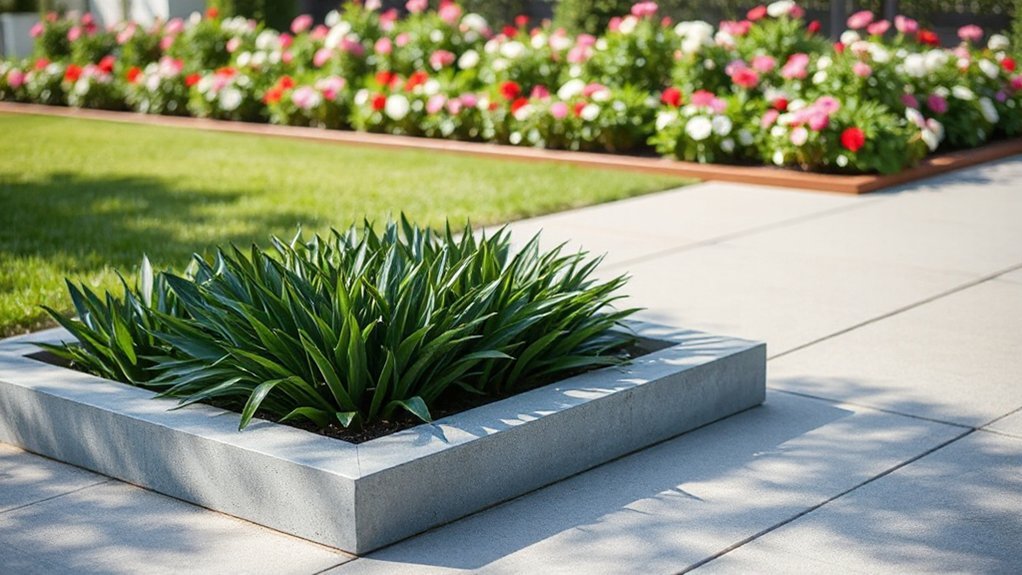
Choosing modern garden edging for your bed starts with clarity about function and style. You define division, prevent soil spill, and set visual rhythm.
Start by evaluating function: do you want subtle separation, weed control, or a dramatic line that anchors plantings?
Next, align texture and tone with your garden’s mood. Consider maintenance: low upkeep edging saves time, while flexible materials accommodate shifting borders.
Explore garden border ideas that suit your climate and scale, from narrow aluminum profiles to durable plastics and natural stone.
Compare edging material comparisons for durability, cost, and installation ease, noting UV resistance, frost tolerance, and repair needs.
Finally, visualize sightlines and alignment along paths, ensuring consistent height and a cohesive, modern feel throughout your bed.
Modern Concrete Edging: Crisp Lines and Low Maintenance
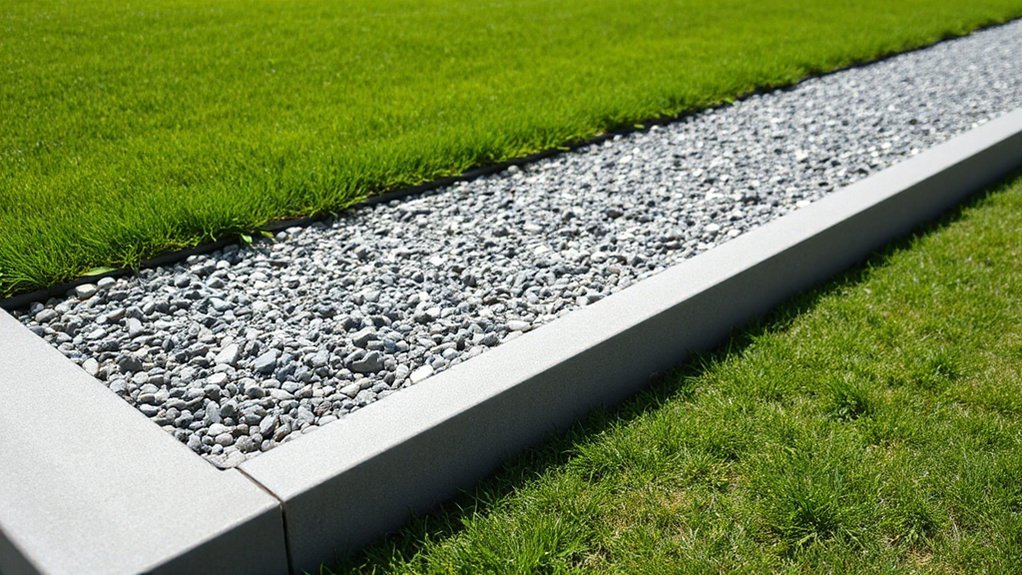
Concrete edging brings crisp lines and low maintenance to a modern bed. When you choose concrete, you invest in clean geometry that stays true through seasons, rain, and sun. You’ll appreciate its stability; it won’t shift like some soft borders, preserving your garden’s minimalist silhouette.
For installation, plan a precise line, use a stake and string guide, and deepen the trench enough to prevent heaving. Finishing options range from smooth, troweled faces to subtle chamfers that catch light without glare.
In regards to garden edging materials, concrete pairs well with gravel, mulch, or stone accents, reinforcing a contemporary feel.
Maintenance tips are simple: rinse periodically, seal if you want extra sheen, and address cracks promptly to prevent enlarging. Your bed remains orderly with minimal effort.
Low-Profile Metal Edging for Seamless Transitions
Low-profile metal edging offers seamless shifts between lawn and bed by riding just a hair above soil level. You’ll notice a clean, almost invisible boundary that preserves lawn movement while defining beds with precision.
This approach minimizes trip hazards and allows better mowing control, since the edge stays stable under frequent foot traffic and equipment. Choose raised profiles that remain flush with soil for a naturally continuous look, or opt for a micro-offset to emphasize subtle gradations.
Durability comes from corrosion-resistant alloys and powder coatings, sustaining color and rigidity through seasons. For long-term performance, install with a solid trench and secure fasteners to prevent heaving.
Garden edging innovations emphasize compatibility with Eco friendly materials, maintaining recyclability without sacrificing sleek, contemporary appeal.
Subtle Brick and Composite Edging for a Cohesive Look
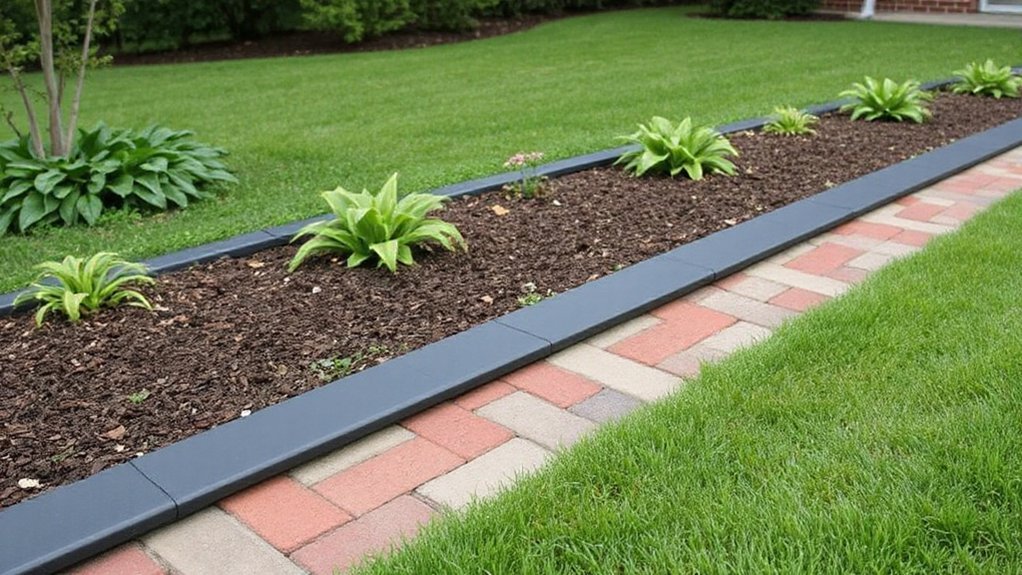
Subtle brick and composite edging blends texture and durability to create a cohesive garden frame. You’ll notice how brick’s warm tones echo walkways and beds, while composite options add uniformity and low maintenance.
This pairing delivers a streamlined boundary that defines plant bed borders without shouting for attention. When you choose brick, opt for tight joints and clean grout to minimize visual noise; with composites, select a consistent color and smooth surface for a polished look.
The result is a seamless connection between lawn, border, and mulch. Use this edging as decorative trim that reinforces structure while remaining unobtrusive. It supports clean lines, resists weathering, and reduces lawn edging gaps over time.
Matching Edging to Pathways: Color, Texture, and Scale
Matching edging to pathways requires deliberate coordination of color, texture, and scale so borders read as a single, intentional design rather than separate elements. You align garden color with the pathway hue, selecting tones that echo nearby plantings without overwhelming the route.
Edging texture matters: choose smooth profiles for formal lanes and rougher finishes for rustic routes, ensuring tactile continuity where feet meet ground. Scale matters too; slim borders create linear quiet, while wider edges define bold passages between lawn and path.
Maintain rhythm by repeating a limited palette and texture in alternating segments, avoiding jarring contrasts. Consider lighting angles, ensuring color and texture stay legible after dusk.
When done well, your edging blends utility with aesthetic cohesion, guiding movement while enhancing garden color and overall composition.
Installation Essentials: Tools, Tips, and Common Pitfalls
To install garden edging effectively, gather the right tools, plan around your path’s width and terrain, and proceed with deliberate steps to avoid costly mistakes. Start with a clean baseline: mark your straight lines, verify angles, and set stakes at consistent intervals.
Use a trenching tool or shovel to cut a shallow, uniform groove, then insert edging with a slight upward lip for durability. Check alignment frequently; uneven sections waste time and damage durability over time.
Choose eco-friendly materials that resist weather and root intrusion, and secure with appropriate fasteners or stakes. Maintain soil compaction around the edge to prevent shifting.
Regularly inspect joints for gaps, reseal as needed, and avoid overdriving anchors to preserve garden edging durability and aesthetic.
Frequently Asked Questions
What Edging Options Are Best for Rainy Climates?
For rainy climates, choose rain resistant materials and flexible edging options. You’ll want durable polymers, steel with corrosion protection, and treated timber that resists rot.
Opt for flexible edging options like rubber, vinyl, or wire-edged profiles that adapt to slopes and overflow.
Make certain proper installation with a low, continuous setback and a moisture-friendly base.
Regular maintenance keeps seams tight and edges sharp, so you preserve a clean, modern look despite wet conditions.
Can Edging Impact Soil Drainage and Plant Health?
Edging can affect soil drainage and plant health. You’ll see better outcomes when you prevent soil compaction and root intrusion with proper barriers.
You won’t stall water flow long, and you’ll protect roots from mower damage. If you misplace edging, soil compaction worsens, roots girdle, and drainage suffers.
You should choose permeable, durable materials, maintain grade, and guarantee a slight slope away from beds. This keeps soil structure healthy and plants thriving.
Are Heated or Insulated Edges Practical for Cold Climates?
Heated or insulated edges aren’t practical for most cold climates. You’ll gain minimal, if any, soil warmth benefits, and installation costs can be prohibitive.
Instead, you should focus on insulation beneath beds, windbreaks, and selecting cold-tolerant plants.
If you still pursue heated edges, plan for robust power supply, moisture control, and safety.
Heated edges and insulated borders can be part of a niche system, but they aren’t broadly efficient or reliable for typical garden use.
How Do I Maintain Color Consistency Across Materials?
Color consistency starts with careful color matching and disciplined material selection.
You’ll maintain color across materials by choosing hues from the same family and opting for durable, fade-resistant finishes. You should test finishes in the sun and track age, texture, and sheen to avoid contrast surprises.
Match undertones, document the exact products, and request samples. By aligning color matching with material selection, you’ll preserve a cohesive, lasting look and minimize discoloration over time.
What Budget-Friendly DIY Edging Ideas Work Long-Term?
Yes—budget-friendly diy edging ideas that last include concrete pavers laid in staggered steps, bricks repurposed from pallets, and gravel paths framed with landscape fabric.
You’ll get long-term durability by compacting soil and using crushed stone for drainage.
Creative border ideas blend low-maintenance materials with clean lines, while decorative edging options like metal or treated timber keep roots safe.
You’ll save money by choosing durable, readily available supplies and installing them with simple, precise measurements.
Conclusion
You’ve chosen a clean, modern garden—let edging carry that look. Pick concrete for crisp, low-maintenance lines, or metal for a near-invisible boundary that lets plants shine. If you favor warmth, subtler brick or composite can still feel contemporary. Coordinate color, texture, and scale with pathways to maintain cohesion. Install with precise cuts and secure foundations, and beware of shifting soil or uneven pavers. In short, let your edges whisper, not shout, and the garden will speak volumes.
About the Author