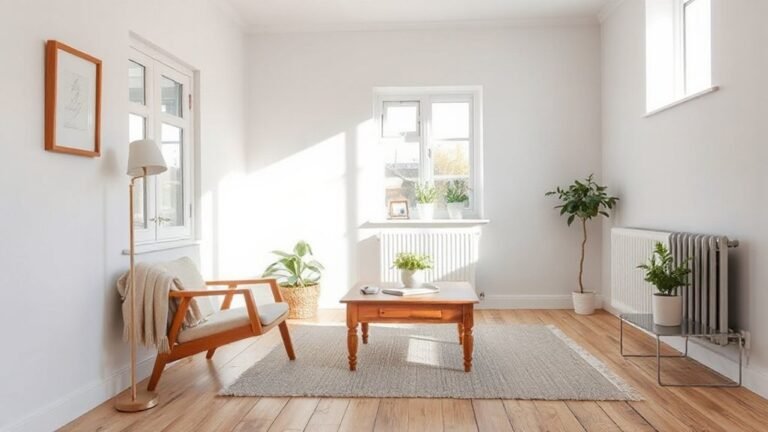
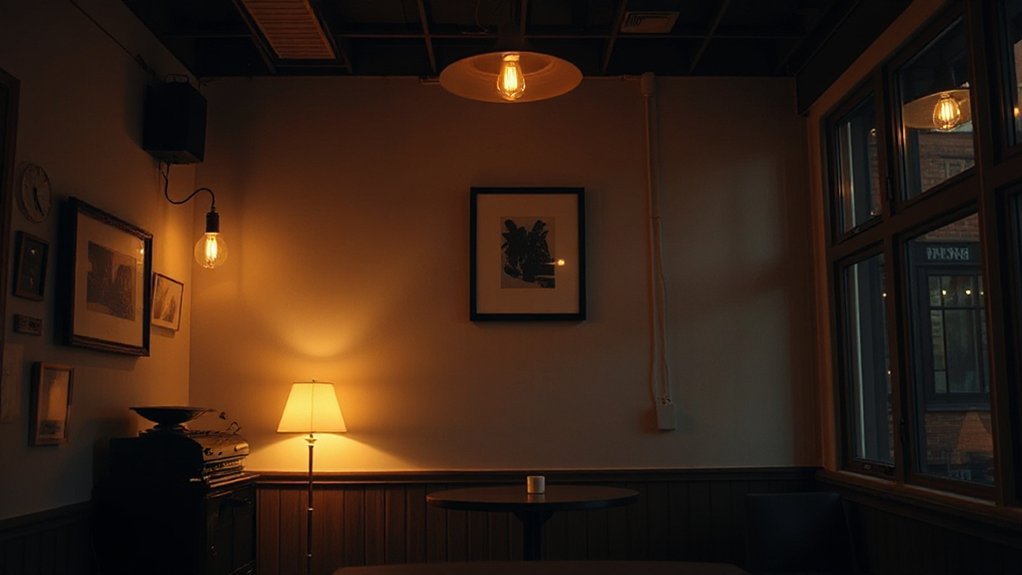
You might not realize that color temperature can alter your mood as much as brightness does. When you layer ambient, task, and accent lighting, you create depth you can adjust with dimmers or smart controls. The right mix shapes space, zones, and pace, from cozy corners to focused work. Want to see how small swaps shift the feel, or how to plan light zones for any room? It’s all about precise choices that subtly steer atmosphere.
Key Takeaways
- Light temperature sets mood: warm 2700K enhances comfort; cool 5000K+ boosts alertness and clarity.
- Layer ambient, task, and accent lighting to add depth and guide attention without harsh shifts.
- Dim with purpose: use gradual dimming and scenes to adjust intimacy, focus, or relaxation.
- Harness natural light and reflections: align windows, use diffusers, and mirrors to extend brightness.
- Choose fixtures and finishes thoughtfully: warm neutrals, matte/satin textures, and energy-efficient dimmable LEDs for mood control.
How Warm or Cool Light Sets Your Room’s Mood
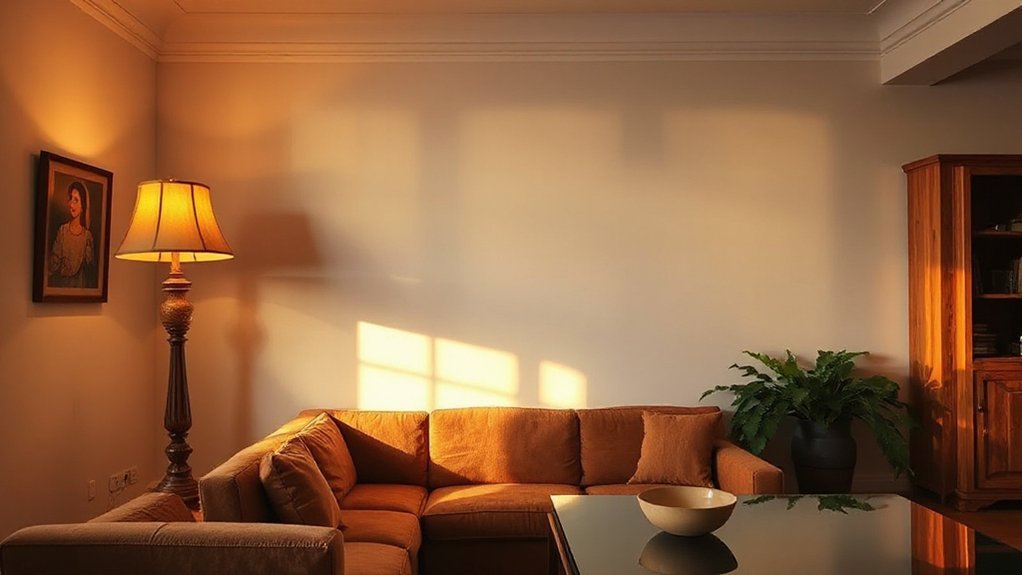
Warm light creates energy and focus, while cool light invites calm and concentration. You shape a room’s mood by choosing warmth or coolness to match tasks, times of day, and your intended emotional tone.
Warm light enhances comfort, intimacy, and appreciation of textures. Cool light sharpens perception, boosts alertness, and supports clean aesthetics.
You balance chromatic warmth with functional needs, ensuring tasks aren’t sacrificed for mood. Consider ambient shadows that add depth and dimension, when warm light softly fades across surfaces.
In cooler setups, lighting symmetry becomes critical to prevent harsh contrasts and maintain a steady field of view. You’ll notice the atmosphere shifts as color temperature changes, guiding behavior subtly without overpowering the space.
Layered Lighting That Feels Right in Any Space
Layered lighting harmonizes function and mood by combining multiple light layers to suit any space. You shape atmosphere with ambient, task, and accent cues, ensuring each area serves a purpose without glare or gaps.
This approach balances brightness and depth, creating nuanced, inviting environments. By thinking in layers, you prevent flat illumination and avoid overfixating on a single source.
Emphasize ambient shadows to add texture and perception of size, while preserving clarity for reading or detail work. Maintain consistent color temperature across layers to avoid harsh shifts.
Use lighting layering to guide attention, highlight architecture, and reinforce style without clutter. Your goal is coherent, adaptable lighting that feels natural and purposeful, not overpowering.
- Align layers for function and mood
- Preserve ambient shadows for depth
- Balance brightness and contrast
- Target spaces with intentional accents
The Dimming Advantage: Control Your Room’s Atmosphere
Dimming isn’t just about lowering light; it’s a precise tool for shaping mood and function. When you dim, you don’t merely reduce brightness—you adjust depth, contrast, and focus, guiding attention where you want it most.
The dimming advantage lies in nuanced control: you can elevate intimacy for conversation, sharpen focus for tasks, or soften ambience for relaxation, all without changing fixtures. Use gradual shifts to maintain comfort and avoid abrupt shifts that disrupt the room’s rhythm.
Pair dimming with responsive controls—occupancy sensors, timers, and scenes—to guarantee consistent mood control as the day evolves. This technique empowers you to tune atmosphere quickly, efficiently, and with intention, guaranteeing spaces support activities while reflecting your personal style and goals.
Color Temperature in Practice: 2700K to 6500K and Beyond
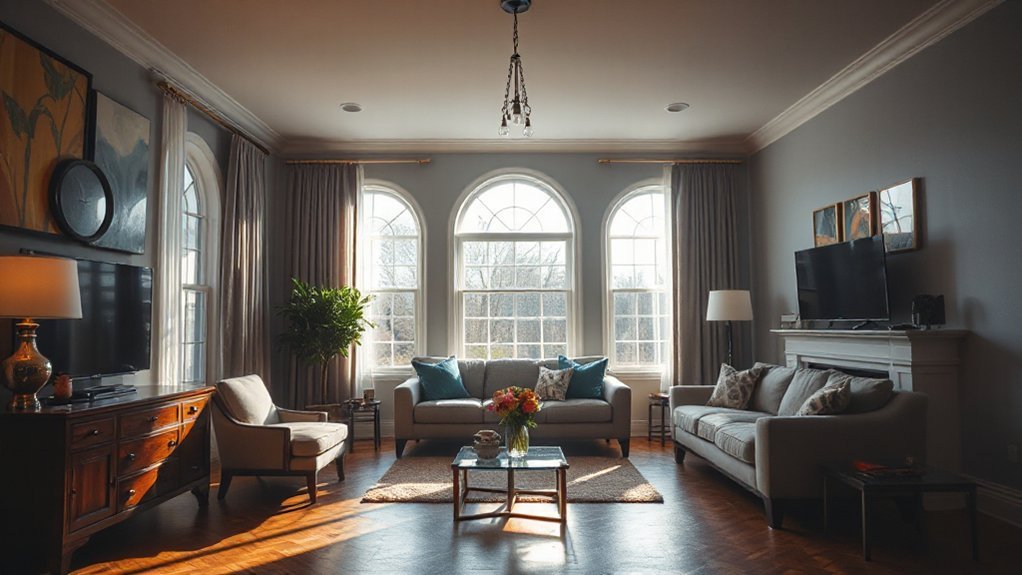
Color temperature shapes how the mood and readability of a room feel, and understanding its range lets you tailor atmosphere from cozy to crisp. In practice, 2700K offers warm, inviting light that boosts comfort; 3500K to 4000K yields neutral clarity for daily tasks; 5000K to 6500K provides bright, daylight-like visibility for focused work.
Beyond, tunable fixtures let you shift cues as needed without changing the room’s layout. You shape color psychology by matching light to activity and mood, not just wattage. Use proper Light fixtures to maintain consistency across zones, ensuring color rendering remains true. Be deliberate with calibration, avoiding gaps between fixture output and finish tones.
- Start with warm tasks or accents
- Move toward neutral for general areas
- Shift to cool for work zones
- Integrate dimming for flexibility
Light Zone Planning: Cozy Nooks, Social Areas, and Task Corners
Cozy nooks, social areas, and task corners each demand distinct lighting zones that support their primary purpose. You design spaces by ambient layering, assigning soft baseline lighting for comfort, brighter task corners for reading, and focused accents to draw attention without glare.
Zone differentiation ensures that each area serves its function without competing light levels. In a nook, keep low, diffuse illumination amplified by complementary shadows to invite relaxation.
In social zones, balance enough brightness for conversation with warm, flattering tones that reduce fatigue and promote connection.
For task corners, prioritize precision: crisp, even illumination with controllable intensity and color accuracy.
Coordinate layers to avoid harsh contrasts, using dimmable, layered light that adapts as activities evolve. This comprehensive approach optimizes mood, flow, and usability.
Choosing Fixtures by Mood: Chandeliers, Pendants, and Lamps
Chandeliers create instant ambiance, so consider how their scale and glow shape the room’s mood.
Pendant light temperatures guide the feel: warm hues ease evenings, cooler tones sharpen focus.
Lamp style versatility lets you mix textures and heights for cohesion, contrast, and flexible atmospheres.
Chandeliers For Ambiance
Wondering how to set the room’s mood with the right fixture? Chandeliers transform spaces with focused charm and controlled grandeur. When chosen for ambiance, they deliver Chandeliers elegance and ambient illumination that anchors a room’s tone without overpowering it.
Opt for designs with appropriate scale, metal finishes, and glass details that complement your palette and furniture. Dimmer compatibility matters, enabling changes from bright planning light to intimate evening glow.
Positioning matters too: ceiling height and sightlines influence impact, not just brightness. A well-chosen chandelier becomes a mood anchor, guiding conversations and energy flow.
- Scale to room size and ceiling height
- Choose finishes that echo the room’s hardware
- Prioritize dimmable, warm-toned light
- Align with overall color and material palette
Pendant Light Temperatures
Cooler temperatures, closer to daylight, sharpen focus and reveal true colors, aiding detail work and perceptual clarity. Warmer temperatures create comfort, reduce glare, and invite relaxation, influencing seating arrangements and conversation.
Consider fixture materials; metal and glass can amplify cool notes, while warm wood or ceramic soften the light and enhance cohesion with surrounding décor.
Aim for a consistent color temperature across nearby fixtures to prevent visual discord. Balance ambient color by calibrating lamp output to your space’s function, rhythm, and natural light.
Lamp Style Versatility
To set the mood effectively, pick fixture styles that align with the room’s function and color match, recognizing how chandeliers, pendants, and lamps each shape atmosphere. Lamp style versatility matters because different spaces demand distinct light quality and scales.
By evaluating fixture options for brightness, glare, and warmth, you guarantee each piece contributes to the overall ambiance without overpowering accents or textures. This approach keeps your lighting cohesive, functional, and expressive, while you maintain control over mood shifts from day to night.
- Consider chandelier drama for formal spaces, pairing with dimmers for flexibility
- Use pendants to define zones and focal points with scalable visuals
- Choose lamps to balance task needs and decorative intent
- Align finishes and color temperature with room palette for unified ambiance
Maximize Natural Light: Timing, Placement, and Reflection
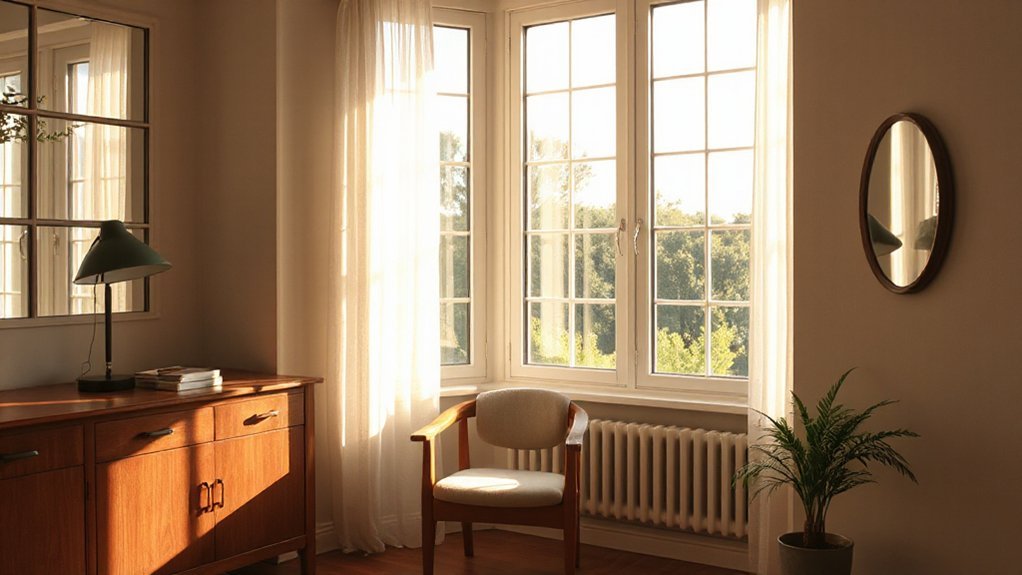
Maximize natural light by timing your interior updates to catch peak daylight and by orienting key spaces toward the sun’s path.
Place reflective surfaces strategically to bounce light into darker corners without creating glare.
Tune window choices to balance openness with privacy.
Focus on optimizing exposure and reflections to amplify brightness while preserving atmosphere and energy efficiency.
Optimal Sun Exposure
Smart use of daylight hinges on timing, placement, and reflection to flood a room with natural light while controlling glare. You optimize exposure by aligning sun angles with your routines, using Sunlight scheduling to prioritize morning brightness and dim midday glare.
Place windows and openings where they capture sightlines without overheating, and employ outdoor shading to modulate intensity. Treat light like a resource: channel it toward work zones, keep it off reflective surfaces that cause distraction, and allow soft diffusion when needed.
- Align windows with daily sun path for steady brightness
- Use outdoor shading to curb excess heat and glare
- Schedule high-activity tasks during peak natural light
- Favor diffusers and transoms to widen the usable daylight window
Reflective Surface Strategies
Ever considered how reflections transform a room’s brightness? You’ll maximize natural light by synchronizing timing with sun position and occupant rhythms, then align reflections to amplify it.
Place mirrors where they capture daylight without glare, usually opposite windows or adjacent to light-colored surfaces that bounce light deeper. Consider mirror placement heights to avoid cropping ceilings or floors, ensuring a balanced flow across zones.
Use reflective decor strategically—metallic accents, glass, and high-gloss finishes—to extend luminance without overpowering texture. Keep sightlines clear to prevent clutter from interrupting reflected pathways.
Be mindful of seasonal shifts; reposition pieces as daylight angles shift. This approach yields a cohesive, airy atmosphere that feels energetic yet calm, with daylight working harmoniously to illuminate spaces.
Smart Lighting for Flexible Ambiance
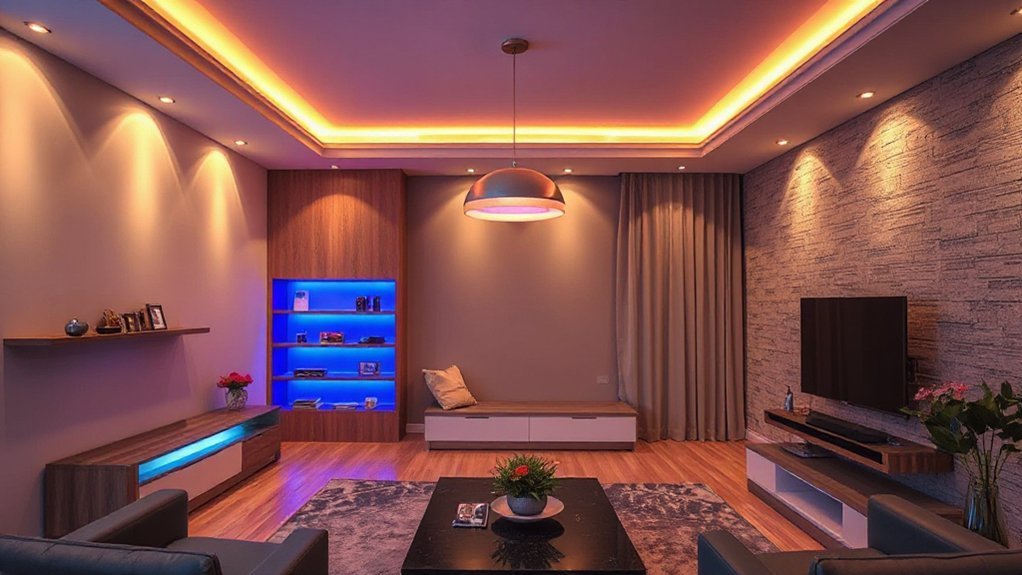
Smart lighting lets you shift the room’s mood on demand, so you can adapt quickly from focused work to relaxed evening. With smart lighting, you control ambiance without moving a lamp switch. You’ll benefit from integrated systems, reliable schedules, and seamless scene changes that align with activity.
Smart bulbs enable precise color and brightness tuning, while voice control adds hands-free convenience for quick adjustments. Establishing flexible ambiance means selecting scenes that cover work, dining, and downtime, then layering them with automation for progressions.
Consistency across fixtures ensures a cohesive feel, not a patchwork of mismatched tones. Monitor energy use and maintenance needs to sustain performance over time.
- Smart bulbs enable color and brightness customization
- Voice control for rapid, hands-free adjustments
- Scene-based presets for work, dining, and relaxation
- Automated progressions with timers and sensors
Practical, Budget-Friendly Swaps That Transform a Room
You can start transforming a room on a budget by swapping in budget-smart light options that punch above their price. Choose mood-enhancing fixtures that maximize impact with minimal cost, like versatile lamps or dimmable LEDs.
These practical choices set the tone quickly while keeping your overall lighting cohesive.
Budget-Smart Light Swaps
Swapping in budget-friendly lighting options can dramatically alter a room’s feel without breaking the bank. You’ll transform ambiance by choosing simple swaps that deliver impact, efficiency, and cohesion.
Prioritize energy efficient bulbs and decorative light fixtures that align with your room’s purpose, color, and scale. Subtle changes, like color-temperature tuning and placement, can shift mood without major renovations.
- Use dimmable LEDs to adjust brightness and tone
- Replace harsh overheads with decorative light fixtures for focal points
- Swap old bulbs for energy efficient bulbs with warm hues
- Layer lighting with task and accent options to balance shadows
These moves help you control atmosphere, save power, and maintain a polished, cohesive look across spaces.
Mood-Enhancing Fixture Choices
Mood-enhancing fixtures can transform a room’s feel without a full remodel, and the right choices stay within budget. You’ll start by selecting fixtures that align with color psychology to influence mood: warm whites evoke coziness, while cooler tones promote calm focus.
Choose scalable illumination—dimmable sconces or pendant lights—to modulate intensity as activities shift. Fixture placement matters: place ambient sources high for even wash, task lighting where you read or work, and accent accents to sculpt depth with shadows.
Opt for metal and glass finishes that reflect light without glare, and use shades to soften outputs. Prioritize consistency across rooms to reinforce flow.
A simple, strategic swap plan yields dramatic mood shifts without costly renovations.
How Color and Finish Influence Light on Surfaces
Color and finish don’t just decorate a surface; they actively shape how light behaves. You’ll notice color psychology guides mood by absorbing and reflecting wavelengths, while finish texture alters specular highlights and diffusion.
Higher reflectivity surfaces brighten corners, yet can wash out details if too uniform; lower reflectivity yields depth and contrast, sharpening texture. You’ll choose warm neutrals to lift ambience without overpowering features, or cool tones to create calm, focused spaces.
Matte finishes soften glare, satin finishes balance sheen with legibility, and gloss amplifies directionality for focal points. Consider secondary effects, like wall color influencing furniture legs and artwork shadows.
Surface reflectivity interacts with room lighting to redefine scale and perception; test swatches under actual lamps to verify harmony.
- Color psychology guides mood through light interaction
- Surface reflectivity changes brightness and depth
- Finish level modifies glare and texture
- Test swatches under real lighting for accuracy
Lighting Mistakes to Avoid for a Welcoming Space
Even with good intentions, common lighting mistakes can undermine warmth and welcome. You’ll often overdo brightness without layering, creating glare that drains comfort.
Avoid relying on a single overhead fixture as your entire lighting plan; instead, mix ambient, task, and accent layers to sculpt atmosphere.
Misjudging color temperature can skew mood: choose warm or neutral whites for inviting spaces, not cool tones that feel clinical.
Ignore dimmers, and you’ll miss control over ambiance and energy efficiency.
Too many high-CRI bulbs can skew colors, while too few leave surfaces flat and uninteresting.
Invest in dimmable, well-placed sources, and balance natural light with artificial light.
Prioritize lighting design that supports function, reduces waste, and reinforces a welcoming, livable environment.
Frequently Asked Questions
How Do Color Choices Affect Perceived Room Warmth?
Color choices affect perceived room warmth through color psychology: warm hues (reds, oranges, yellows) feel cozier and inviting, while cool hues (blues, greens) feel more distant and crisp.
You’ll sense a quicker emotional impact when you use warm tones near seating or lighting.
The overall warmth also depends on saturation and lighting quality.
Use harmonious palettes to balance emotional impact with comfort, guiding mood intentionally and precisely.
Can Lighting Alter Room Acoustics or Sound Perception?
Yes, lighting can influence sound perception. You’ll notice changes through sound absorption and acoustic enhancement: warmer, dimmer lighting often correlates with softer perceived rooms, while brighter, cooler light can make echoes feel sharper.
Strategically placed fixtures, lamps, and dimmers shape how you hear reflections and reverberation, subtly altering intelligibility and ambience. Use sound-absorbent decor alongside lighting choices to optimize clarity, comfort, and spatial feel, ensuring a balanced acoustic environment.
Do Humidity or Temperature Change Light Brightness or Color?
Yes, humidity and temperature can affect light brightness and color. You’ll notice higher humidity can scatter beams, subtly dimming brightness, while dry air lets light appear crisper.
Temperature shifts can alter color perception through the source’s emission and sensor response; cool temps may pull a daylight bias, warmer temps a yellow glow.
Humidity impact is more about diffusion than color, but temperature effects matter for color stability and intensity, especially with LEDs and high-CRI lamps.
Which Fixtures Best Suit Small Spaces With Low Ceilings?
Wall sconces and pendant lighting work best for small, low-ceiling spaces. You’ll want slim, downward-angled sconces tucked beside mirrors or art to free floor space while casting soft, ambient pools.
Choose compact pendant lighting with a low-profile canopy, or install multiple small pendants at varying heights to add visual depth without crowding the ceiling.
You get even illumination, reduced glare, and a cohesive, modern look that enlarges the room’s feel.
How Often Should Bulbs Be Replaced for Mood Consistency?
You should replace bulbs every 1 to 2 years to maintain mood consistency. Consider bulb lifespan across your fixtures and remote controls, not just wattage.
Track usage hours and color temperature shifts, since fatigue can dull ambiance. Replace for consistent brightness and accurate tones, especially in rooms used daily.
Keep a replacement plan, rotate bulbs seasonally, and note any flicker. By scheduling replacements, you preserve the intended mood and avoid sudden color or intensity changes.
Conclusion
So there you are, wielding light like a magic wand, except it’s just a lamp and a dimmer—but don’t tell your guests. You’ll tune warmth to coax, coolness to sharpen, layers to invite lingerers, and smart controls to pretend you planned it all along. Avoid the common missteps, swap a cheap shade for a wiser glow, and watch a tired room pretend it’s a stylish showroom. In short: master mood with modest upgrades and purposeful cleverness.
About the Author